
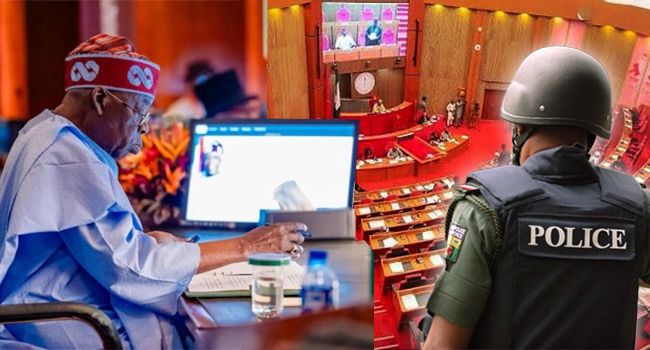
The proposed legislation, dated June 15, 2026, was presented during plenary on Tuesday and formally read by Senate President Godswill Akpabio.
According to the President, the bill seeks to establish a legal framework for a dual policing system that would allow states to operate their own police formations alongside the existing federal police structure.
He explained that the initiative is designed to improve national security coordination and enhance the protection of lives and property, while also giving communities, local governments and municipalities greater involvement in policing and security response mechanisms.
Following the presentation, the Senate President referred the bill to the Committee on Constitutional Review and directed the panel to report back on Wednesday for further legislative action.
Akpabio stressed the importance of community-based security architecture, noting that local authorities are often better positioned to detect early warning signs of threats and relay intelligence to relevant security agencies.
“You will know when foreigners infiltrate Nigeria and alert security agencies so they can react proactively rather than reactively,” the lawmaker said, expressing optimism that collaboration between the executive and legislature would ensure successful implementation of the reform.
He further explained that the proposed constitutional amendment would be executed in phases through constitutional alteration and subsequent legislative instruments.
“We will do it in two phases through alteration and an Act of Parliament. There will be a lot of safeguards; let us come and do this important task. It is extremely important that we come tomorrow,” Akpabio said.
The Senate President also informed lawmakers that plenary would not entertain extensive debates on other matters due to the death of House of Representatives member Yahaya Tongo from Gombe State.
Meanwhile, the Senate Leader urged lawmakers to attend the next sitting, emphasising the national importance of the proposed state police framework.
“We need a minimum of two-thirds of members to vote on constitutional alterations. The issue of state police is non-partisan and cuts across geopolitical zones and interests,” he said.
The development comes less than two weeks after the Senate passed a related executive bill on state policing for second reading. Akpabio noted that the latest Constitution Alteration Bill transmitted by the President builds on the earlier proposal and is aimed at providing the constitutional backing required for the establishment of state police services.