
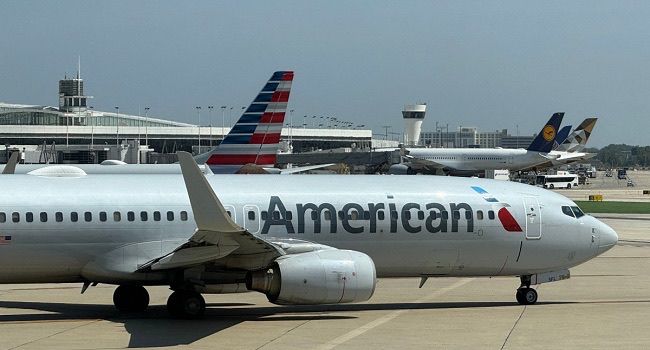
The United States has announced new measures aimed at curbing the spread of Ebola, including tighter screening procedures for travelers arriving from affected regions and a temporary suspension of visa services in some areas.
The steps, unveiled on Monday by the Centers for Disease Control and Prevention, follow the declaration by the World Health Organization that the Ebola outbreak in the Democratic Republic of Congo constitutes an international public health emergency.
During a media briefing, the CDC’s Ebola response incident manager, Satish Pillai, confirmed that an American citizen working in the DRC had tested positive for the virus after exposure connected to official duties.
“The person developed symptoms over the weekend and tested positive late Sunday,” Pillai said, adding that arrangements were being made to move the patient to Germany for medical treatment.
He further disclosed that US authorities were working to evacuate six other individuals for health monitoring purposes.
Pillai explained that roughly 25 personnel are currently attached to the CDC field office in the DRC, noting that the agency is also preparing to deploy an additional senior technical coordinator to strengthen response operations.
“At this time, CDC assesses the immediate risk to the general US public as low, but we will continue to evaluate the evolving situation and may adjust public health measures as additional information becomes available,” the health agency said in a statement.
Beyond airport screening, the CDC announced temporary entry restrictions on non-US citizens who have visited Uganda, the DRC, or South Sudan within the last 21 days.
Meanwhile, the US Embassy in Kampala confirmed that all visa services had been temporarily suspended, stating that affected applicants had already been contacted.
Health authorities say there is currently no approved vaccine or targeted treatment for the strain behind the ongoing outbreak of the highly infectious hemorrhagic fever.
According to figures released on Sunday by Congolese Health Minister, Samuel-Roger Kamba, at least 91 deaths are suspected to be linked to the outbreak.
About 350 suspected infections have also been recorded, with most cases involving people between the ages of 20 and 39. Women account for more than 60 percent of those affected.
The outbreak comes months after the administration of Donald Trump officially withdrew the United States from the WHO.
In recent days, American officials have faced questions over whether cuts to the United States Agency for International Development — which previously played a major role in Ebola response efforts — have weakened current monitoring and containment operations.
Despite the criticism, CDC officials insist they remain in close coordination with international health agencies and authorities in affected countries.
The agency said the new measures would also involve continued deployment of CDC experts to outbreak zones, alongside support for contact tracing and laboratory testing.
The US State Department separately announced on Monday that it had approved $13 million in emergency assistance to support immediate response operations.
However, Matthew Kavanagh described Washington’s handling of the outbreak as inadequate, arguing that travel bans alone would do little to stop the disease.
“The administration claimed it could negotiate bilateral deals and replace the capacity of WHO with domestic efforts. This outbreak clearly shows that is a failed strategy,” he told AFP.