
(Published in the Nigerian Tribune on Monday 15 June, 2026).
President Bola Tinubu, in his June 12 broadcast, condemned terrorists and their work but told us not to “assign blame or point fingers” because “crime has no ethnicity.” Crime may indeed have no ethnicity, but that does not relieve us of the duty to identify the environment that breeds and sustains it. A desert does not cease to be a desert because it contains a few oases.
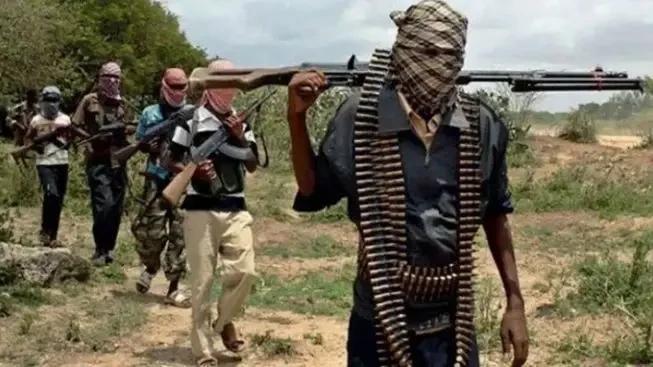
As I write this, Yoruba schoolchildren and their teachers have spent one full month in captivity, held in the bush by badly brought up boys from northern Nigeria. Exposed to the rain, exposed to the sun, the abducted remain bargaining chips in a conflict they knew nothing of. Their captors reportedly demand the release of northern terrorist commanders in northern detention centres.
The president says fingers should not be pointed. They will be pointed. Every wound points to the object that inflicted it. Every crime points to its perpetrator. Every nation seeking a cure must first locate the source of its affliction.
A friend heard the president and said this president is as afraid of the North as all those before him. The fear of the North is regularly reflected in our reluctance to “point fingers” and confront uncomfortable truths about the sources and scale of the country’s insecurity and crises of development.
No harm seems too grievous to excuse when it comes from the North. A General from the North died in the captivity of terrorists birthed by the North, yet his state government announced that he died “a natural death.” The terrorists reciprocated the courtesy and graciously released his corpse for burial.
At his burial, there was no loud clerical revolt against the murderers, no moral earthquake, no national reckoning; no thunderous fatwa was pronounced against the killers. There was no collective outrage strong enough to shake the land. It was simply another distinguished star extinguished.
Only the North understands the North and its strange, opaque ways.
If you think the North is well, read what Ishaka Rabe Abubakar, son of the murdered General, said about the mysterious return of his father’s corpse:
“Many people saw the announcement that the funeral prayer would be held at six o’clock. People then asked me, ‘How was the corpse brought back?’ I replied that I cannot answer that question. Rather, the government should be asked about it. Even I myself would like to know how the corpse was brought.”
Read that again.
A General was abducted. A General died in captivity. His corpse was returned. Yet his own son says he does not know how the body came back and would like the government to explain.
Should we not ask: What kind of country is this? How does the family of a murdered General not know how his remains were recovered? Who brought the corpse from the forest to the city? The bandits? The state? Some intermediary? Who, and how? What does this say about the authority of the state and the depth of the crisis consuming Northern Nigeria?
With the General’s death, we should finally say: enough. But we will not. We will not because saying so would mean confronting uncomfortable truths about the North, and we have convinced ourselves that the North must never be offended. But is it not in the interest of the North – and of Nigeria – for this kind of death to die with the General?
Northern Nigeria has for decades incubated much of the violence, extremism, and instability that continue to threaten national cohesion, yet public discourse by our leaders often avoids naming this reality directly. Until we are willing to define the problem honestly and acknowledge the region’s central role in the crisis, meaningful solutions will remain elusive.
The bandits who would not release General Rabe Abubakar alive eventually released his corpse for burial without arrests. If that does not tell the story of what and who controls Northern Nigeria today, nothing will.
The problem called Northern Nigeria should have a solution. What that solution is I do not know. What I know is that the solution cannot lie in denying the problematic choices and realities that have brought us to this shore of unremitting insecurity.
We are in a mess; what (or where) is the way out? Someone did an experiment in 1898:
A cat is locked inside a wooden cage. The door can be opened by pulling a string, but the cat has never seen such a mechanism before and has no idea how it works.