
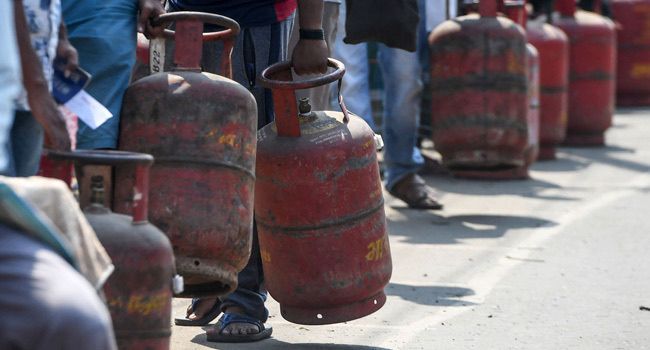
The rising cost and growing scarcity of Liquefied Petroleum Gas (LPG), popularly known as cooking gas, have sparked concern among marketers, with prices now climbing to about ₦1,500 per kilogram in several parts of Nigeria, up from around ₦1,300 depending on location.
In a statement issued on Sunday, the Nigerian Association of Liquefied Petroleum Gas Marketers (NALPGAM) alerted the Federal Government, regulators, importers, producers, depot owners, consumers, and other stakeholders to what it described as the persistent shortage and sharp increase in cooking gas prices nationwide.
The association said marketers are now forced to buy 20 metric tonnes of LPG for between ₦25.2 million and ₦26.2 million, depending on the depot and location, a development they warned is putting unbearable pressure on both sellers and consumers.
“It is sad and rather very pathetic to inform the general public that the citizens of Nigeria have woken up to buy cooking gas, which should be a social item at a prohibitive cost of over N1,500per kg, while the Marketers are made to pay as much as N25,200,000, or, depending on location, N26,200,000 for 20MT of cooking gas.
“We feel that if the situation is not immediately checked, the citizens may rise against the owners of gas filling stations.
“This sad situation has brought untold hardship to millions of Nigerian households, small businesses, food vendors, and low-income families who rely on LPG for daily cooking and livelihood.
“It is rather worrisome to state that this situation is seriously eroding the substantial progress made by the Government on the usage of Clean Energy in the country”.
NALPGAM explained that its members are battling difficulties in getting adequate LPG supply due to continuous shortages, expensive depot prices, transportation challenges, and increasing operational costs.
The association noted that even when products are available, they are often sold at prices beyond what average Nigerians can afford.
“We observe that where product is available, it is sold at rates far beyond the reach of average Nigerians.
“NALPGAM hereby observes that the current crisis is undermining years of progress achieved through Federal Government policies, public-private investments, and awareness campaigns aimed at deepening LPG penetration and promoting clean cooking energy as a safer alternative to kerosene, charcoal, and firewood in Nigeria.
“While millions of Nigerians have embraced cooking gas as a result of the national clean energy transition agenda, it is sad to state that those gains are at risk as households are struggling to refill cylinders, small businesses are folding under rising energy costs, while many families are reverting to firewood and charcoal despite the serious implications for public health, environmental degradation, and deforestation”.
The marketers further warned that the continued instability in the LPG sector could worsen the country’s economic situation if urgent steps are not taken.
According to the association, the crisis may fuel food inflation, force many small LPG retailers out of business, cause job losses, discourage investors, and threaten Nigeria’s clean energy goals and climate commitments.
NALPGAM called on the Federal Government, the Ministry of Petroleum Resources, the Nigerian Midstream and Downstream Petroleum Regulatory Authority (NMDPRA), the Nigerian National Petroleum Company (NNPC) Limited, terminal operators, domestic producers, international suppliers, and other stakeholders in the LPG value chain to urgently work together to stabilise the market.
The group urged authorities to improve the availability and accessibility of LPG across the country, increase local supply allocation, ensure transparent distribution, and address challenges affecting importation, storage, and distribution.
It also appealed for strategic measures to stabilise retail prices, protect consumers, expand storage and distribution infrastructure, and introduce policies that would guarantee affordability and long-term sustainability in the sector.
NALPGAM said it remains committed to collaborating with regulators, government agencies, producers, and industry players to find lasting solutions that will ensure stable supply and affordable pricing of cooking gas nationwide.
“In conclusion, it is apposite to state that “We cannot stand by and watch millions of Nigerian families suffer in silence while access to clean cooking energy becomes increasingly difficult and unaffordable. For years, Government and industry operators have worked to move Nigerians away from unsafe fuels. Those gains are now under serious threat”, the statement added.