
The United States has officially begun enforcing a new law requiring social media and technology companies to remove sexual deepfakes and other non-consensual intimate images from their platforms.
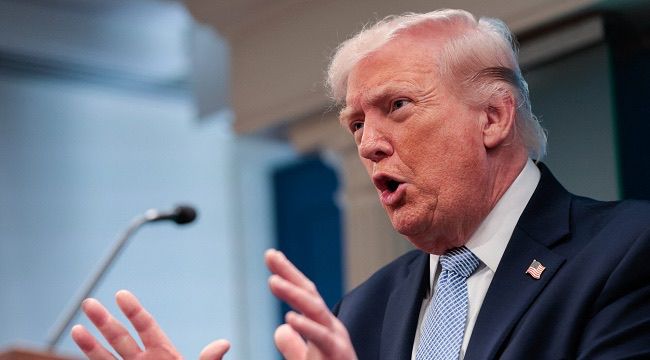
The law, known as the Take It Down Act, was signed by President Donald Trump last year to criminalize the online distribution of intimate content shared without consent, including AI-generated sexual images created using widely accessible artificial intelligence tools.
Under the new regulation, tech companies are now mandated to create systems that allow victims to request the removal of such content. Platforms that fail to take down the material within 48 hours of receiving a valid complaint could face penalties.
The Federal Trade Commission confirmed that enforcement began on Tuesday, with FTC Chairman Andrew Ferguson announcing that letters had already been sent to major technology companies including Meta, TikTok, X and Snapchat ahead of the rollout.
“We stand ready to monitor compliance, investigate violations, and enforce the Take It Down Act,” Ferguson said.
“Protecting the vulnerable — especially children — from this harmful abuse is a top priority for this agency and this administration.”
Ahead of the enforcement, X said in a statement posted through its Safety account that the platform would not tolerate exploitative content.
“There is no place in our society for predators to share intimate photos and videos of others without their consent,” the company stated.
“X has zero tolerance for non-consensual intimate images, unwanted sexual content, or any kind of exploitative behavior.”
The issue drew global attention earlier this year after backlash surrounding Elon Musk’s AI tool, Grok, which was accused of digitally undressing women and minors without consent. Researchers estimated that the tool generated millions of sexualized images within days.
Despite support for the legislation, some experts and free speech advocates have expressed concerns about how the law could be applied.
Riana Pfefferkorn, a policy fellow at the Stanford Institute for Human-Centered Artificial Intelligence, warned that the law could create what she described as a “shoot first, ask questions never” environment for online platforms.
“The incentive structure is in the ‘direction of just remove it, remove it, remove it,’” she said in comments published by Indicator, a newsletter focused on digital deception.
Pfefferkorn also cautioned that the law could potentially be misused against transgender individuals, consensual adult content creators and certain forms of political expression.
Free speech advocates have similarly warned that platforms may begin aggressively removing content — including material that does not violate the law — in order to avoid legal risks.
Experts say the rapid rise of AI-generated deepfake pornography continues to outpace efforts by governments worldwide to regulate the technology, particularly with the growing availability of “nudification” applications.
While prominent figures such as Taylor Swift have been victims of deepfake pornography, researchers stress that ordinary women are equally at risk.
Several AI-related pornography scandals have also emerged in schools across different US states, including California and New Jersey, where hundreds of teenagers were reportedly targeted by classmates using AI-generated imagery.
Experts warn that the spread of non-consensual intimate content can lead to bullying, harassment, blackmail and severe emotiotrauma for victims.