
•Nigeria needs targeted, capped fuel subsidy —Atiku
•Presidency accuses him of volte-face, desperation for power, says ex-VP spoke like a man from archaic past
•As ex-vice president unveils plans to subsidise refineries
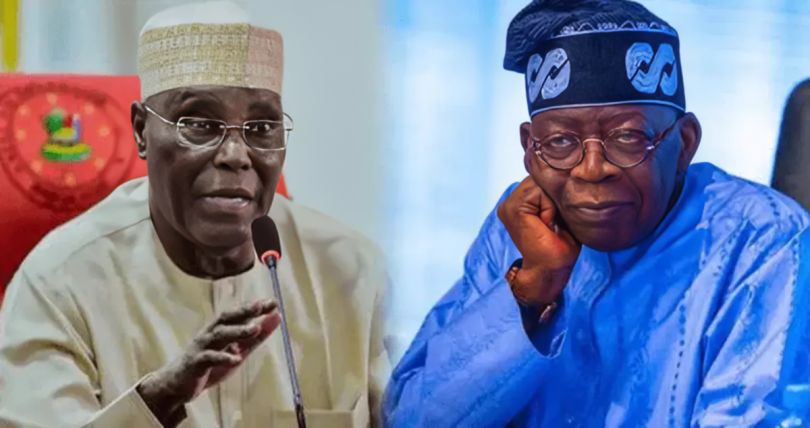
THE Presidency and former Vice President Atiku Abubakar on Thursday engaged in a war of words over a possible return of the nation to a fuel subsidy regime.
While Atiku said in a statement by his Senior Special Assistant on Public Communication, Phrank Shaibu, that he would introduce targeted subsidy regime that would accelerate domestic refining if elected in 2027, the Presidency, in a statement by the Special Adviser to President Bola Tinubu on Information and Strategy, Mr. Bayo Onanuga, said that the former vice president was simply desperate for power, accusing him of volte-face.
Atiku, in the statement released on Thursday, said that he would implement what he called the Atiku Economic Recovery Plan (AERP), if elected into power, adding that the policy would replace the nation’s import-subsidy architecture and be imbued with a targeted, capped, transparently budgeted and independently audited production subsidy, which he said would be designed to lower energy costs and accelerate domestic refining.
The presidential candidate of the African Democratic Congress (ADC) said in the statement that his AERP would recognise that “the choice before Nigeria is not simply between subsidy and no subsidy, but between an opaque intervention that breeds waste and a disciplined economic instrument that delivers measurable benefits to citizens.”
Atiku further said: “My proposal is not to resurrect the old subsidy regime. We will move subsidy from importation to production, from middlemen to Nigerian refineries, and from unverifiable claims to verifiable barrels.
“The principle is simple: the subsidy will follow the barrel.”
He added: Under the AERP, qualifying public and private Nigerian refineries would receive domestic crude at a preferential price, subject to strict production, efficiency, transparency and domestic-supply conditions.”
But in a statement by presidential spokesman, Onanuga, the presidency said that Atiku’s proposal showcased a man who least comprehends current national realities, adding that he spoke: “like a man from archaic past.”
Onanuga wrote: “Alhaji Atiku Abubakar, former Vice President and perennial candidate for the presidency of Nigeria, has finally revealed his economic plans to Nigerians, should he be elected as President by January next year.
“Against expectations that he would announce a more creative and ingenious alternative to the programme being executed by the Tinubu administration, Atiku Abubakar behaved like a man from an archaic past who least comprehends the present economic dynamics and suggested that he would restore the much-abused, wasteful, pillaged, corruption-ridden fuel subsidy regime, which the Petroleum Industry Act made illegal from the end of June 2023.”
The presidency stated that even though Atiku used to believe that the subsidy regime must be eliminated, and canvassed the same point in the build-up to the 2023 election, “he has now opportunistically recanted the major plank of his economic doctrine and turned a renegade.”
“It is not difficult to explain why Atiku has latched onto the abandoned subsidy regime, five months to the election. Desperate for power, he needed to make a promise that he knew, if he were candid with our people, does not make fiscal sense, is regressive, and is against the genuine interest of the people. But before his suggestion hoodwinks the people, we must quickly subject the promise to a serious examination, especially in the context of Nigeria’s present economic and petroleum realities,” the statement read.
The presidency added that while it respects Atiku Abubakar’s constitutional right to propose alternative policies, it believes that it was wrong for him to seek the support of Nigerians and recant a major policy prescription. It added that the former vice president, however, deserves to let Nigerians understand what the content of his proposed subsidy restoration plan would amount to, how it would be funded, and whether it would be compatible with the legal and structural changes that have taken place in the petroleum sector.
The presidency said: “First, we must clear some ambiguities about the so-called subsidy. It is not some money sitting in the treasury to be disbursed to offer cheap fuel to Nigerians. It is the massive discount the NNPC offered the Nigerian government: selling fuel it bought at N100 at N50 at the pump, leading to under-recovery of costs and massive losses.
Somewhere in the NPO books are still trillions of Naira in subsidy costs that the Nigerian government has not paid. Contrary to Atiku’s claim in his interview, no N30 trillion subsidy windfall or savings exists anywhere except in his imagination.
“The petrol subsidy regime that Nigerians knew before May 2023 was dismantled as part of the country’s petroleum-sector reforms. The Petroleum Industry Act established a new framework for the downstream petroleum market. It removed the subsidy, as was previously done for diesel, kerosene and aviation fuel, ending a system that had placed a substantial and often unpredictable burden on public finances.
The PIA scheduled the subsidy removal by the end of June 2023. President Tinubu only accelerated it by weeks to stop further bleeding before the due date.
“Restoring the old arrangement therefore cannot simply be presented as a matter of announcing that government will once again pay part of the cost of petrol. It would require a clear legal, fiscal and administrative framework, including identifying the source of the funds and determining how such a policy would be implemented under the present petroleum-market structure.
More importantly, Nigeria’s petroleum landscape has changed significantly since May 2023. For many years, the country relied heavily on imported petrol, with the government bearing the consequences of the gap between the regulated pump price and the cost of supplying the product.
Today, the emergence of substantial domestic refining capacity has fundamentally altered that equation.
The Dangote Refinery has become a major source of locally refined petrol. Indeed, the Dangote Refinery would not have kickstarted production for local consumption were the subsidy regime operative. This is an important point that Atiku deceptively ignored.”
The presidency said that Atiku’s proposal portends a reversal of current local production, adding that it could spell bankruptcy for smaller local refineries, leading to attendant job losses and a loss of foreign exchange.
It stated that because the sector is now market-driven, Nigeria now exports refined products to Europe, Asia, and the United States, adding that such a development has restored national pride
“The N15 trillion that would have been borrowed and spent on selling discounted petrol has now significantly gone into the coffers of the three tiers of government Now all states are fiscally stable and can pay salaries regularly and embark on infrastructure projects.
In July, the three tiers shared about N3 trillion, a record, from the federation account. That is a major achievement, since the abolition of petrol price discount and distortions in the foreign exchange regime,” the presidency said.
The presidency further said that the Nigerian system was increasingly moving from a model in which scarce foreign exchange is used to import refined petrol to one in which crude oil is largely sold in Naira, processed locally, and supplied to the domestic market.
“That transition creates opportunities for greater energy security, foreign-exchange conservation, industrial development and ultimately a boost to employment generation.
The subsidy debate must therefore be grounded in the realities of today’s market rather than treated as though Nigeria’s petroleum sector has remained unchanged,” the government said.
In his submission contained in the statement by Shaibu, Atiku said several proposals, indicating that there would be no cheaper crude without cheaper products.
According to him, the AERP would specifically prevent refinery owners from pocketing the benefit of preferential crude without passing it to consumers.
“No refinery would receive subsidised crude without a corresponding, independently verified quantity of petroleum products being supplied to the Nigerian market under a transparent pricing formula reflecting the benefit of the preferential crude price,” the statement said.
It added that crude allocation, refinery intake, production yields, inventories and domestic deliveries would be reconciled to ensure that every subsidised barrel can be followed from allocation through refining to the Nigerian consumer.
“No phantom cargoes. No fictitious imports. No unverifiable under-recoveries. No retrospective claims.
“If you receive subsidised Nigerian crude, you must refine it in Nigeria, supply the agreed products to Nigerians and pass the benefit to Nigerians. Otherwise, you do not qualify,” the statement read.
It also indicated that the AERP would eliminate favouritism, adding that eligibility would be open and rules-based for all public and private refineries, such that the system would prevent a situation where any particular refinery or politically connected operator is enriched.
“Allocation would be based on independently verified capacity, efficiency, domestic supply and compliance rather than political discretion.
“The programme would also contain strict safeguards against arbitrage.
Subsidised crude and products benefiting from the intervention could not simply be diverted to more profitable foreign markets while Nigerian consumers bear the fiscal cost.
“Any operator that diverts subsidised crude or products, manipulates production records, violates domestic-supply obligations or fails to pass the prescribed benefit to consumers would lose eligibility, refund the subsidy benefit and face applicable regulatory and legal sanctions.
“Nigeria will not subsidise anybody’s private profit.
Public support must produce a measurable public benefit,” the statement further read.
While claiming that the plan would entail a ‘target it, cap it, audit it’ programme, Atiku said that the production subsidy would operate within a predetermined annual fiscal ceiling approved through the federal budget, and end what he called the culture of open-ended subsidy liabilities.
He said: “No refinery gets unlimited support. No marketer brings the government a surprise bill. No agency manufactures an under-recovery after the transaction.
“The National Assembly will see the appropriation.
Nigerians will know the maximum exposure. Independent auditors will see the barrels. And the public will see what was produced for every naira of support.”
The statement further noted that where oil revenues exceed the budget benchmark, a predetermined and legally appropriated portion of the additional revenue may be deployed within the established fiscal ceiling, adding that no windfall would be assumed before it materialises.
The statement by Atiku also said that his AERP was meant to ensure that subsidy disappears from the system, stressing that the AERP intervention would carry statutory sunset and periodic review provisions.
The statement noted: “As domestic refining capacity expands, utilisation improves, competition increases and production costs decline, support per barrel would progressively reduce according to predetermined benchmarks.
“Our objective is not permanent subsidy. It is to use temporary and disciplined support to build a refining industry strong enough eventually not to need subsidy.
“We will measure the fiscal cost against refinery output, domestic prices, jobs, investment and benefits delivered to consumers. If the policy is not delivering value greater than its cost, it must be adjusted or terminated.”
He further noted that his approach would reduce petrol and diesel costs and transmit the benefits throughout the economy.
“Lower transportation costs would benefit commuters and farmers; lower energy and logistics costs would support manufacturers and traders; and falling production costs would help moderate inflation and restore purchasing power.
“The ultimate objective is not merely cheaper petrol. It is cheaper transportation, cheaper food, stronger businesses, more Nigerian jobs and greater purchasing power.
“Nigeria’s crude should first help build Nigerian refining capacity and Nigerian prosperity.”
Atiku questioned the transparency he said was supposed to be built into the subsidy removal policy of President Tinubu, questioning what the president removed in May 2023.
He said: “President Tinubu stood at Eagle Square on May 29, 2023 and declared that ’subsidy is gone! Nigerians were immediately handed the bill.
“Petrol prices exploded, transportation costs multiplied, food prices soared, and households were told that their suffering was the necessary price of reform.
“But after Nigerians paid that price, the government’s own accounts created questions that President Tinubu has still not satisfactorily answered.”
He cited what he called NNPCL’s audited financial statements recording approximately $4.84 trillion in Energy Security Expenses in 2023 and N7.13 trillion in 2024, saying Nigerians deserve a precise explanation of the economic substance of those expenses and the extent to which they incorporate under-recoveries, pricing differentials or other costs associated with petroleum supply.
“We are not interested in playing games with accounting terminology. If government continued absorbing differences between the economic cost of petroleum products and what was recovered from the market, then Nigerians are entitled to ask how that differs economically from the subsidy they were told had disappeared.
“You cannot abolish subsidy at Eagle Square and allow subsidy-like costs to resurface in government accounts without explaining the contradiction,” he said.
He equally raised a controversy around N30 trillion federal revenues, saying that “Our reconciliation of published Federation Account figures has identified approximately #30 trillion in revenues, deductions, savings, transfers and related funds requiring transparent reconciliation.
“Let nobody misrepresent the argument. We are not saying #30 trillion is fuel subsidy or that #30 trillion has been proven stolen.
“We are saying that approximately #30 trillion reflected across Federation revenues, deductions, savings, transfers and related classifications requires a complete, month-by-month public reconciliation. The distinction is important – but so is the question,” he said.