
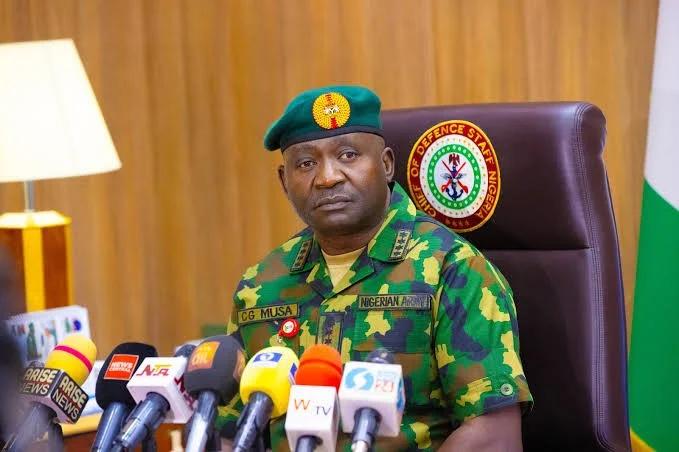
He also raised concern over the absence of a comprehensive national database, noting that it is affecting the ability of security agencies, especially the police, to effectively track and apprehend criminals.
Musa stated this on Saturday while delivering a keynote address at the Nigerian People’s Strategic Conference and Defence Exhibition 2026 in Abuja.
According to him, the disruption in global supply chains for military hardware has made it necessary for Nigeria to prioritise local production of defence equipment.
“With the war in Ukraine, Russia, Iran, the U.S. and Israel, it’s been extremely difficult getting equipment. Because most times they do down payment because they have the money and they produce most of these items. So even when you go to get, they have booked for them, and so it’s difficult.
“The only solution is for us to produce what we need,” he said.
The minister commended indigenous defence manufacturers and innovators, calling for stronger government support and patronage of locally produced military solutions.
He also appealed to the National Assembly to back the creation of a national database for Nigerians, describing it as critical to improving policing and national security.
“I want to also appeal to the National Assembly on the issue of a database. We must develop a database for every Nigerian in the world. There is a capacity to do that.
“It is only with that that it will make the job a lot easier for security forces. The Nigerian police is struggling because they don’t have a database to track and trace,” he said.
Musa praised the Nigeria Police Force for its efforts despite operational challenges, noting that many of its successes would be difficult without proper data systems.
“I commend them because I think they are performing magic. Some of the crimes they’re able to bring out, I can tell you it’s extremely difficult without a database,” he added.
He further stressed that security agencies cannot operate effectively without timely intelligence from citizens, warning that public indifference weakens crime prevention efforts.
“Security agencies are not magicians. If they don’t get the support and information at the right time, it becomes extremely difficult to curtail it,” he stated.
He cited repeated vandalism of public infrastructure such as roads, rail lines, and solar-powered street lights, saying many incidents go unreported by residents.
Musa also urged state governors to ensure that increased federal allocations translate into development at the grassroots level, arguing that poverty, unemployment, and illiteracy remain key drivers of insecurity.
“The tendency is now to throw everything at the federal. And I can tell you, Mr President is doing so well because if you look at the amount of money being released monthly to the governors, it is important for us to be able to make sure that these things get down to the people so that we can stop issues of poverty and illiteracy,” he said.
He further cautioned against the unregulated use of the Civilian Joint Task Force and other community-based security groups, warning that arming unvetted individuals could worsen insecurity.
Also speaking, Deputy Speaker of the House of Representatives, Benjamin Kalu, said the National Assembly would continue to support security agencies through legislation, oversight, and funding.
He, however, stressed that military action alone is not sufficient to address Nigeria’s security challenges.