
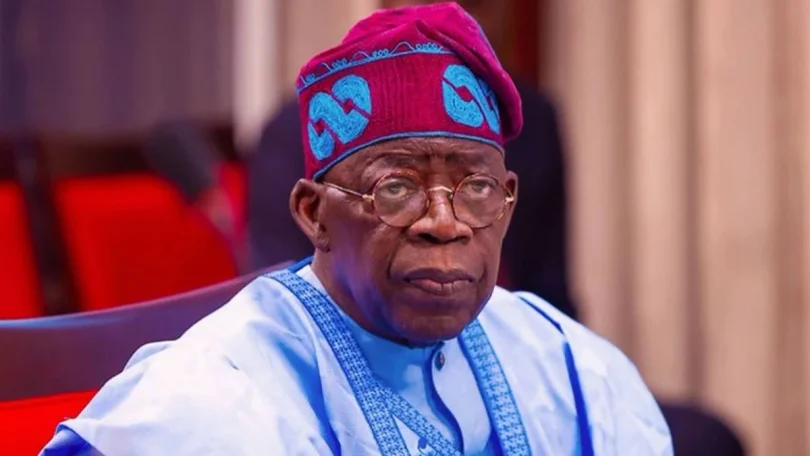
President Bola Tinubu’s lawyer in the United States, Wole Afolabi (SAN), has explained why American authorities never arrested or prosecuted the Nigerian president over allegations linked to drug trafficking dating back to the early 1990s.
Afolabi said the absence of an indictment was significant, arguing that the United States would have taken criminal action against Tinubu if investigators had established sufficient evidence to prosecute him.
The Senior Advocate of Nigeria made the remarks during an appearance on Channels Television’s Sunday Politics as a long-running legal battle over FBI and Drug Enforcement Administration (DEA) records connected to Tinubu continues in a US federal court.
The controversy centres on records being sought by American transparency activist Aaron Greenspan through a Freedom of Information Act (FOIA) lawsuit.
Greenspan is seeking access to additional documents held by US law enforcement agencies concerning investigations from the 1990s.
Some of the records are linked to a 1993 civil forfeiture case involving about $460,000 connected to bank accounts associated with Tinubu.
The matter has returned to public attention in Nigeria after the FBI recently submitted records linked to the historical investigation to a US federal judge for confidential review.
The documents were submitted on August 28 to Judge Beryl Howell of the United States District Court for the District of Columbia.
The records were not released to Greenspan or made available to the public.
Instead, the FBI submitted them under seal for the judge to examine privately while determining whether the agency has sufficient legal grounds to withhold parts of the material.
It is against this background that Afolabi addressed questions about why Tinubu was never arrested or charged in the United States if the allegations against him had criminal merit.
“If he was culpable, he simply would have been indicted. There’s no shortcut around it,” Afolabi said.
He also stressed that the existence of an investigation does not automatically establish that a person committed an offence.
According to him, people can become subjects of investigations without ultimately being charged.
“Anyone can be a subject of investigation,” he stated, while pointing to the principle that a person remains presumed innocent unless proven guilty.
The lawyer’s comments come as attention is being paid to the old US case and the records that remain undisclosed.
The 1993 proceeding involved the forfeiture of approximately $460,000 by the US government.
US authorities had linked the funds to suspected narcotics trafficking and money-laundering activity.
However, the case was a civil forfeiture action against the money.
It was not a criminal prosecution of Tinubu.
No criminal conviction for drug trafficking was recorded against the president in the United States.
Tinubu has also consistently denied wrongdoing in relation to the allegations.
Afolabi further defended the decision by Tinubu’s legal team to challenge the release of additional FBI and DEA records.
He said the US government had already released some documents but had withheld other portions under exemptions provided by the FOIA.
The exemptions cited by the agencies concern issues including personal privacy, protection of confidential sources, law enforcement techniques and the safety of individuals connected to investigations.
“They are saying that if we discuss this publicly, we would compromise our agents; we would compromise the techniques that we use to get information,” Afolabi said.
He added: “They have sources, they have informants. They don’t want them to be compromised.”
The lawyer rejected claims that Tinubu’s legal team was attempting to hide damaging information by opposing the release of the documents.
He argued that lawyers would be failing in their professional responsibilities if they refused to use protections available under US law.
“It will amount to professional malpractice on our part if we don’t take advantage of what the law offers.”
Afolabi also declined to disclose details of what Tinubu may have told him privately about the old forfeiture case.
He said such information was protected by attorney-client privilege.
The lawyer was also unable to say what is contained in the portions of the FBI and DEA records that remain under seal.
“I don’t know what’s in the documents,” he said.
The FOIA dispute has been ongoing for several years.
Greenspan began seeking records relating to Tinubu and investigations conducted in the United States in the early 1990s.
His requests include the FBI’s file relating to Tinubu and interview records known as Form 302 reports.
The case has since involved the FBI, DEA and other US government agencies.
In earlier proceedings, the US court questioned the agencies’ reliance on a blanket refusal to confirm or deny the existence of records concerning Tinubu.
Recall that Politics Nigeria had reported that the FBI submitted Tinubu-related records to Judge Beryl Howell on August 28 after the court ordered the agency to meet a deadline in the FOIA case.
The documents remain under seal while the judge considers whether the government has lawful grounds to keep some or all of the material from public disclosure.