
…Someone Must Accept An Outcome They Did Not Want For Opposition Unity To Work
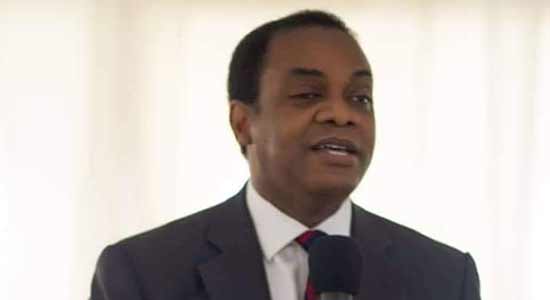
Former Cross River State Governor Donald Duke has pledged to support any candidate who emerges from ongoing efforts by opposition political parties to forge a common platform ahead of the 2027 general elections.
Duke made the commitment on Monday at the G100 Summit of Nigeria’s Opposition Political Parties held at the Shehu Musa Yar’Adua Centre in Abuja.
He said he would remain committed to the opposition unity process, irrespective of the outcome of negotiations among the participating political parties.
“We will support any political party that emerges in 2027. Whatever decision is arrived at today, I will not walk away but will strive all along because that’s what the people want to see,” Duke said.
The summit, convened by the G100 in collaboration with the Minority Caucus of the House of Representatives, brought together leaders and representatives of six opposition parties, including the African Democratic Congress, Allied Peoples Movement, Nigeria Democratic Congress, Peoples Democratic Party, Peoples Redemption Party and Social Democratic Party.
Speaking on behalf of the G100, Salihu Mohammed Lukman said opposition parties could only mount an effective challenge against the ruling All Progressives Congress in 2027 if they overcame the divisions that contributed to their defeat in the 2023 presidential election.
Lukman said opposition parties collectively received about 13 million votes in the 2023 election, compared with fewer than nine million votes secured by the winner, but lost because their votes were divided among several candidates.
“Nobody stole thirteen million votes. We divided them ourselves, in public, and we did it knowing exactly what the consequence would be,” he said.
He recalled the negotiations that preceded the 2015 general elections, during which opposition parties agreed on the rules governing their alliance and the process for producing a common presidential candidate.
According to him, the lesson from that experience was that parties must first agree on the rules before negotiating political positions.
“What they had was not affection. What they had was sequence. They agreed on the rules before they knew the outcome,” Lukman said.
He explained that consultations conducted by the G100 showed that opposition leaders understood the consequences of remaining divided but lacked a common platform for negotiating their interests.
Lukman clarified that the summit was not asking any opposition party to dissolve or demanding that any presidential aspirant immediately withdraw from the race.
Lukman clarified that the summit was not asking any opposition party to dissolve or demanding that any presidential aspirant immediately withdraw from the race.
“It is not asking any party to dissolve. It is not asking any party to disappear into another party. It is not asking any candidate to stand down this morning,” he said.
He said the objective was to secure the parties’ approval for a framework through which their interests, ambitions and policy positions could be negotiated.
The proposed framework comprises three standing coalition structures: a Central Leadership Committee, a Publicity and Communication Committee, and a Legal Committee.
The G100 also proposed five working groups to prepare documents on democratic renewal, a proposed four-year transition, a national reform programme, opposition unity and a roadmap for producing a common presidential candidate.
According to Lukman, the working groups are expected to complete their assignments within four weeks and submit their papers for consideration at a second summit.