
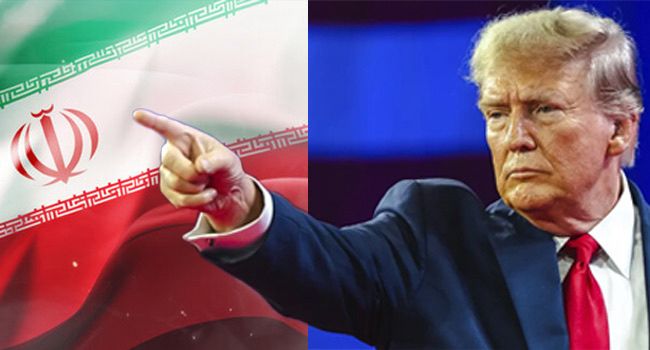
Speaking to reporters on Friday, Trump made it clear that the latest offer from Tehran had not met expectations. “At this moment I’m not satisfied with what they’re offering,” he said, pointing to internal divisions within Iran’s leadership as a key reason negotiations have failed to progress.
The proposal, according to Iran’s state news agency IRNA, was delivered Thursday evening through Pakistan, which is acting as a mediator. However, details of the document were not disclosed.
Framing the stakes in stark terms, Trump outlined two possible paths forward. “Do we want to go and just blast the hell out of them and finish them forever — or do we want to try and make a deal? I mean, those are the options,” he said when asked about next steps. He added, however, that he would “prefer not” to pursue military action “on a human basis”.
The conflict, triggered by a joint offensive launched by the United States and Israel on February 28, has been paused since April 8 under a ceasefire agreement. Despite this, only one round of direct talks has taken place—and it ended without success.
While negotiations remain frozen, tensions continue to ripple across global markets. Iran has maintained control over the Strait of Hormuz, effectively restricting the flow of critical resources such as oil, gas, and fertiliser. In response, the US has enforced a counterblockade targeting Iranian ports.
Even with the diplomatic deadlock, both sides have signaled a reluctance to return to full-scale war. Iran’s judiciary chief, Gholamhossein Mohseni Ejei, said “the Islamic Republic has never shied away from negotiations”, but stressed, “we certainly do not accept imposition” — while reaffirming that Tehran does not seek renewed conflict.
The White House has remained silent on the specifics of the new proposal. However, reports indicate that US envoy Steve Witkoff recently pushed for changes to earlier negotiation terms, including renewed focus on Iran’s nuclear programme. Among the reported conditions is a demand that Iran refrain from moving enriched uranium from sites targeted during last year’s brief war or resuming activity there while talks continue.
Markets reacted briefly to the news of Iran’s proposal, with oil prices dropping by nearly five percent. Still, prices remain significantly elevated—about 50 percent higher than prewar levels—amid ongoing uncertainty and the continued closure of the Strait of Hormuz.
European diplomatic efforts are also underway. The European Union’s foreign policy chief, Kaja Kallas, held talks with Iran’s top diplomat, Abbas Araghchi, on Friday in a bid to find a path toward reopening the strategic waterway.
For ordinary Iranians, the prolonged standoff is taking a heavy toll. One Tehran resident described the situation bluntly, saying it “feels like we are stuck in purgatory”. Another expressed skepticism about the latest proposal, calling it “a waste of time” and predicting further escalation.
Back in Washington, political pressure is mounting on Trump. Lawmakers are debating whether he has exceeded the legal deadline to seek congressional approval for military action. The administration argues that the ceasefire effectively pauses that timeline, a position the president reinforced by insisting the US is “in the midst of a big victory”.
Meanwhile, economic strain is intensifying on both sides. The US announced fresh sanctions targeting three Iranian currency exchange firms and warned others against facilitating payments linked to passage through the Strait of Hormuz.
According to US officials, the blockade has already prevented Iran from exporting billions of dollars’ worth of oil. Inside Iran, inflation has surged past 50 percent, worsening living conditions. One resident said, “For many people, paying rent and even buying food has become difficult, and some have nothing left at all.”
On the military front, strategic movements continue. While the USS Gerald R. Ford aircraft carrier has departed the region after participating in operations, two other US carriers remain deployed, underscoring the fragile and unresolved nature of ⊇the standoff.