
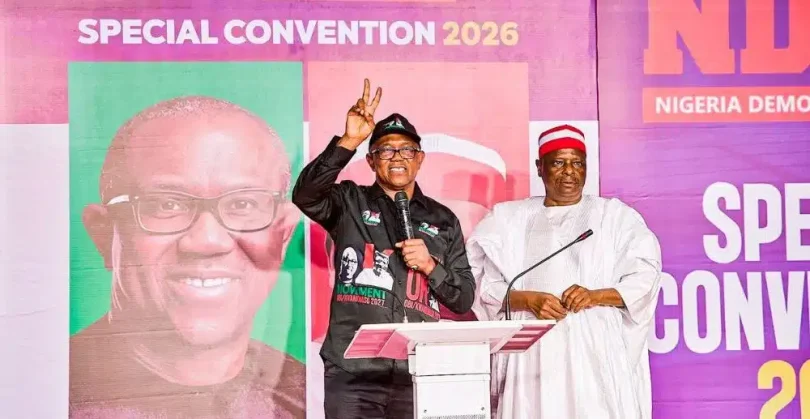
Presidential candidate of the Nigeria Democratic Congress (NDC), Peter Obi, has clarified his position on fuel subsidy, saying there is no disagreement between him and his running mate, Rabiu Kwankwaso, over the issue.
Obi spoke at the 2026 All Nigeria Editors Conference (ANEC), organised by the Nigerian Guild of Editors in Enugu, against the backdrop of reports suggesting that the two NDC leaders hold different positions on the subsidy regime.
The former Anambra State governor explained that Kwankwaso was not advocating a return to the old subsidy system but had proposed a different approach to subsidising fuel.
According to Obi, both he and Kwankwaso recognise corruption within the subsidy regime as a major problem.
“The talk is about how Kwankwaso and I differed on subsidies. No, we didn’t. What Kwankwaso said is that we will introduce our own style of subsidy. In fact, he didn’t say he would remove it,” Obi said.
Obi argued that the central issue was not whether Nigeria had enough resources, but how the country’s resources were managed.
He maintained that tackling corruption and waste in the subsidy system could free up resources for critical sectors of the economy.
“If you remove the corruption in subsidy, there might not be subsidy,” he said, describing the subsidy regime as having been characterised by what he called “huge corruption.”
The NDC candidate also pointed to reported savings from the removal of fuel subsidy, saying such funds could be redirected towards healthcare and other areas of national development.
“People will say, ‘Where are you going to get the money?’ The money is there!” Obi said, referring to a reported N15.8 trillion in savings from subsidy removal.
Obi proposes increased healthcare spending
Obi also used the occasion to advocate greater investment in Nigeria’s healthcare system.
Also Read: Police reveal how workers moved dead guest’s body to conceal hotel death
He said the country needed more specialised medical facilities, including kidney treatment centres and cancer centres, while also calling for increased investment in primary healthcare.
He argued that resources generated from reforms in the subsidy system could be channelled into such projects rather than being lost through corruption and inefficient spending.
Obi further claimed that only about 10 per cent of primary healthcare facilities were functional and proposed the establishment of 10,000 primary healthcare centres at an estimated cost of N1 trillion.
He said the funding could be sourced from savings associated with fuel subsidy reforms.
The comments formed part of Obi’s broader argument at the editors’ conference that Nigeria has sufficient resources to address many of its development challenges if public funds are deployed more efficiently.