
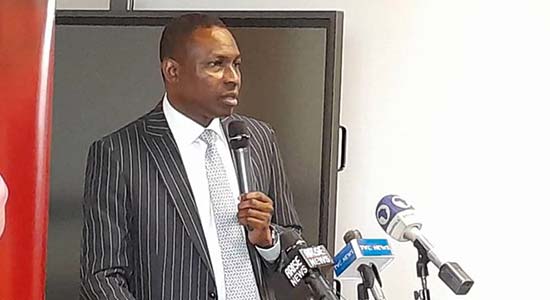
The Economic and Financial Crimes Commission has recovered more than ₦1.23 trillion and $684.48 million from proceeds of economic and financial crimes while dismissing over 40 of its personnel for corruption and financial malpractice under the leadership of its chairman, Ola Olukoyede.
Olukoyede disclosed this on Monday during a briefing with media executives and journalists at the EFCC headquarters in Abuja, where he presented the commission’s achievements and ongoing internal reforms.
According to him, the commission recovered ₦1,233,612,040,411.11, $684,478,457.32, £373,905.78 and €9,343,803.66 between October 1, 2023, and June 30, 2026, in addition to recoveries made in other currencies.
He explained that approximately ₦397.26 billion, representing 33 per cent of the total naira recovery, was recovered directly for the Federal Government.
The remaining ₦836.34 billion, representing 67 per cent, comprised indirect recoveries made on behalf of various government ministries.
Olukoyede described asset recovery as one of the major pillars of the commission’s efforts to combat economic and financial crimes and protect public resources.
He also disclosed that more than 40 EFCC employees had been dismissed for alleged corruption and financial malpractice during the past two and a half to three years.
“In the past two and a half years or three years of my service, I’ve asked them to dismiss over 40 staff on account of corruption and financial malpractice. More than five of them are being prosecuted at the moment,” he said.
The EFCC chairman explained that the commission could not prosecute individuals from other institutions for corruption while merely dismissing its own personnel accused of similar misconduct.
“Because if that is what people do in other agencies and I arrest them, I investigate them, I prosecute them, why must I just dismiss you if you do it within our own system and I’m not prosecuting you?” he asked.
Olukoyede said more than five of the dismissed personnel were already facing prosecution, while case files involving others were being prepared for possible prosecution.
“You can follow those cases in court; they are public knowledge,” he added.
As part of efforts to strengthen internal accountability, Olukoyede announced that the commission’s former Department of Internal Affairs had been renamed the Department of Ethics and Integrity.
The EFCC has also developed a gift policy that will regulate the type and value of gifts its personnel may accept.
The EFCC has also developed a gift policy that will regulate the type and value of gifts its personnel may accept.
Under the proposed framework, staff members will be required to declare assets and gifts valued above a specified threshold, including gifts received from relatives living abroad.
Olukoyede said the policy would enable the commission to examine whether the income and declared assets of its personnel were consistent with their lifestyles.
“You must be sure that your hands are clean. You can’t be fighting corruption when your hands are soiled with corrupt practices,” he said.