
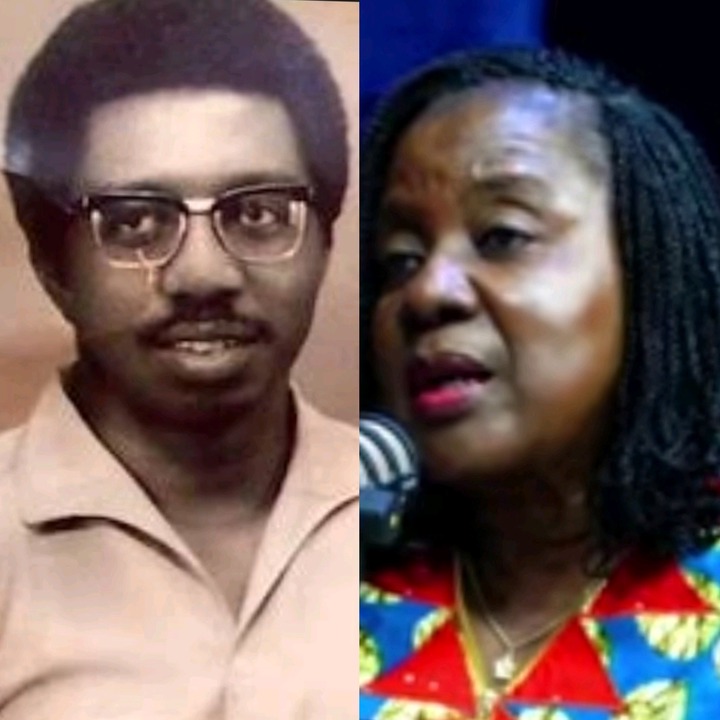
Professor Olayinka Omigbodun, daughter of late Nigerian military officer Victor Banjo, has shared a deeply moving account of how her family received news of her father’s death during the Nigerian Civil War.…WATCH THE VIDEO HERE
Omigbodun made the disclosure during an interview on State Affairs with Edmund Obilo Show, where she reflected on the emotional and psychological impact of the loss, particularly from the perspective of a child.
Recounting the moment, she explained that her mother gathered the children together shortly after reports emerged that their father had been executed during the war. Rather than delivering the news abruptly, she said her mother chose a calm and spiritual approach.
“My mother called us together, she prayed with us and then said ‘daddy has gone to be with Jesus,’” Omigbodun recalled.
She noted that the explanation, though gentle, carried a meaning that the children at the time could not fully grasp. Raised in a religious environment where Jesus was often described as loving and good, the message was interpreted very differently by her siblings.
“My elder brother jumped up really excited. He was happy because we have been hearing that Jesus is good,” she said. “May the Lord have mercy.”
According to Omigbodun, the reaction of her brother, Dele Banjo, reflected the innocence of childhood and the limited understanding young children have about death. To him, the idea that their father had gone to be with Jesus sounded like something positive rather than a tragic loss.
She explained that it was only later in life that the true weight of the moment became clear, as they gradually came to understand the permanence of death and the circumstances surrounding their father’s passing.
Victor Banjo was a notable figure during the Nigerian Civil War, a conflict that left deep scars on families and communities across Nigeria. His execution remains one of the many tragic episodes associated with the war, which lasted from 1967 to 1970.
Omigbodun’s account sheds light on the often-overlooked experiences of children during times of conflict, particularly how they process grief and loss in the absence of full understanding. Her story highlights the emotional resilience of families who must find ways to cope with devastating news under difficult circumstances.
Psychologists note that children frequently interpret complex events like death through simplified frameworks, often shaped by religious or cultural teachings. In such situations, reactions that may seem unusual to adults such as excitement or confusion are not uncommon.