
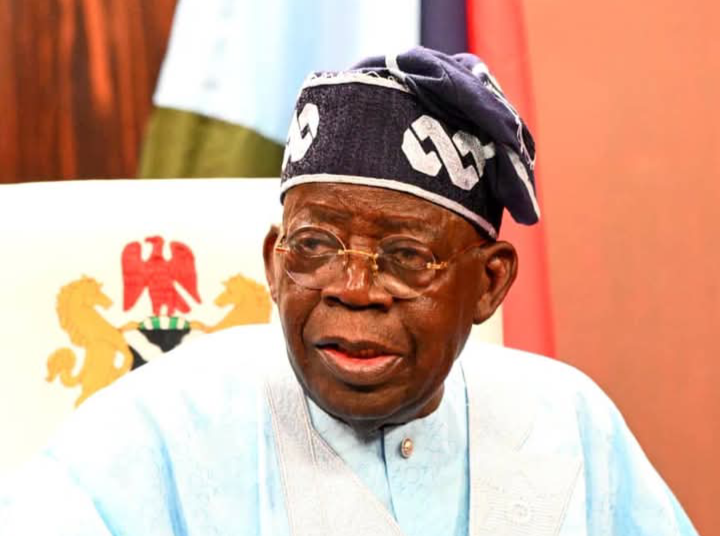
President Bola Tinubu has said the hardship being experienced by millions of Nigerians did not begin with the economic reforms introduced by his administration, attributing the situation to decades of low productivity, inadequate infrastructure and insufficient opportunities.
TheNewsGuru (TNG) reports President Tinubu stated this in his Independence Day address to Nigerians on Thursday, marking the country’s 66th independence anniversary.
The President said his administration inherited an economy in which poverty was rising and “hope was nearly gone” in 2023, insisting that the government had no choice but to undertake difficult reforms.
He likened Nigeria’s economic situation at the time to a cancer patient whose doctor had prescribed a painful but necessary treatment.
“By 2023, poverty was rising, and hope was nearly gone. The country’s situation was darker than ever. We had no choice but to act,” Tinubu said.
According to him, previous administrations had focused on managing the symptoms of the country’s economic problems rather than confronting their underlying causes.
“For too long, Nigeria’s leaders chose morphine while praying for a miracle that never came,” he said.
“They focused on symptoms while allowing the disease to take hold deep within the fabric of our society. We spent enormous sums sustaining inefficient arrangements that were never intended to last.”
Tinubu said his administration consequently chose to “excise the cancer”, acknowledging that the reforms had been difficult and that their “side effects were real”.
However, he maintained that the reforms did not create Nigeria’s economic weaknesses.
“Our reforms did not create the weaknesses in our economy. They confronted them,” the President said.
Tinubu said the government had now moved from correcting the country’s economic direction to pursuing “shared and widespread prosperity”.
He said the new focus would be on reducing the cost of living, creating productive jobs, expanding industries and ensuring that Nigerians could benefit from economic growth.
“When I speak of prosperity, I do not speak merely of a larger economy, abstract numbers or better statistics. I mean something much more personal,” he said.
“I mean a Nigeria in which the farmer can cultivate his land safely, produce more at lower cost, and earn a decent return for his labour. A Nigeria in which factories have reliable power, businesses can obtain credit, and young people can find productive work.”
The President said his administration’s priority was to bring down the cost of living by reducing the cost of producing and transporting goods.
He listed mechanised irrigation, dry-season farming, access to seeds and fertiliser, mechanisation, storage and transportation among measures being pursued to boost agricultural production.
He added that the government was building and completing roads, railways and ports to connect farms and factories with markets.
Tinubu also said his administration would use Nigeria’s gas resources to power new industries, support the revival of factories, expand digital connectivity and invest in skills required by employers.
“I want to see more Nigerians making things. I want to see more Nigerian farms feeding our cities and supplying our factories. I want to see Nigerian businesses selling Nigerian goods to the whole world,” he said.
But acknowledging the immediate struggles facing many Nigerians, Tinubu said millions of families still faced difficulties meeting basic needs.
“I am also conscious that millions of our fellow citizens cannot wait for tomorrow. Some Nigerian families still struggle today for the next meal, the next school fee, the next medical bill, or simply enough money to get to work,” he said.
He added: “Their circumstances did not begin with the reforms of the last three years. Their struggle is the accumulated consequence of decades of low productivity, inadequate infrastructure, insufficient opportunity and institutions that too often failed those who needed them most.”
Tinubu said his administration could not “erase in four years what accumulated over generations”, but pledged to change the direction of the country.
He said the government was strengthening direct support for the poorest households and improving the National Social Register to ensure that assistance reaches those who need it.
He also cited the Nigerian Education Loan Fund, CREDICORP and reforms in primary healthcare, basic education and the national pension programme as measures aimed at supporting vulnerable Nigerians.
“These programmes are not substitutes for prosperity. They are a bridge to aid our nation’s citizens on their path towards it,” he said.
“Our objective is not to manage poverty more efficiently. We will defeat it.”
The President acknowledged that achieving widespread prosperity would take time, discipline and sustained economic growth, alongside the creation of millions of productive opportunities.
He, however, declared that Nigeria had emerged from the period of emergency economic reforms and entered what he described as “the age of prosperity”.
“The age of reform has done its work. Now begins the age of prosperity,” Tinubu said.
He described the reforms as the foundation for a future in which the promise of Nigeria would become the lived experience of its citizens.
“Nigeria has corrected its course. We have passed through our own Red Sea. This is not the time to look back,” he said.
“Let us go forward together, with faith in ourselves, faith in our country, and faith that the sacrifices we have made will yield their reward.”
Tinubu said the “Promised Land” ahead was a Nigeria of abundance and opportunity, where prosperity would be broadly shared and every child could dream beyond the circumstances of their birth.
“Our destination is in sight. Our foundations are strong. Our direction is clear. So let us go forward. No looking back,” he said.