
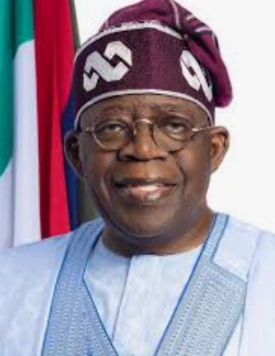
Asiwaju Bola Ahmed Tinubu, Nigeria’s President
As Nigeria marks 66 years of independence on October 1, 2026, Corporate Accountability and Public Participation Africa (CAPPA) has called on the Bola Ahmed Tinubu administration, and state governments to genuinely commit to building a country where democracy translates into security, dignity, economic opportunity, accountable governance and a better quality of life for all Nigerians.
The organisation acknowledged the resilience of Nigerians and the progress recorded since independence, including the country’s return to democratic rule in 1999 and more than two decades of uninterrupted civilian government. But it argued that judging by whether citizens can live safely, participate meaningfully in government, afford basic necessities and trust public institutions to work in their interest, Nigeria’s democratic journey has not succeeded.
CAPPA lamented that for many citizens, Independence Day has come to mean little more than an acknowledgement of the country’s political existence, with many ordinary Nigerians frustrated into seeking a second address abroad or planning to flee the country entirely. It urged government to see the anniversary as an opportunity to honestly reflect on the distance between the promises at Independence and the stark realities confronting millions of Nigerians.
The organisation noted that the country celebrate its 66th anniversary at a difficult moment for many households. Despite the Federal Government’s emphasis on economic reforms, stabilisation and renewed growth, poverty, food insecurity and pressure on household incomes remain serious concerns. The International Monetary Fund reported in June that 63 per cent of Nigerians were living below the national poverty line, while an estimated 27 million Nigerians faced food insecurity in late 2025.
CAPPA said the government’s own stated ambition of moving from reform and stabilisation towards shared prosperity must now be measured against the lived experience of ordinary Nigerians.
“Beyond statistics and policy announcements, Nigerians need to feel the difference in their pockets, homes, communities, workplaces and markets,” CAPPA said.
The organisation urged the government to make the welfare of citizens a central measure of economic policy by prioritising affordable food, the implementation of a living wage and provision of decent jobs, accessible healthcare, quality education, reliable electricity, public water and social protection.
“Economic reforms should not be considered successful merely because they improve government revenues, attract investment or strengthen macroeconomic indicators. Their ultimate test should be whether they improve household incomes, reduce hardship, expand opportunities and protect vulnerable Nigerians from being pushed deeper into poverty,” CAPPA added.
With the 2027 general elections approaching, CAPPA said Nigeria has an opportunity to strengthen the democratic institutions that determine how citizens choose their leaders and hold them accountable.
The Independent National Electoral Commission (INEC) has scheduled the presidential and National Assembly elections for 16 January 2027, followed by the governorship and State House of Assembly elections on 6 February 2027.
CAPPA urged the Federal Government, INEC, political parties, security agencies and other stakeholders to ensure that the elections are peaceful, transparent, credible and inclusive. It described as troubling allegations of vote-buying, undue influence, intimidation, and other electoral offences in the just concluded Osun State Guber polls.
It said Nigerians must be able to vote without intimidation, violence, manipulation or fear, while electoral institutions must operate independently and transparently.
The group particularly urged government to address insecurity in areas where violence could prevent citizens from campaigning, reaching polling units or exercising their franchise.
It also called for greater transparency around election technology, voter registration, collation and results management, as well as timely resolution of electoral disputes.
But, CAPPA stressed, democracy must not begin and end at the polling booth.
“Credible electoral processes and institutions are essential, but democracy must continue between elections. Citizens must be able to question government, demand information, organise peacefully, criticise public policy and participate in decisions that affect our lives,” the organisation said.
“The government must therefore protect freedom of expression, peaceful assembly and civic participation, while ensuring that journalists, civil society organisations, workers, students and ordinary citizens can speak and organise without intimidation.”
Referencing the National Human Rights Commission’s recent reminder to political actors that democracy encompasses citizens’ dignity, voice and rights, CAPPA called for a peaceful, inclusive and rights-respecting political environment ahead of the 2027 elections.
The group condemned campaigns based on ethnic or religious mobilisation, misinformation, intimidation and empty promises, and called for political parties and candidates to be held to a higher standard.
CAPPA described security as a democratic dividend, saying no discussion of Nigeria’s progress can ignore the insecurity that continues to plague communities across the country.
It lamented that insurgency, kidnapping, banditry, communal violence and other forms of insecurity continue to threaten lives, livelihoods, education, agriculture and freedom of movement, despite some gains by the military and other security agencies.
Security agencies, CAPPA also insisted, must operate within the law and respect human rights. Referencing police attacks on peaceful Nigerians during anti-landgrab protests in Lagos, the organisation said a secure Nigeria must be one in which citizens are protected both from violent non-state actors and from unlawful abuses by state authorities.
CAPPA further urged the Federal Government and National Assembly to strengthen institutions rather than allow political power and public resources to become overly dependent on individual office holders. It called for stronger oversight of public expenditure, transparent procurement, open contracting and effective enforcement against corruption, saying public office must remain a public trust.
The organisation also urged government to invest more substantially in education, healthcare, public water systems, agriculture and other essential services instead of allowing the deterioration of public institutions to become a justification for their commercialisation or transfer to private interests.
At 66, CAPPA said, Nigeria has every reason to acknowledge the sacrifices, resilience and achievements that have kept the country together through decades of political, economic and social upheaval. But that patriotism should not require Nigerians to remain silent about what is failing.
“The Nigeria of our dreams cannot be built by pretending that everything is working,” CAPPA said. “It will be built by confronting what is broken, fixing our institutions and ensuring that government works for the people.”
The organisation urged the Federal Government to use the 66th anniversary as a turning point by committing to five immediate priorities: strengthening the electoral system ahead of 2027; protecting civic and democratic freedoms; making citizens’ welfare the measure of economic policy; rebuilding public services and infrastructure; and developing a security system that protects lives, livelihoods and rights.
It also called on Nigerians to participate actively in democratic life, scrutinise political promises, demand accountability from elected officials and reject attempts to divide citizens along ethnic, religious or regional lines.