
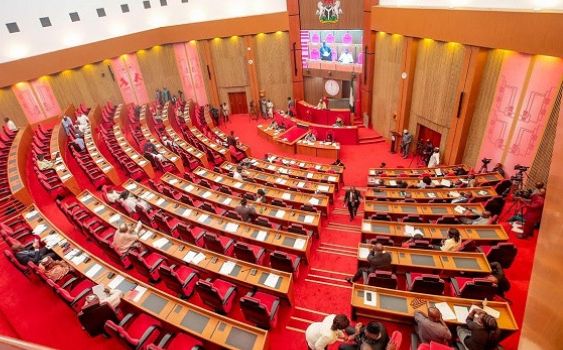
The proposal, sponsored by Ned Nwoko, scaled through after lawmakers debated and adopted the report of the Senate Committee on Health (Secondary and Tertiary), chaired by Ipalibo Harry Banigo.
Lawmakers explained that the planned agency would serve as a central coordination point for malaria control programmes nationwide. It is also expected to shift Nigeria’s strategy away from largely treatment-based responses toward a stronger focus on prevention, control, and eventual eradication.
Under the framework, the agency would operate with zonal and state offices to ensure implementation is driven by structured policy, scientific evidence, and accountability mechanisms.
The President of the Senate, Godswill Akpabio, described the bill as a major milestone in Nigeria’s public health response, stressing that malaria continues to be one of the country’s most persistent diseases.
After the passage, Nwoko told Senate correspondents that eliminating malaria in Nigeria is achievable, insisting the country has both the capacity and tools to make it happen. He noted that the agency would push interventions such as environmental sanitation, large-scale fumigation, and vaccine-related research, adding that Nigeria could eventually become the first malaria-free nation in Africa.
Meanwhile, global health developments continue to shape the fight against the disease.
Last month, the World Health Organization announced a significant breakthrough with the prequalification of a malaria treatment designed specifically for newborns and infants.
The drug, artemether-lumefantrine, is the first formulation tailored for the youngest age group affected by malaria, a mosquito-borne disease that has long posed treatment challenges in early childhood.
The WHO explained that its prequalification status confirms the medicine meets international standards for quality, safety, and effectiveness.
Before this approval, infants were often given drugs formulated for older children, a practice that increased the risk of incorrect dosage, side effects, and toxicity.
“For centuries, malaria has stolen children from their parents, and health, wealth and hope from communities,” said WHO’s chief Tedros Adhanom Ghebreyesus.
“But today, the story is changing. New vaccines, diagnostic tests, next-generation mosquito nets and effective medicines, including those adapted for the youngest, are helping to turn the tide.
“Ending malaria in our lifetime is no longer a dream — it is a real possibility, but only with sustained political and financial commitment. Now we can. Now we must,” he added.
According to WHO estimates, there were about 282 million malaria cases and 610,000 deaths across 80 countries in 2024, with Africa accounting for about 95 per cent of both cases and deaths. Children under five made up roughly three-quarters of the fatalities.
The agency also warned that progress against malaria is being slowed by rising drug and insecticide resistance, diagnostic gaps, and declining international funding support.
It further noted that about 70 per cent of countries globally still lack strong enough regulatory systems to properly monitor medicines, vaccines, diagnostic tools, and other medical technologies.