
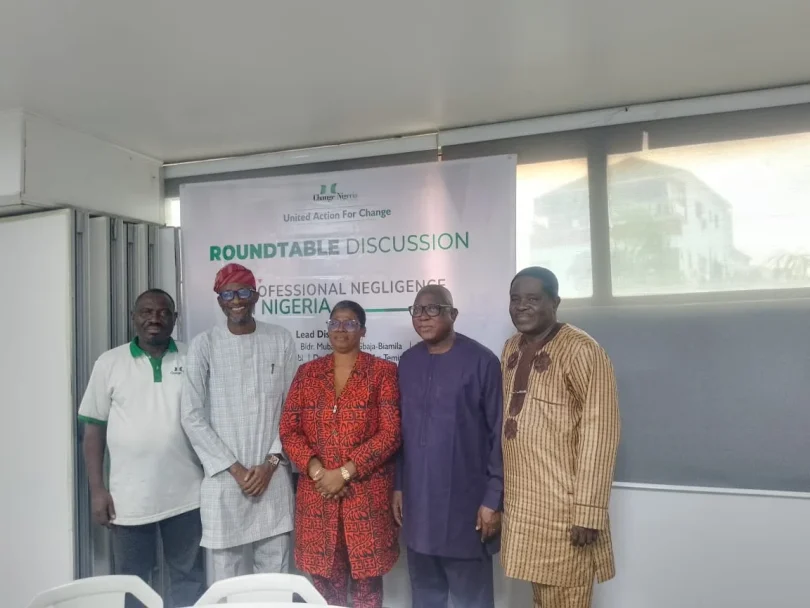
Deputy Registrar, Lagos State University (LASU), Ms Temitope Ladipo-Scott, and expert in built sector, Builder Builder Mubarak Gbaja-Biamila have called on regulatory bodies and gatekeepers to discharge their duties in line with extant rules and regulations to tackle administrative and professional negligence in Nigeria, saying the menace had led to loss of lives and discouraged many citizens from doing the right thing.
- …seek sanctions, community vigilance to curb building collapse, legal failures
- ALSO READ: Routine eye scan may predict atrial fibrillation years before diagnosis — Study
The call, which was made on Saturday in Lagos during a roundtable organised by a group, under the aegis of United Action for Change (UAC), also urged citizens not to keep silent in addressing administrative and professional negligence in the country.
The event, themed: “Professional Negligence: Responsibilities, Consequences and the Need for Accountability,” brought together professionals in the administrative sector, building industry and legal sector.
Speaking on administrative negligence, tha Deputy Registrar of LASU, Ms Ladipo-Scott, decried the high level of administrative negligence in the country despite existing laws, demanding that offenders should be penalised or jailed for violating established procedures.
“Administrative negligence is getting worse in the country because the gatekeepers and regulatory bodies are looking away,” she said.
She noted that failure to follow rules had caused many deaths and demotivated others from standing by the truth. “Our establishments are structured. When we fail to do things the right way, it is administrative negligence,” she added.
Ladipo-Scott urged citizens not to be deterred from doing the right thing, even when society does not acknowledge them.
“The gatekeepers and regulatory bodies have a role to play. Even without the bureaucratic setup, we need to do the right thing. The rules, the regulations are there,” she said.
On construction-sector negligence, Builder Gbaja-Biamila said citizens’ silence contributed to professional negligence and the rising incidence of building collapse, adding: “Silence equals shared responsibility.”
He urged Community Development Associations (CDAs) and residents to speak up when they notice wrong construction practices.
ALSO READ: Routine eye scan may predict atrial fibrillation years before diagnosis — Study
“CDAs and others have the right to walk into a construction site and say, ‘What you are doing, the building you are putting here is wrong. Stop it!’ Ask who the architect is, get his phone number and call him. Tell him the contractor here is not doing the right thing,” he said.
Gbaja-Biamila advised professionals handling multi-storey buildings to engage qualified contractors when a project exceeded their capacity, citing the Ikoyi building collapse, even as he also warned against cost-cutting.
This was just as he listed some recommendations, including the mandatory presence of regulatory professionals at construction sites, continuous professional development, rigorous quality assessment and community vigilance to address professional negligence.
Speaking on legal negligence, a lawyer, Asiwaju Dave Ajetunmobi, advised professionals who had reached a dead end to reach out to colleagues, noting that nobody knows it all.
Ajetunmobi explained that a lawyer owes a client a duty of care in a lawyer-client relationship, but a lawyer consulted in a courtroom can claim he owes no duty to the person.
He added that before a client can claim that a lawyer owes him a duty, the client must show that he properly briefed and remunerated the lawyer.
Ajetunmobi identified other levels of professional negligence to include failure to correctly value a claim and making clients accept a lesser value; failure to carry out research when due; failure to inform clients of available choices so they can make informed decisions; and engaging in coercive or bullying behaviour towards clients.
He stressed that a lawyer must exercise maximum patience to avoid professional negligence, noting that a client has the right to sue a lawyer if he realises he had been poorly advised.
Earlier, in his welcome address, Chairman of the Planning Committee, Dr. Afolabi, while welcoming participants set the tone for the discussion by emphasising the importance of professional responsibility, accountability and effective service delivery in both public and private institutions.
He said the discussions focused broadly on administrative negligence, professional negligence, negligence in the construction sector and legal negligence, with practical examples drawn from Nigerian institutions and professional practice.