
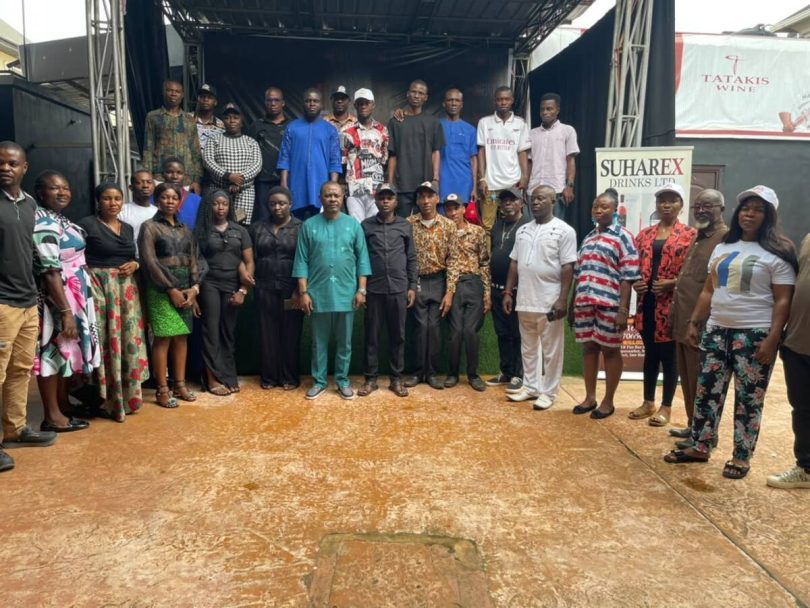
A former Speaker of the Imo State House of Assembly, Rt. Hon. Ike C. Ibe, has called for child abuse to be treated as a serious social and human rights issue rather than merely a private family matter.
Ibe made the call while speaking on “Legal Solution To Child Abuse” at a human capacity-building program organized by the Stand For Humanity Foundation in Owerri.
Drawing on his legal knowledge and experience in public service, Ibe, who holds a Ph.D. in Law from American University, Washington, DC, stressed the need for society and relevant institutions to recognize child abuse as a serious human rights concern requiring deliberate legal, social, and institutional intervention.
He said, “Child abuse is not mainly a family problem; it is a social concern and, fundamentally, a violation of human rights.”
He described the protection of children as a collective responsibility, stressing the need to uphold their rights to safety, dignity, justice, and protection.
The former parliamentarian called for the establishment and strengthening of child-friendly police units where children could report abuse and seek protection in environments designed to reduce fear, intimidation, and further trauma.
He also emphasized the need for properly trained investigators with specialized knowledge and skills to handle cases involving children.
He said, “To investigate crimes involving children effectively, you must understand the psychology and physiology of children. If you do not understand the psychology and developmental realities of children, you cannot effectively investigate crimes surrounding them.”
ALSO READ: 2027: Ex-Imo dep gov, Madumere, seeks support for senate bid
Ibe said investigating crimes against children required more than conventional investigative techniques.
He said, “They require specialized understanding of child psychology, child development, trauma, communication, evidence gathering, and child-sensitive investigative procedures.”
He added, “A justice system that is properly equipped to understand how children communicate, respond to trauma, and disclose experiences is better positioned to handle cases involving children with the sensitivity and professionalism they require.”
Speaking at the program, the president of the Stand For Humanity Foundation, Chidiebube Okeoma, expressed appreciation to Ibe for his contribution to the program.
Okeoma described the presentation as insightful and impactful, saying Ibe’s legal knowledge and public service experience added value to the capacity-building program.
He also appreciated the former speaker for sharing his expertise and providing participants with practical perspectives on legal and institutional approaches to strengthening child protection.
The foundation’s president reaffirmed its commitment to creating platforms where professionals, legal practitioners, policymakers, advocates, and community stakeholders can share knowledge and develop practical solutions to human rights challenges.
Okeoma called for stiffer punishment for child abusers, particularly perpetrators of child battery, defilement, rape and other forms of abuse against children.
He also called for changes to the processes for accessing institutional support for victims.
Okeoma expressed concern over delays in the justice system as well as bureaucratic and logistical challenges affecting police prosecution processes.
According to him, such challenges reduce the willingness of victims and their families to pursue justice and, in some cases, deny survivors of child abuse access to justice and rehabilitation.
Okeoma stressed that meaningful solutions to child abuse required collaboration among law enforcement agencies, the judiciary, legal practitioners, social workers, healthcare professionals, educators, families, civil society organizations, community leaders, and child protection advocates.
He said, “The Foundation believes that laws and policies must be supported by effective implementation, trained personnel, accessible reporting mechanisms, appropriate investigative procedures, and systems that place the safety, dignity, and best interests of the child at the center of every intervention.”
He added that the contribution of Ibe during the program reinforced the need to strengthen these systems and ensure that professionals responsible for protecting children were adequately equipped for the task.
Okeoma said the “Legal Solutions to Child Abuse” capacity-building program was not only an educational engagement but also a call for collective responsibility and action.
He said every child deserved to grow up in an environment where their rights were respected, their voices heard, their concerns taken seriously, and effective protection provided whenever those rights were threatened.
He said, “Protecting children is not simply about responding to abuse after it occurs. It is about building stronger laws, institutions, communities, and professional systems capable of preventing abuse, identifying risks, responding appropriately, investigating professionally, and ensuring that justice remains accessible to every child.
Okeoma assured that the Stand For Humanity Foundation would continue to promote human rights, strengthen child protection, build institutional capacity and advocate for a society where every child could live with dignity, safety, justice, and hope.
The foundation also appreciated Ibe for serving as the resource person and contributing his knowledge, experience, and legal perspectives to the program.