
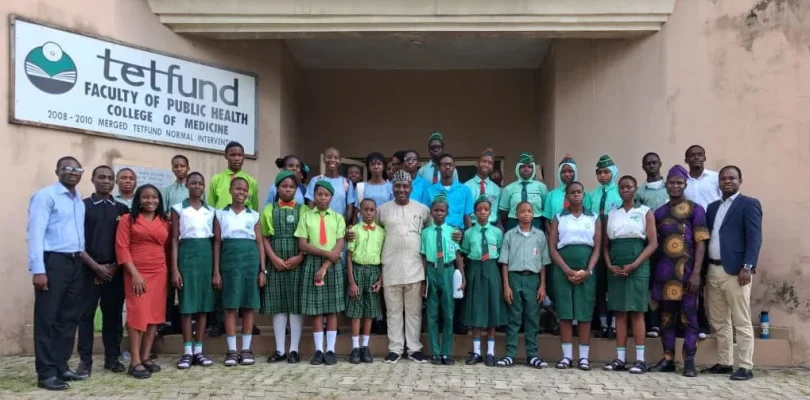
The Oyo State Commissioner for Environment and Natural Resources and faculty members of the Department of Environmental Health Sciences, University of Ibadan (UI), have emphasised that science must guide and shape environmental policies and practices, especially where they affect people and communities.
The environmental stakeholders made this known last Thursday in Ibadan during the events that marked the 2026 World Environmental Health Day with the theme: ‘Environmental health: Standing with science to protect communities’.
The three-day event featured environmental rallies by the Youth Environmental Stewards (YES) club and members of the Department of Environmental Health Sciences, UI, on the first day; a symposium and exhibition on the second day; and community sensitisation on the third day.
The Provost of the College of Medicine, UI, Professor Elizabeth Oloruntoba, stressed that science should translate into sound environmental innovations and build community capacity so people can take their health and well-being into their own hands.
Professor Oloruntoba insisted that environmental scientific research and findings must be translated into local and indigenous knowledge for communities to understand and work with them for their benefit.
Dr Taiwo Hammed, representing the national president of the Environmental Health Scientists Association of Nigeria (EHSAN), stated that to properly protect health and the environment “we must stand firmly on the foundation of scientific knowledge and evidence-based environmental health practices.”
Dr Hammed also stated that environmental health endeavours are not only about protecting the environment, but also about anticipating risks and preventing hazards before they harm people and communities.
ALSO READ:UI don faults employers over ‘unemployable’ label on Nigerian graduates
Dr Sunday Moradayo, representing the Oyo State Commissioner for Environment and Natural Resources, said that the ministry works with environmental scientists and other related stakeholders to protect the environment, insisting that science should be given priority in matters of environmental policies.
The representative of the commissioner added that the government is committed to protecting the health and environment of its people, and urged the citizens to report any person, industry, or activity that is posing environmental risk or danger to people and communities.
Dr Shade Akinsete delivered the keynote speech. She stated that science must be the backbone of informed decisions and innovations in environmental matters, and that science and data should be translated into results that save lives and protect communities.
Dr Akinsete admonished environmental stakeholders and researchers to build good science and strengthen environmental health and community participation.
During the panel discussion session, Professor Olajumoke Fayinminnu, Dr Taiwo Hammed, and Dr E Asemadahun spoke about how the environment impacts all aspects of life and health, including food and air, plants and animals, land and water, and the atmosphere and climate.
The panellists urged the government to take adequate actions in protecting the environment. They enjoined scientists to make their work practical and relevant to the environment. They advised people and communities to keep their living place safe and clean.
The rebranded YES club now has a customised uniform, a slogan, and an anthem. Members of the club are drawn from young people in primary and secondary schools.
Dr Moradayo, representing the Oyo State Commissioner for Environment and Natural Resources, commended the YES club initiative, adding that the functions of the club are significant in a society where adults are failing to protect the environment.
The Head of Department (HOD) of Environmental Health Sciences, UI, said that the department is ready to help the club achieve its mandate, and that the undergraduate and postgraduate students of the department will work with the club weekly to sustain its work.
At the event were the Federal Fire Service, represented by its public relations officer, Ayobomi Jemibola; officers of the Oyo State Environmental Health Services; some Ibadan North corps members; students of the Oyo State College of Health Sciences; and students of the School of Hygiene.
Some of the schools present at the event were Command Day Secondary School, Christ Chapel Comprehensive College, Anglican Community Junior School, Ibadan Boys High School, and Loyola College.
The students presented drama, poetry, and cultural displays that reflected how the earth and the environment should be properly treated.