
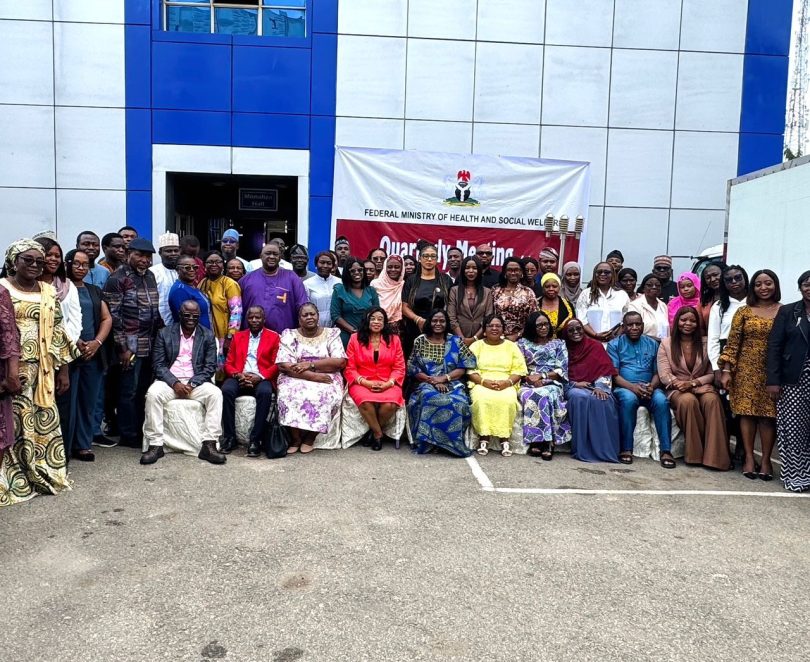
The Federal Ministry of Health and Social Welfare has affirmed that Nigeria is making commendable progress in strengthening its nutrition information systems, a move critical to evidence-based planning and accountability within the sector.
Speaking at the 2nd Quarter 2026 National Nutrition Technical Working Group (NNTWG) meeting, held from 24th to 25th June in Abuja under the theme “Strengthening Nutrition Routine Information Systems,” the Ministry conceded, however, that significant gaps remain. The gathering drew more than 140 delegates, both in person and virtually, from federal and state MDAs, the Office of the Vice President, development partners, academia, and civil society.
Despite these advances, the 2024 Nigeria Demographic and Health Survey (NDHS) paints a sobering picture: 40 per cent of children aged 6–59 months are stunted, 8 per cent wasted, and 27 per cent underweight. Exclusive breastfeeding rates remain suboptimal at 29 per cent, whilst micronutrient deficiencies persist – with 30 per cent of children deficient in vitamin A and 31 per cent affected by anaemia. “These figures remind us that, despite progress, much work remains,” the Ministry stated, adding that data quality is inextricably linked to the systems that generate it.
Participants observed that weaknesses in standardisation and digitisation have resulted in fragmented reporting, delayed decision-making, and service inefficiencies. To address this, the National Health Management Information System (NHMIS) was reviewed and validated in 2024 and 2025, with updated tools now integrating Multiple Micronutrient Supplements (MMS), Small Quantity Lipid-Based Nutrient Supplements (SQ-LNS), Ready-to-Use Supplementary Food (RUSF), birth weight, and early breastfeeding indicators. These tools underwent pilot testing in six states – Benue, Kaduna, Bauchi, Ogun, Cross River, and Ebonyi – followed by national validation of Primary Health Care (PHC) tools in May 2026. Nevertheless, delegates expressed frustration over delays in the nationwide rollout, which have perpetuated parallel data collection systems and undermined harmonised reporting.
On the logistics front, the Nigeria Health Logistics Management Information System (NHLMIS) – the country’s inaugural integrated health logistics platform – has onboarded nutrition commodities from just 5 to 23, including RUTF, F-75, F-100, and vitamin A. Since its launch on 1 October 2025, 23 states have been trained and are actively reporting live data, with 185 health facilities reporting initially. Over 1,774 government staff have undergone training, and State Nutrition Officers, alongside Local Government Area Focal Persons, have been integrated into the reporting structure.
However, participants raised concerns over persistent challenges, including parallel procurement and distribution systems, risks of commodity diversion and expiry, and the weak integration of logistics data into planning and decision-making frameworks. They appealed for sustained collaboration among government institutions, development partners, and civil society to accelerate progress towards national nutrition goals.
The NNTWG continues to serve as Nigeria’s central platform for technical coordination, evidence generation, and the alignment of nutrition interventions across all tiers of government.