
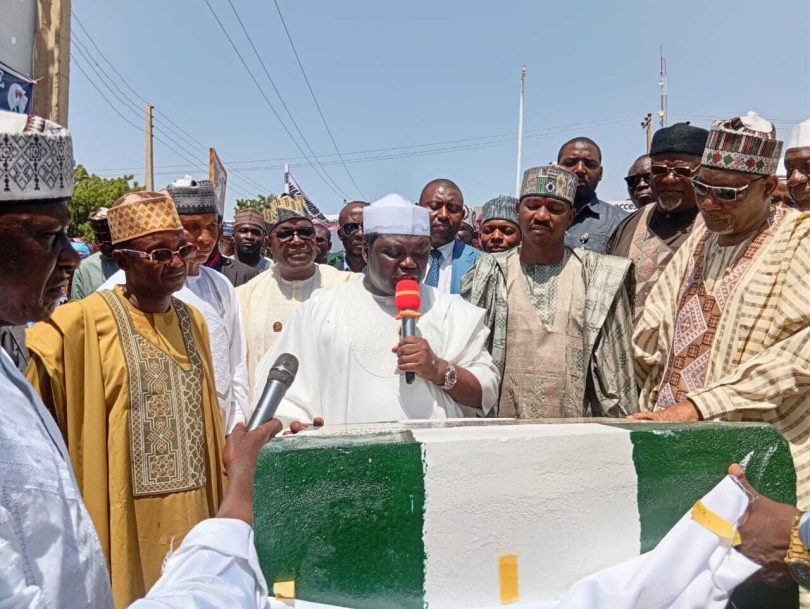
Taraba State Governor, Dr Agbu Kefas, on Monday commissioned the 2km Buzaye road network in Sokoto metropolis, describing the over ₦3 billion project – executed by ZBCC – as a critical investment in the state’s future prosperity.
Delivering his address, Kefas underscored the enduring historical bonds between Taraba and Sokoto, framing his visit as a homecoming. Recalling his tenure as a Major in the city, he remarked: “I stand here not as a guest, but as a brother from a state that shares a deep historical connection with the people of Sokoto. As we speak, the tombs of two Sultans of Sokoto are in Taraba.”
The governor stressed that modernised cities are built upon improved public facilities, asserting that road infrastructure is indispensable to urban development. “Leadership is ultimately measured by tangible impact on the populace,” he said, adding that development knows no political party, as all leaders share a constitutional responsibility to deliver good governance.
Kefas further noted that public infrastructure yields its greatest value when citizens take ownership, and he encouraged Governor Ahmed Aliyu to remain steadfast and undeterred in his commitment to the people of Sokoto.
In his earlier remarks, Sokoto State Governor Ahmed Aliyu detailed that the Buzaye Area Road Network Project comprises Argungu Road, Gobir Road, Lanzu Road, and other connecting routes, with a combined length of approximately two kilometres.
He described road infrastructure as the bedrock of sustainable socio-economic development, facilitating the efficient movement of people and goods while improving access to residential communities, educational institutions, healthcare facilities, markets, and business centres. He added that such projects bolster security, promote environmental improvements, and stimulate economic growth.
Governor Aliyu affirmed that the initiative is an integral component of his administration’s broader Urban Renewal Programme, which continues to transform Sokoto metropolis through strategic infrastructure projects designed to modernise the city, enhance public amenities, and create a resilient, attractive environment capable of supporting long-term economic development.