
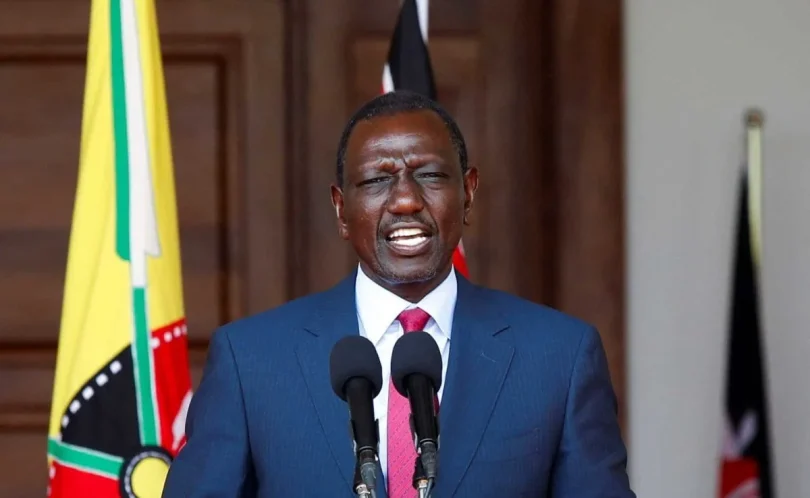
The African Regional Organisation of the International Trade Union Confederation (ITUC-Africa) has warned Kenyan President William Ruto against making African migrant traders scapegoats for the country’s economic challenges, saying unemployment, inequality and informality should not be blamed on nationality.
ITUC-Africa’s warning followed recent remarks by President Ruto directing action against foreign nationals engaged in hawking and certain small-scale businesses in Kenya, with the Kenyan leader arguing that such activities should be reserved for Kenyans.
In a statement signed by its General Secretary, Akhator Joel Odigie, the regional trade union body said the remarks had generated anxiety among migrant communities, with reports that hundreds of Burundians subsequently sought travel documents to return home, while some foreign nationals reported threats and growing hostility.
ITUC-Africa described the development as an “early-warning alert”, cautioning that political statements distinguishing Africans as unwanted foreigners could fuel discrimination, profiling, harassment and violence.
The organisation said, “economic hardship must not be explained through nationality, nor should migrant workers and African traders become convenient scapegoats for structural problems of unemployment, inequality, informality and inadequate social protection.”
It acknowledged Kenya’s right to regulate employment, immigration and commercial activities, as well as protect Kenyan workers and small enterprises from unlawful or unfair practices.
However, the union body stressed that enforcement should be based on evidence and applied fairly to individuals rather than entire communities.
“Governments should rely on evidence, enforce laws fairly and individually, and address abuses without criminalising or stigmatising entire communities,” it said.
ITUC-Africa also expressed concern that the controversy could have implications beyond Kenya, particularly for Africa’s continental integration agenda and the implementation of the African Continental Free Trade Area (AfCFTA).
According to the organisation, AfCFTA is founded on the ambition of creating a single African market, facilitating the movement of persons, increasing intra-African trade and building an integrated and prosperous continent.
It noted that President Ruto himself had recently argued that AfCFTA policies should make it easier, rather than harder, for micro, small and medium enterprises to participate in cross-border trade.
The labour body therefore warned that rhetoric encouraging Africans to regard one another as economic threats could undermine the broader Pan-African integration project.
“For ITUC-Africa, this constitutes an early-warning alert,” the statement said, stressing that Africa had witnessed enough episodes of xenophobia and Afrophobia “to know that such rhetoric must never be treated lightly.”
The organisation also took note of a subsequent clarification by Kenya’s Foreign Affairs authorities that Ruto’s remarks should not be interpreted as a blanket prohibition on foreigners and that documented foreign nationals with the requisite permits and licences remained legally protected.
While describing the clarification as important, ITUC-Africa cautioned that the effects of exclusionary political rhetoric could extend beyond subsequent government explanations.
It said, “once exclusionary rhetoric enters public discourse, its consequences cannot always be controlled through subsequent explanations.”
ITUC-Africa consequently called on the Kenyan Government to ensure that any enforcement measures against foreign traders and workers were lawful, proportionate and non-discriminatory.
It further urged the authorities to protect migrant workers and traders from intimidation and violence and to reaffirm Kenya’s commitment to Pan-African solidarity, regional integration and AfCFTA.
The organisation concluded with an appeal against the treatment of Africans from other countries as outsiders, saying, “Africa is one. Africans must not become strangers to one another on their own continent.”
It added that Africa’s integration should not produce a situation “in which goods and capital cross borders more easily than African workers, traders and families.”