
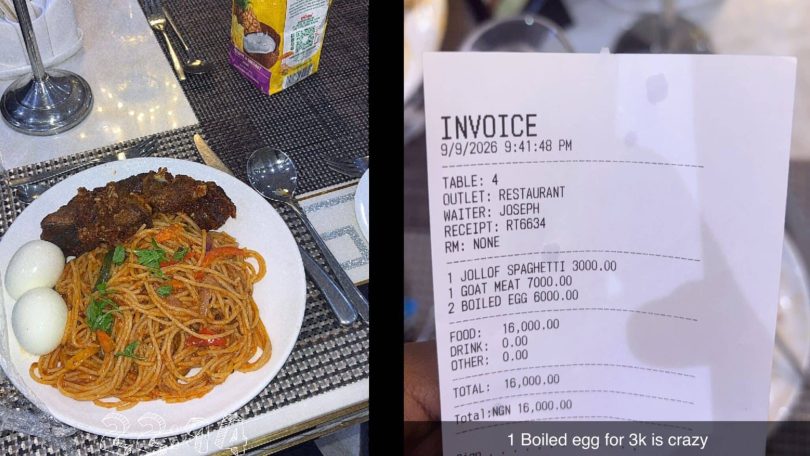
A man has sparked reactions on social media after sharing a receipt showing that two boiled eggs were sold for ₦6,000 at a restaurant.
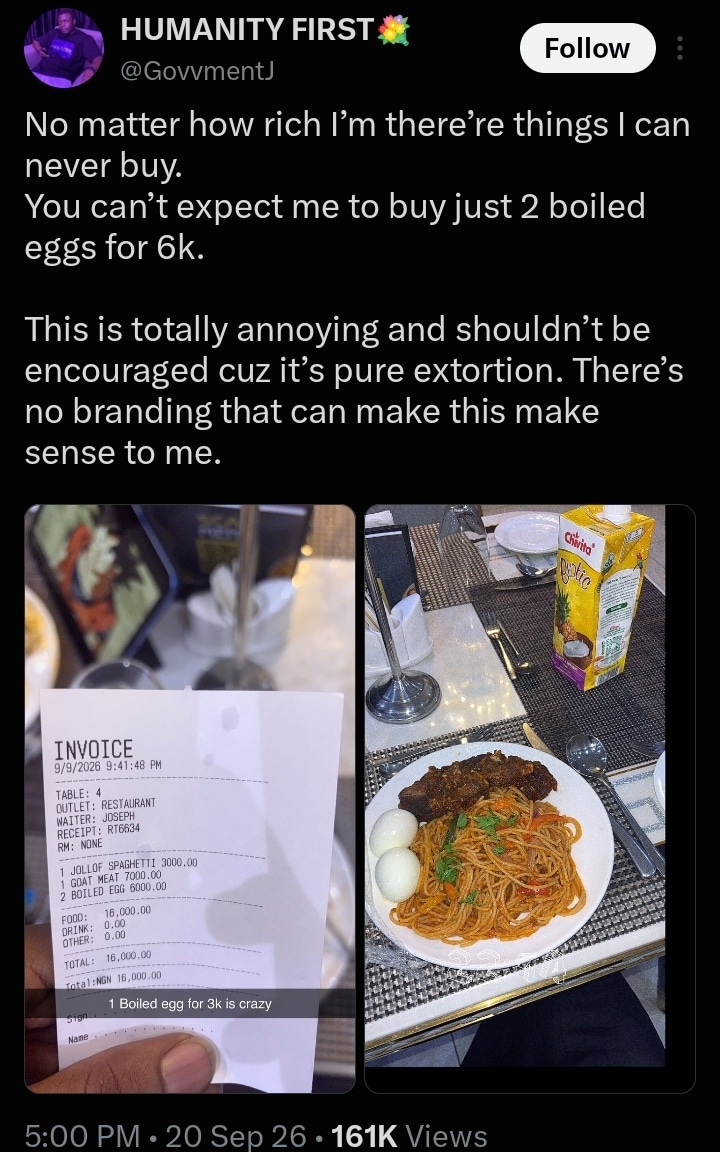
In a post on X (formerly Twitter), the man expressed his disbelief over the price, describing it as excessive and arguing that no level of branding could justify the cost.
He wrote: “No matter how rich I’m there’re things I can never buy.
“You can’t expect me to buy just 2 boiled eggs for 6k.
“This is totally annoying and shouldn’t be encouraged cuz it’s pure extortion. There’s no branding that can make this make sense to me.”
Public reactions
... generated various reactions from social media users, with some questioning the restaurant’s pricing while others offered explanations for the high cost of food and services in restaurants.
Rotexas wrote: “I’ll calmly call them to remove it and add another goat meat and whatever that 7k meat is.”
Jodeofor wrote: “Including plus that goat meat, na heaven them rear the goat? I no fit chop for there! Cooked egg wey them dey sell #250 na em I go pay 3k? Abeg pass my table I no chop.”
No_virgins_here wrote: “I no wan talk about the egg sef…normally I dislike spaghetti…this holiday wey pass…na so I go buy for my niece the same 3k e pain me ehn…3k noodles wey go full pot nai I go go buy small spaghetti 3k…spag and noodles no be the same…but except I first ask if not 3k 4/1 egg.”
Nawam wrote: “You will get used to it. That’s how bottled water is sold in most restaurants. When Eva bottled water sold for one hundred Naira, it cost two thousand five hundred Naira in most places. Nigerians know how to endure pain.”
Ela attributed high restaurant prices partly to the cost of commercial spaces, including rent, short leases and service charges.
She wrote: “Apart from greed and opportunistic pricing, a major structural driver of unreasonable prices is the cost of commercial space. Exorbitant rents, short leases, service charges and other occupancy costs are squeezing SMEs, forcing many to raise prices, cut jobs or, in some cases, shut down altogether.
“This is no longer just a business problem; it is a commercial-sector concern. Government must urgently examine and regulate the wider ecosystem of commercial rents, leases, levies and occupancy charges across hospitality, retail and other SME-dependent sectors.
“The goal is not price control, but firm regulation against exploitative commercial real-estate practices that undermine enterprise survival and ultimately burden consumers.”
Chief_priest wrote: “If Chinese enter Nigeria, start to dey sell with better aesthetics and quality…, also lower and reasonable prices. They will start protesting that they are taking over their business.”