
The Federal Neuro-Psychiatric Hospital (FNPH), Kaduna, says about half of the patients receiving treatment at the facility are presenting with substance-abuse-related disorders.
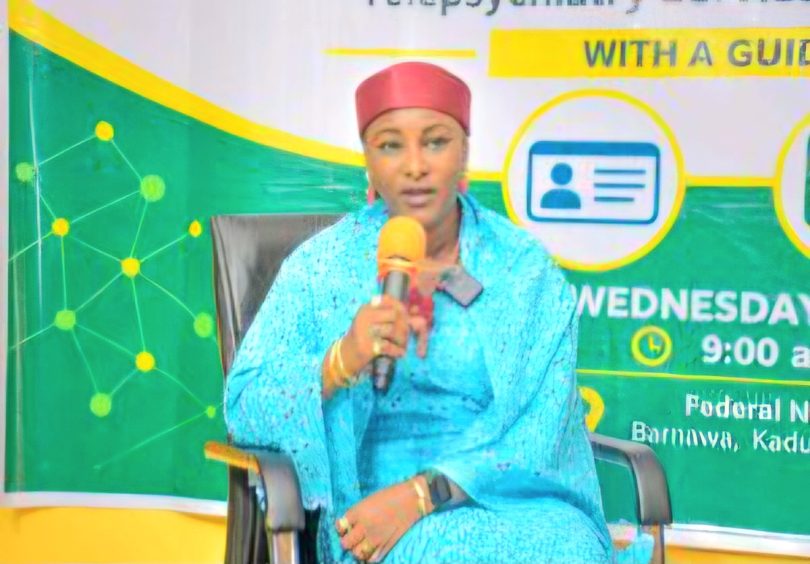
The Medical Director of the hospital, Prof. A’ishatu Yusha’u-Armaya’u, disclosed this on Wednesday at a media parley in Kaduna to unveil the hospital’s new patient cards, telepsychiatry services and other digital innovations.
Yusha’u-Armaya’u said substance-use disorder “is recognised” as a mental health condition under both the International Classification of Diseases (ICD-11) and the Diagnostic and Statistical Manual of Mental Disorders (DSM-5).
She said the increasing number of acute substance-abuse cases necessitated the creation of a dedicated toxicology ward to provide specialised care for such patients.
According to her, the toxicology ward was introduced after the hospital observed challenges associated with mixing acute substance-abuse patients with other psychiatric patients.
She said such patients could become highly aggressive during the acute stage of withdrawal and craving, resulting in incidents of attempted escape and damage to hospital facilities.
“On inception in 2022, there was a ward that was being renovated. We changed the concept of the renovation and turned it into a toxicology ward,” she said.
The medical director explained that the ward was specially designed to prevent patients from escaping while receiving treatment, adding, “it currently has a capacity of 52 patients.
“Patients are usually kept in the toxicology ward for a maximum of one month before being assessed for possible admission into the hospital’s Drug Abuse Treatment, Education and Rehabilitation (DATER) programme.”
Yusha’u-Armiya’u said admission into the rehabilitation programme was generally based on patients’ consent, although the Mental Health Act 2021 provides for involuntary admission where a patient poses a danger to themselves or others.
She said: “The hospital’s DATER ward currently has a capacity of about 42 patients and operates a structured four-month treatment programme involving doctors, nurses, psychologists and social workers.”
According to her, the hospital currently has four to five addiction specialists among its trained doctors and nurses, supported by other professionals working as a therapeutic team.
On the integration of mental health services into primary healthcare, Yusha’u-Armiya’u said mental health was already part of the primary healthcare package but remained insufficiently available at the grassroots level.
She said the hospital had therefore partnered with relevant Kaduna State agencies to take mental health services closer to communities.
The medical director said the hospital had trained personnel from 19 general hospitals in Kaduna State on the Mental Health Gap Action Programme (mhGAP), while additional training had been extended to 23 centres of excellence across the state.
She said the centres commenced implementation in August and recorded 1,075 patients within their first month of operation.
According to her, about 75 per cent of the patients were female, with epilepsy, depression and perinatal psychosis constituting the majority of cases recorded.
Yusha’u-Armaya’u added that substance-abuse cases were also being identified and managed through the community-based approach.
She said the strategy would enable the hospital and its partners to focus more on awareness, prevention, promotion of mental health and destigmatisation, while reducing pressure on limited inpatient facilities.
The MD said the hospital was also working to renovate additional wards, including 54-bed and 44-bed facilities, to expand its capacity to provide psychiatric and substance-abuse treatment.
Yusha’u-Armaya’u said the hospital would continue to combine clinical services with research, training and community-based interventions to improve mental healthcare delivery.
The media parley formed part of activities marking the unveiling of the hospital’s new patient cards, telepsychiatry services and other digital innovations aimed at improving access to psychiatric care. (NAN)