
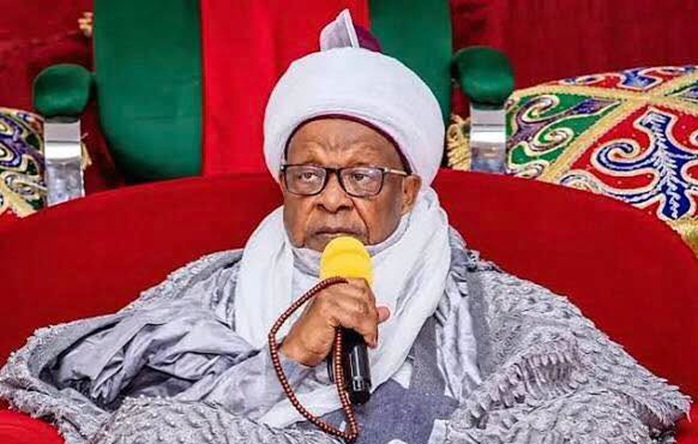
The Katsina Emirate Council has advocated the establishment of a dedicated government fund to support and rehabilitate orphans who have become victims of drug abuse.
The Magajin Garin Katsina, and District Head of Katsina Town, Alhaji Aminu Abdulmuminu-Kabir, made the call on Wednesday when the campaign team against drug abuse and domestic violence paid a road show visit to his office.
Abdulmuminu-Kabir represented by Abdu Iliyasu, Wakilin Kudu, described the initiative by the Speaker of the House of Representatives, Tajudeen Abbas, and the National Orientation Agency (NOA) as a welcome development.
He assured them of the emirate council’s support and commitment to the campaign, noting that orphans and vulnerable children who had lost their parents and lacked adequate care and supervision were particularly exposed to negative influences, including drug abuse.
According to him, the government should establish a special intervention fund to provide such children with care, education, rehabilitation and other necessary support to help them overcome addiction and rebuild their lives.
He urged guardians and relatives to pay adequate attention to the upbringing and welfare of orphaned children, while calling on parents to monitor their children’s activities and protect them from negative peer influence.
The Magajin Gari reiterated the emirate council’s commitment to working with government and relevant stakeholders to tackle drug abuse and domestic violence through sustained public enlightenment and community engagement.
Later at a town hall meeting, Abbas represented by his Senior Legislative Assistant, Najib Yanduna, described drug abuse and domestic violence as serious societal challenges threatening the peace, stability, health and development of communities.
The speaker of the House of Representatives noted that drug abuse, particularly among young people, could lead to addiction, mental health challenges, criminal behaviour, unemployment and the loss of valuable human potential.
Abbas stressed that young people represented the nation’s future and must not be allowed to lose their dreams, ambitions and opportunities to substance abuse.
He also condemned domestic violence, saying physical, emotional, psychological, sexual and economic abuse had devastating consequences for victims, children and society.
“The home should be a place of love, protection, respect and understanding, not fear, intimidation or abuse.
“We must therefore promote a culture of peaceful conflict resolution, mutual respect, gender equality and responsible family relationships,” he said.
The speaker reaffirmed the commitment of the national assembly to supporting policies, legislation and institutional interventions to protect vulnerable persons strengthen families and combat substance abuse.
He urged traditional institutions, religious organisations, parents, teachers, community leaders and government agencies to intensify public education on the dangers of drug abuse and domestic violence.
He also advocated increased investment in education, vocational training, entrepreneurship and other productive engagements to provide young people with positive alternatives.
Earlier, the Director-General of the National Orientation Agency (NOA), Malam Lanre Issa-Onilu, represented by Mr David Akoji, Director of Special Duties and State Operations, said building a peaceful society required the collective commitment of all stakeholders.
Issa-Onilu said traditional values such as discipline, respect, responsibility, compassion, honesty and community solidarity must be preserved to address emerging social challenges.
He warned that drug abuse and domestic violence could undermine family stability, national security and sustainable development.
“We cannot allow drug abuse to destroy the dreams of our people. We must not allow domestic violence to destroy the sanctity of families and our homes.
“We must not allow silence, indifference or misplaced tolerance to become accomplices to the suffering of innocent citizens,” he said.
The NOA director-general called for communities where young people were encouraged to pursue productive lives, and where women and children were protected from violence and abuse.
He also advocated peaceful conflict resolution within families and adequate support, counseling and rehabilitation for people struggling with substance dependency.
According to him, national security begins with personal discipline, family stability and responsible communities.(NAN)