
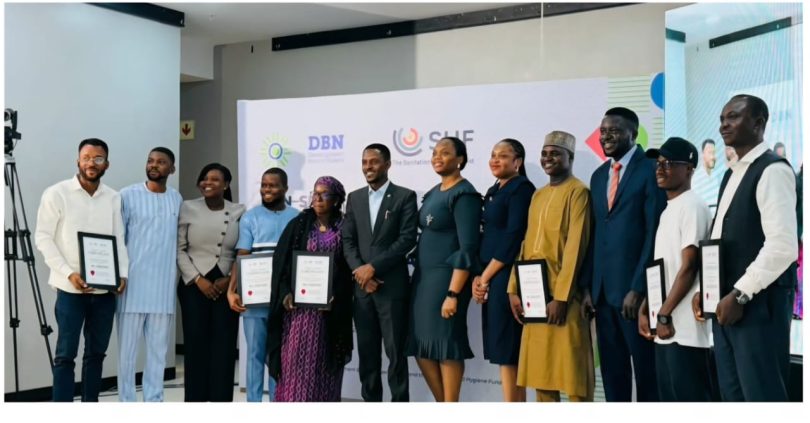
Hundreds of sanitation and hygiene entrepreneurs across Nigeria are now better equipped to access finance, and lenders are better prepared to serve them, after the first phase of a programme by the Development Bank of Nigeria (DBN) and the United Nations Sanitation and Hygiene Fund (UNSHF). Partners came together today to mark these results, as the programme works to build a bankable sanitation and menstrual health market in Nigeria.
Over five months, more than 1,000 enterprises applied and 333 enterprises across all six geopolitical zones were trained in seven workshops.
They learned the skills lenders look for: separating business and personal accounts, keeping records, registering the business and presenting a clear case for finance.
The programme built capacity on both sides of the market, making MSMEs and lenders better prepared to access and provide finance. On the MSME side, enterprises were trained in finance management, understanding the business of sanitation and business formalisation.
On the lender side, the ten participating financial institutions were better equipped through the workshops to navigate sanitation sector financing.
Maryesther Ezeadi, Head of Credit Operations and Collections at DBN, said the programme went beyond proving the concept. “By preparing the demand and supply sides together, a well-run enterprise can attract funding because the financiers are ready,” she said. “The sanitation and hygiene sector is a national priority that cannot fail.”
Elisha Sulai of UNSHF said the Fund, the only United Nations organisation established to address sanitation and menstrual health challenges, supported phase one through a grant to DBN. Closing the sanitation gap, he said, requires the private sector to work with government, and financial institutions to work with partners such as DBN.
Participants say the change is already visible. One enterprise owner now tracks cash flow, records income and expenses; another has begun preparing a bid for a major market construction project; a third is expanding to new council wards. Enterprises and lenders reported that the matching sessions helped them “speak the same language”.
Grants for 24 enterprises
As a springboard for the enterprises’ growth, 24 grants of up to ₦1 million each were presented, four in each of the six geopolitical zones, funded by UNSHF through DBN.
Grantees were selected by their performance in a post-training assessment, and eight of them pitched their solutions at the event, from public toilets to hygiene supplies and menstrual health.
Funds are for strengthening the business, such as digital systems, record-keeping, registration and compliance, and DBN will monitor their use.