
There is a scene that plays out in thousands of Nigerian homes every evening, but it never makes the headlines.
A mother returns from the market after spending hours under the scorching sun selling tomatoes. A father comes home exhausted from riding a commercial motorcycle through chaotic traffic. Their children sit quietly in one corner of the room, reading borrowed textbooks under a rechargeable lamp because electricity has once again disappeared.
For many of these families, education is the one investment they still refuse to abandon. They may skip meals. They may postpone hospital visits. They may wear the same clothes for years. But somehow, they keep finding ways to keep their children in school because they believe education remains the last honest escape from poverty.
Then comes another bill.
Not school fees.
Not transport.
Not textbooks.
Not uniforms.
Not feeding.
This time, it is the price of simply being allowed to write the examination that determines whether years of classroom learning will count for anything.
Beginning in 2027, candidates sitting the West African Senior School Certificate Examination (WAEC) and the National Examinations Council (NECO) examinations will pay ₦50,000 each, a steep jump from the current ₦27,500.
Government officials argue that the increase reflects rising operational costs. Printing examination papers is more expensive. Logistics now cost more. Security has become costlier. Technology requires investment. Inflation has spared no institution.
On paper, the explanation appears reasonable.
In reality, something much bigger may have been overlooked.
The policy was calculated using the economics of running examinations. It was not calculated using the economics of surviving as an average Nigerian.
That difference changes everything.
For many middle-class families, ₦50,000 may simply mean adjusting the monthly budget.
For millions of low-income households, however, it represents a painful decision that no parent should ever have to make.
Do you register one child and ask another to wait until next year?
Do you borrow money at high interest?
Do you sell your only motorcycle?
Do you postpone rent?
Do you skip feeding properly for weeks?
Or do you quietly tell your child, “Let’s wait until things get better”?
In Nigeria, “next year” has ended countless dreams.
The danger in this policy is not that examination fees have increased. Governments across the world review fees from time to time.
The real danger is that the increase assumes every student begins the race from the same starting line.
They do not.
Some students attend schools with modern laboratories, stable electricity, digital classrooms and private lesson teachers.
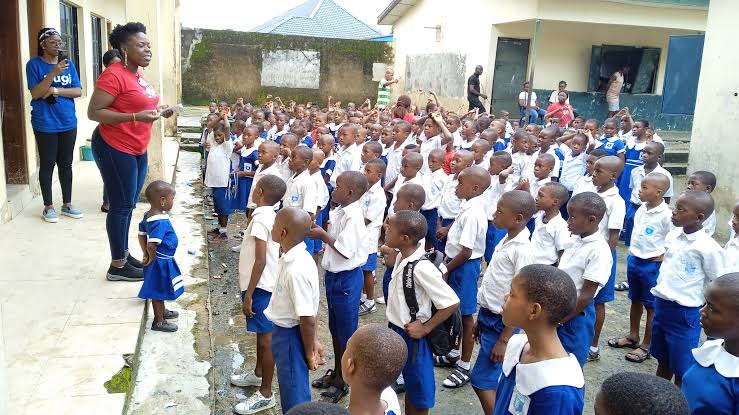
Others study in overcrowded classrooms with broken chairs. Some have never entered a functional laboratory before being asked to write practical examinations. Many trek several kilometres to school every morning before returning home to help parents sell food or work on farms.
Yet, when examination season arrives, they are all handed the same invoice.
Equality in billing does not always translate to fairness in reality.
The irony becomes even more striking when viewed against Nigeria’s education crisis.
For years, governments at every level have spoken passionately about reducing the number of out-of-school children. International organisations have repeatedly identified Nigeria as one of the countries with the highest population of children outside the classroom.
Countless summits have been organised.
Policies have been drafted.
Committees have been inaugurated.
Campaigns have been launched.
Yet, with one signature approving a fee increase, another financial barrier quietly appeared between vulnerable children and the certificates they need to move forward.
Sometimes children do not leave school because they dislike education.
Sometimes they simply run out of money before they reach the finish line.
Perhaps the most fascinating twist in this conversation came not from critics of the policy but from history itself.
As Nigerians debated the new fees, an old video of President Bola Tinubu resurfaced online.
In the clip, recorded during his time as governor of Lagos State, Tinubu explained why his administration decided to pay WAEC fees for students.
His reasoning was remarkably simple.
Parents could not afford them.
He recalled meeting schoolchildren hawking goods after school and asking himself a question that still echoes today: if these children cannot afford examination fees, how will they become doctors, engineers or pharmacists?
It was a practical observation rooted in everyday life.
The numbers have changed since then. Inflation has changed. Nigeria has changed.
But one reality has remained stubbornly the same.
Millions of parents still cannot afford the rising cost of educating their children.
Supporters of the fee increase are not entirely wrong.
Also Read: Justine Madugu leads Super Falcons into WAFCON training camp
Running nationwide examinations in today’s economy is significantly more expensive than it was a decade ago. Examination bodies cannot ignore inflation forever. Invigilators must be paid. Question papers must be secured. Technology must be upgraded. Credibility comes at a cost.
The real question, however, is not whether those costs exist.
It is who should bear them.
Should they be transferred almost entirely to families already battling soaring food prices, rising transport costs, higher electricity tariffs and increasing school expenses?
Or should government absorb more of the burden in recognition that education is not just another service, but one of the most important investments a nation can make?
This is where the conversation moves beyond WAEC and NECO.
A country does not become developed simply because it builds roads or bridges.
It becomes developed because it consistently removes obstacles standing between its young people and opportunity.
Every additional financial hurdle placed before education creates another child who may never finish school, another dream quietly abandoned, another potential scientist, teacher, entrepreneur or doctor lost, not because of a lack of intelligence, but because of a lack of money.
That is a cost no spreadsheet can accurately calculate.
And perhaps that is the biggest disadvantage hidden inside the new examination fees.
The Federal Government may have solved part of WAEC’s and NECO’s funding challenge.
But unless deliberate measures are introduced to protect students from poor and vulnerable households, Nigeria risks creating another generation that is qualified to dream, yet unable to afford the opportunity to prove it.
Because in the end, the true price of education is not always measured by what government spends.
Sometimes, it is measured by the number of children a nation quietly leaves behind.