
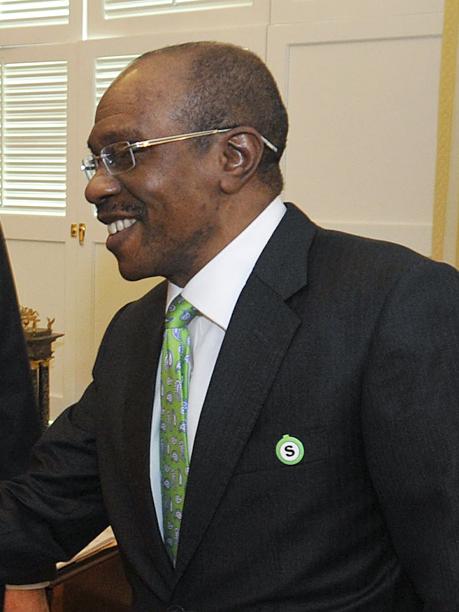
The high-stakes legal battle between John Omoile and his brother-in-law, former Central Bank of Nigeria Governor Godwin Emefiele, remains active and unresolved in the United States District Court for the Northern District of Texas, Dallas Division. On April 21, 2026, Judge Brantley Starr denied Omoile’s request for a status conference in the $200 million breach of contract case, ordering both parties instead to confer and submit a joint status report by June 5, 2026.
Despite the court’s order, the docket for case number 3:22-cv-02638 remains in a state of suspended animation. As of November 17, 2026, no joint status report has been filed, and there has been no substantive movement toward a trial or final judgment. The case persists as an unresolved, years-long dispute, punctuated by a mysterious, unindexed court entry from September 3, 2026, that leaves the status of this multi-million dollar litigation shrouded in procedural silence.
The silence surrounding this case is as deafening as it is suspicious. While the Nigerian media ecosystem often thrives on speculation, it has conspicuously steered clear of the gritty, documented reality of this Texas courtroom drama. This is not merely a family quarrel over shares, oil trading companies, and truck heads; it is a window into the financial entanglements of a man who once held the keys to Nigeria’s monetary policy. The fact that an American federal judge had to remind these litigants that a status conference is not a “grand slam”—a sharp, judicial brush-off—speaks volumes about the nature of the proceedings. It is a spectacle of two parties dragging their laundry through a foreign jurisdiction while the public is left to guess what truly transpired.
The core allegations are damning in their specificity. Omoile accuses Emefiele of leveraging his immense influence as a Zenith Bank titan and later as the chief of the Central Bank to stiff him on dividends, shares, and a failed oil venture. Conversely, Emefiele’s camp has dismissed the litigation as a “shakedown,” suggesting that the “gravy train” has hit a dead end. Regardless of who is lying, the public record paints a picture of a system that has allowed these allegations of fiduciary fraud and breach of contract to linger for years without a decisive judicial conclusion. Emefiele, a man who occupied one of the most powerful offices in Nigeria, is currently fighting to keep these damaging allegations in the realm of “untested” claims while the court docket sits stagnant.
What we are witnessing is the collision between private entitlement and public accountability. Whether this case is an elaborate attempt at extortion or a legitimate pursuit of justice by a disgruntled relative, the lack of media scrutiny is an indictment of the broader investigative culture. The Nigerian public deserves more than outdated, five-year-old headlines. They deserve the truth about whether the former architect of the nation’s economy utilized his position to facilitate personal gain or whether he is the target of a high-stakes, cross-border smear campaign. The judge has ordered them to speak to each other; it is high time the public saw exactly what they have to say.
Source: NaijaProbe