
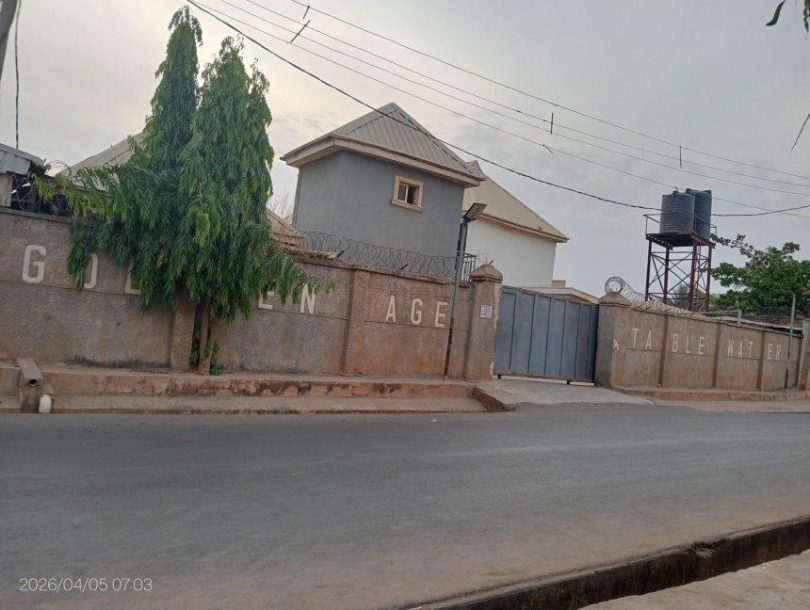
The Gidan Madara community on the outskirts of Minna, Niger State, has finally secured a judicial reprieve from the industrial encroachment that compromised their health for years. On August 17, 2026, Chief Magistrate Hadiza Hamza Imam ordered the Golden Age Hi-Tech and Production Company to cease all plastic-melting and recycling operations at its facility, granting the firm six months to relocate its machinery.
The ruling follows a prolonged legal battle between the company and local residents, supported by the Niger State Environmental Protection Agency (NISEPA). While the company remains permitted to continue its sachet and bottled water production, the court explicitly prohibited any manufacturing activities related to plastic and iron recycling on the premises during the relocation phase. This decision marks the culmination of a February 2024 petition in which residents cited severe health issues, including breathing difficulties and chest pains, directly attributed to the factory’s industrial emissions.
This saga serves as a textbook example of the regulatory negligence and corporate arrogance that often plague residential planning in Nigeria. A company that began as a harmless water producer in 2013 essentially morphed into a toxic neighbor in 2019, seemingly emboldened by a lack of oversight. For years, the residents of Gidan Madara were forced to act as their own environmental inspectors, pleading for government intervention while enduring what they described as unbearable noise and chemical odors that effectively turned their homes into a hazard zone.
The hypocrisy of the corporate response is highlighted by the CEO’s dismissive attitude. While locals recount a litany of respiratory crises—and even report deaths they link to the factory’s fumes—the company’s leadership has consistently dodged accountability. The attempt by Golden Age Hi-Tech to seek an 18-month grace period to keep polluting while “preparing to move” speaks volumes about their regard for the welfare of the community. It is a classic move to prioritize profit margins over the lungs of those living behind their walls.
The scientific evidence, though cautious in its attribution, paints a damning picture. An independent air quality assessment conducted in April 2026 recorded particulate matter (PM10) levels as high as 79 micrograms per cubic meter—well above the World Health Organization’s 24-hour safety guidelines. When companies set up high-intensity industrial machinery in residential neighborhoods, the resulting health consequences are not a matter of “allegation,” but a predictable outcome of poor urban governance and weak environmental enforcement.
For the residents of Gidan Madara, the court order is a victory, but it is also a cautionary tale. NISEPA’s call for citizens to “monitor compliance” and report violations essentially shifts the burden of policing back onto the victims. It highlights a recurring systemic failure where the state, after finally acknowledging a violation, expects the already overburdened citizenry to act as the frontline for enforcement. Without rigorous, proactive monitoring by the authorities, the court order is merely a piece of paper. The people of Gidan Madara should not have to live in fear of their next breath, nor should they be forced to play the role of watchdogs against a company that has already demonstrated a clear disregard for the community’s right to a livable environment.
Source: NaijaProbe