
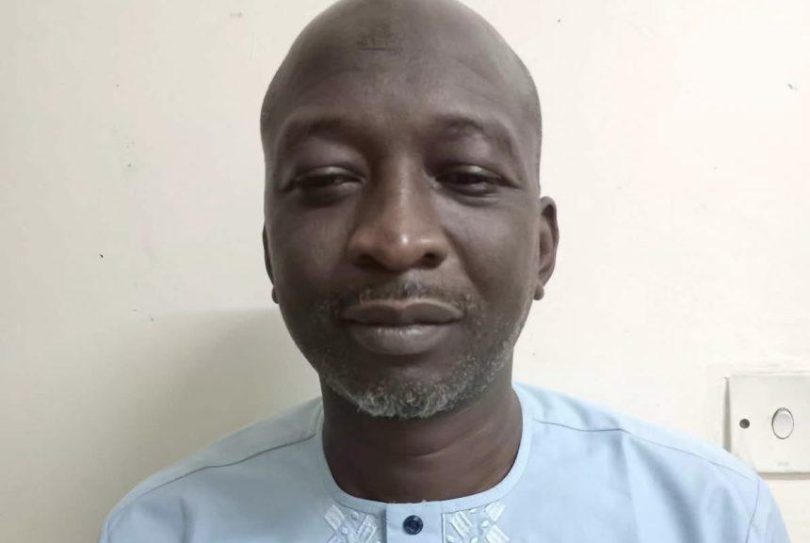
The Economic and Financial Crimes Commission (EFCC) has officially arraigned Abdulkadir Ndaliman before Justice Chinyere Nwecheonwu at the Federal High Court in Abuja. The defendant is facing a two-count charge for the alleged criminal misappropriation of N29.85 million, funds purportedly generated from the sale of a 2014 Toyota Corolla LE belonging to Major General Dagana Allu.
According to the charge sheet presented to the court on Thursday, the commission alleges that Mr. Ndaliman diverted N12.6 million in May 2026, followed by an additional N17.25 million in July 2026 from the vehicle sale. Following his plea of not guilty to the charges, which fall under Sections 311 and 312 of the Penal Code Act, the court granted him bail in the sum of N5 million with one surety. Trial proceedings are set to begin on February 1, 2027.
This case, while seemingly a straightforward matter of breach of trust, exposes the persistent rot of financial indiscipline that continues to plague trust-based transactions in Nigeria. It is a recurring tragedy: a high-ranking military official entrusts a significant asset to an individual, only to have that trust shattered through alleged financial chicanery. That such an amount—nearly N30 million—can be siphoned off in two separate tranches suggests a calculated exploitation of professional relationships that should have been governed by clear legal and moral boundaries.
The EFCC’s pursuit of this case is necessary, but the cynicism of the public is equally justified. We are witnessing a cycle where the mechanisms of justice move at a glacial pace, with the trial date set well into 2027. This delay, while perhaps typical of a burdened judiciary, often serves to dilute the urgency of accountability. When ordinary citizens observe how easily millions are allegedly misappropriated—and how long it takes for the law to catch up—it underscores a systemic fragility where contract enforcement is treated as a suggestion rather than a mandate.
The defense counsel’s move for bail is standard procedural posturing, yet it highlights the stark contrast between the defendant’s freedom and the victim’s loss. Whether Ndaliman is guilty or innocent remains a question for the court to resolve in 2027, but the circumstances of the case serve as a cold reminder of the rampant dishonesty that permeates daily commerce. Until the legal system moves with enough speed and severity to make the consequences of such actions outweigh the potential gains, trust will remain an expensive commodity that many in this country can no longer afford to trade.
Source: NaijaProbe