
The presidential campaign of President Bola Tinubu, who is seeking another four year term will be Ibadan, Oyo State, on Saturday, November 21 (today).
The event comes at a politically significant time, particularly as his relationship with Governor Seyi Makinde, who controls most of the state’s political machinery, has deteriorated.
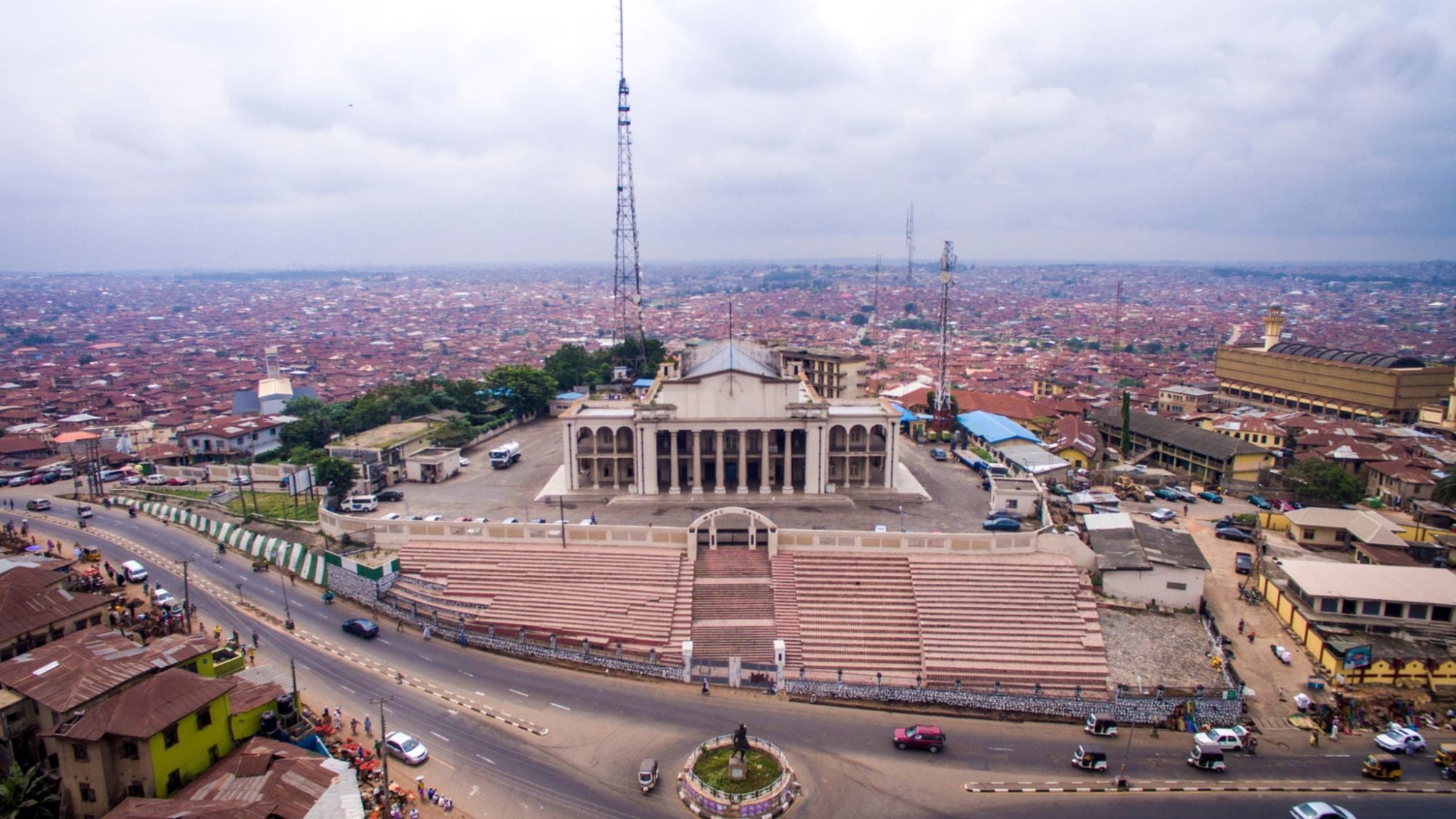
Tinubu is expected to lead top chieftains of the All Progressives Congress (APC), including Vice President Kashim Shettima, governors and members of the National Assembly, to the campaign rally at Mapo Hall in Ibadan.
The rally is part of the APC’s mobilisation efforts ahead of the January 16, 2027, presidential election and represents an important attempt by the President to consolidate his support in the South-West, his geopolitical zone.
According to the campaign itinerary, Tinubu is expected to meet traditional rulers from across the region before proceeding to Mapo Hall for the rally, particularly, the Ooni of Ife, Olubadan of Ibadanland.
However, Tinubu’s campaign in Ibadan is particularly significant because Oyo is governed by Makinde, who has emerged as one of his most vocal critics and is positioning himself as a presidential contender in the same election.
Makinde, who is the presidential candidate of the Allied Peoples Movement (APM), has openly declared his intention to challenge Tinubu’s re-election bid, setting the stage for an interesting political contest in the South-West.
The development is a remarkable departure from the political relationship between both men before the 2023 presidential election, when Makinde, despite belonging to the opposition Peoples Democratic Party (PDP), supported Tinubu’s presidential ambition.
How Makinde Helped Tinubu Win Oyo in 2023
During the 2023 presidential election, Makinde was one of the influential governors who played a controversial role in determining the political direction of the PDP.
He was a member of the G-5 governors, a group of five PDP governors who disagreed with the party’s presidential candidate, Atiku Abubakar, over the party’s leadership structure and the demand for its national chairman, Iyorchia Ayu, to resign.
The group, which included Nyesom Wike, Samuel Ortom, Okezie Ikpeazu and Ifeanyi Ugwuanyi, refused to support Atiku’s presidential ambition.
Makinde subsequently supported Tinubu, who contested the election on the platform of the APC.
The decision proved significant in Oyo State, where Tinubu secured a convincing victory over his major opponents.
According to results announced by the Independent National Electoral Commission (INEC), Tinubu polled 449,884 votes in Oyo, defeating Atiku, who secured 182,977 votes, while Peter Obi of the Labour Party received 99,110 votes.
However, the relationship between both politicians has since deteriorated, with Makinde accusing the President of failing to honour political commitments made before the 2023 election.
Makinde Accuses Tinubu of Breaking Political Agreement
One of the major issues contributing to the strained relationship between Tinubu and Makinde is an alleged written agreement concerning the formation of a government of national unity after the 2023 presidential election.
In an interview with ARISE News aired in November 2026, Makinde disclosed that his decision to support Tinubu was influenced by an agreement he claimed was signed before the election.
According to the governor, the understanding was that Tinubu would form an inclusive government that would accommodate different political interests following his victory.
Makinde insisted that the agreement still existed and accused the President of failing to fulfil the commitment.
“I still have the agreement with us,” he declared.
He further stated: “I’ve had a certain experience with him, you know, where agreement was signed. And he didn’t keep to it.”
The governor questioned whether the President had established the government of national unity that allegedly informed his support during the election.
“Tell us if the agreement was fulfilled. That’s wrong. Tell us if, not in terms of something personal, what has Nigeria got out of this? Are we having a government of national unity right now?” he asked.
Tinubu’s Alleged Silence During Oyo Kidnap Crisis
Another issue Makinde raised was what he described as the President’s failure to show sufficient concern during a major security crisis in Oyo State.
The governor recalled the abduction of schoolchildren and teachers in the state, who reportedly spent 56 days in captivity before their eventual release.
According to Makinde, he attempted to secure an audience with Tinubu during the incident because he expected the President to demonstrate concern about the situation.
He, however, claimed that the President neither contacted him nor responded to his efforts to reach him.
“I tried to see the President when our students and our children and their teachers were kidnapped, because I thought if any part of Nigeria is going through such a challenge, the President should be interested. Actually, I expected the President to call me,” he said.
Asked whether Tinubu eventually contacted him, Makinde responded: “He did not. No. Till tomorrow.”
Makinde’s Presidential Ambition Adds to Political Tension
Beyond the alleged broken agreement and security concerns, Makinde has also suggested that his presidential ambition may have contributed to the deterioration of his relationship with Tinubu.
During the ARISE News interview, the governor speculated that people might have informed the President about his intention to contest the 2027 election, potentially creating tension between them.
“Well, I can only guess. Yes, please. You know, people talk a lot. Maybe some people went and told him, ‘Look, Seyi may likely run against you.’ I don’t know. That may cause bad blood between us,” he said.
The governor has criticised the Tinubu administration’s economic policies, arguing that improvements in some economic indicators have not translated into better living conditions for ordinary Nigerians.
He has particularly questioned the implementation of petrol subsidy removal and foreign exchange reforms, insisting that the government failed to adequately prepare citizens for the consequences.
Makinde maintained that although he supported the need for economic reforms, their implementation should have included sufficient measures to protect Nigerians from hardship.
How Makinde Could Challenge Tinubu’s South-West Votes
Unlike the 2023 election, when Makinde supported his presidential ambition in Oyo, Tinubu now faces a sitting governor who has declared his intention to challenge him.
Although Tinubu retains considerable political influence in the South-West, Makinde’s position as governor gives him an opportunity to mobilise voters, political stakeholders and grassroots networks against the President, particularly in Oyo State.
The South-West is traditionally an important political base for Tinubu, who built much of his political career in Lagos and has maintained considerable influence among political leaders in the region.
However, the 2023 presidential election demonstrated that the region is not an automatic voting bloc for the APC.
In Lagos, Peter Obi defeated Tinubu, polling 582,454 votes against the President’s 572,606. In Oyo, Tinubu won with 449,884 votes, while Atiku secured victory in Osun State.
These results showed that voters in the region could support different presidential candidates depending on political alignments, personalities and local considerations.
Makinde could therefore become an important factor in determining how much support Tinubu receives in Oyo in 2027.
His influence, however, should not be overstated. Tinubu’s support base in the South-West extends beyond Oyo, with the APC maintaining strong political structures in Lagos, Ogun, Ondo and Ekiti.
Furthermore, several South-West governors have expressed support for Tinubu’s re-election, including Babajide Sanwo-Olu of Lagos, Dapo Abiodun of Ogun, Biodun Oyebanji of Ekiti and Lucky Aiyedatiwa of Ondo.
The APC has consequently accused Makinde’s presidential campaign organisation of attacking governors supporting Tinubu after it reportedly described the President’s political alliance as a “Nebuchadnezzar Coalition” and an “alliance of failed governors”.