
Hopes for a breakthrough in efforts to end the conflict between the United States and Iran suffered another setback on Monday as both countries accused each other of launching fresh attacks despite an already fragile ceasefire.
The latest escalation comes after weeks of difficult negotiations that have failed to produce an agreement capable of ending the war and restoring normal operations in the Strait of Hormuz, a critical route for global oil shipments.
Major disagreements continue to divide Washington and Tehran, particularly over Iran’s nuclear programme and the ongoing conflict in Lebanon, which Iranian officials insist must be addressed as part of any comprehensive settlement.
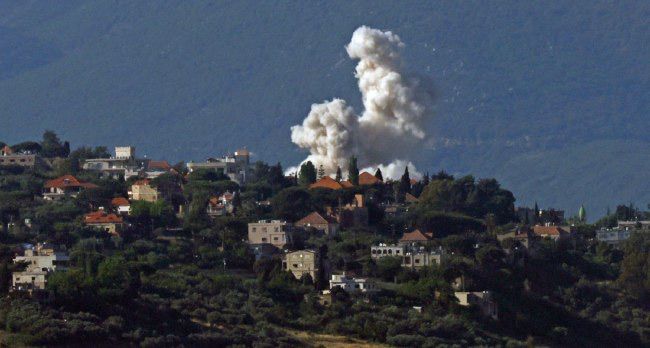
The renewed hostilities unfolded as Israel intensified its military campaign in Lebanon, with Prime Minister Benjamin Netanyahu declaring that Israeli forces would advance further into Lebanese territory.
The US military said it conducted what it described as “self-defense strikes” against Iranian radar installations and drone command facilities in southern Iran during the weekend. According to Washington, the operation was carried out in response to the destruction of a US MQ-1 drone and marked the third round of such strikes in a little over a week.
In response, Iran’s Revolutionary Guards announced that they had struck an “air base from which the attack originated” used by American forces, according to a report by state broadcaster IRIB. The location of the base was not disclosed.
The Iranian statement followed an announcement by Kuwait’s military that its air defence systems had intercepted “hostile missile and drone attacks,” though authorities did not identify the source of the threats.
Negotiations between Iran and the United States over Tehran’s nuclear activities had already been underway before the conflict escalated dramatically in February, when coordinated US and Israeli strikes reportedly eliminated a significant portion of Iran’s senior military leadership.
While Iran maintains that its nuclear programme serves only peaceful civilian purposes, the United States and its Western allies continue to suspect that Tehran is pursuing the capability to develop nuclear weapons.
Reports by The New York Times and Axios on Saturday indicated that US President Donald Trump had returned a revised and tougher proposal to Iranian officials, although details of the framework have not been made public.
Trump has repeatedly said that preventing Iran from obtaining nuclear weapons and reopening the Strait of Hormuz remain central objectives of any agreement.
“The one guarantee that I have to have is that there will be no nuclear weapons. They’ve agreed to that, and it was very interesting,” he told his daughter-in-law, Lara Trump, in an interview on her Fox News programme.
Reinforcing that position, Trump wrote on Truth Social late Sunday that the proposed agreement “states, very clearly, that Iran will not have a Nuclear Weapon”.
Iranian officials, however, remain cautious and have challenged several of Trump’s public claims, underscoring the significant gaps that still exist between the two sides.
“We will not approve any agreement until we are certain that the rights of the Iranian people have been upheld,” Iran’s chief negotiator, Mohammad Bagher Ghalibaf, said in a televised video message.
According to the Tasnim news agency, discussions over the draft agreement remain active, with “both parties regularly proposing amendments”.
Foreign Minister Abbas Araghchi also urged restraint regarding reports about the negotiations, saying that “until a clear conclusion is reached… everything that is being said now is speculation”.
Iran has insisted that access to $12 billion in frozen assets must be secured before serious negotiations can proceed. Iranian officials have also dismissed Trump’s earlier suggestion that Tehran’s stockpile of enriched uranium would be eliminated under a future deal, describing the claim as “baseless”.
The Trump administration is facing growing pressure to secure an agreement that would remove rival US and Iranian restrictions affecting movement through the Strait of Hormuz, a waterway regarded as one of the most important channels for global energy supplies.