
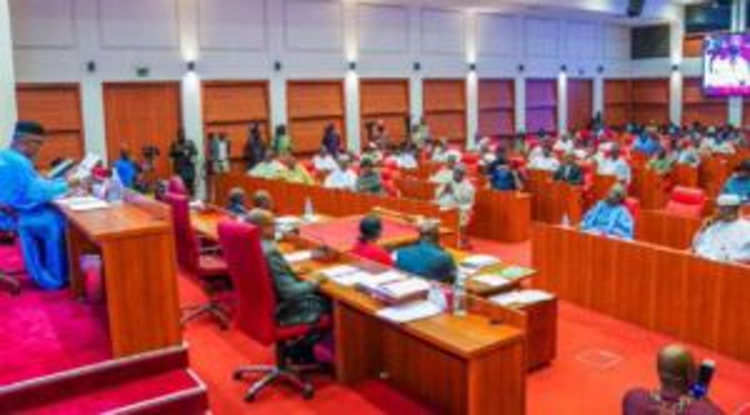
Fresh scrutiny awaits the controversial N1.3 billion budgetary provision for the Presidential Foreign Intervention Promotion Council (PFIPC) as senators reconvene for plenary on Tuesday.
The development has intensified scrutiny of the 2026 Appropriation Act after Presidency and civil service insiders disclosed that the alleged fraud slipped through several layers of government due diligence, allowing the council to operate with apparent legitimacy for more than a year.
According to multiple officials familiar with the matter, the alleged scheme began with a forged appointment letter purportedly signed by Femi Gbajabiamila, the chief of staff to the president. The document was reportedly accepted by officials at the Federal Civil Service Headquarters without proper verification, resulting in the allocation of office space to Prince Adeniyi Adeyemi Mathew at the Federal Secretariat in Abuja.
The office, insiders said, gave the council an official image that enabled it to engage government ministries, diplomatic missions, lawmakers and private organisations as though it had been legally established.
As questions mounted over how the agency secured a budgetary allocation, sources within the National Assembly disclosed that the N1.3 billion provision was never subjected to a formal budget defence before the Senate Committee on Establishment and Public Service.
One legislative source said the allocation was inserted alongside other Presidency-related budget items, thereby escaping detailed legislative scrutiny.
“The item was not presented independently for consideration. It came in with other Presidency submissions, so there was neither public defence nor proper oversight,” the source explained, adding that Senate leaders were expected to address the controversy during Tuesday’s sitting.
Presidency officials also traced the alleged fraud to a forged appointment letter that violated established procedures for federal appointments.
They explained that appointments to agencies under the Presidency are approved by the President following recommendations from the Secretary to the Government of the Federation (SGF), with appointment letters issued by the SGF rather than the Chief of Staff.
According to one official, the forged document exploited a bureaucratic loophole because civil service officers accepted the appointment letter without questioning whether the Chief of Staff possessed the constitutional authority to make such appointments.
Officials said once Adeyemi secured office accommodation within the Federal Secretariat, the council acquired an appearance of legitimacy that discouraged further scrutiny.
The Presidency further revealed that officials of the Nigerian Investment Promotion Commission first raised concerns after noticing that the council’s activities overlapped with the commission’s statutory responsibilities.
The matter was subsequently escalated to the Chief of Staff, who reportedly denied any knowledge of Adeyemi and alerted security agencies.
Investigators later discovered that the alleged operator had continued activities outside the Federal Secretariat after his office was sealed following his initial arrest.
Sources also suggested that Adeyemi may have leveraged the agency’s apparent official status to secure budgetary recognition despite the absence of any formal legislative engagement.
Meanwhile, the controversy has triggered widespread demands for transparency from civil society organisations and opposition groups.
The Socio-Economic Rights and Accountability Project has requested certified documents detailing how the allocation was approved, the officials who defended it before lawmakers, and whether the budget provision originated from the executive or was inserted during legislative consideration.
The Human and Environmental Development Agenda also called for a comprehensive investigation into the allocation process and whether public funds had already been released.
Former Vice President Atiku Abubakar described the controversy as evidence of deeper governance failures, urging the Federal Government to identify those responsible for creating and funding the disputed council.
Similarly, opposition groups, including a faction of the Peoples Democratic Party and the Kwankwasiyya Movement, demanded a full investigation into how an allegedly non-existent agency found its way into the national budget.
However, senior legal practitioners cautioned against linking the President’s Chief of Staff to the criminal proceedings without credible evidence, stressing that allegations alone were insufficient grounds for prosecution.
Adeyemi is scheduled to appear before the Federal High Court in Abuja on July 27 alongside two other suspects who remain at large, as investigators continue efforts to unravel the full extent of the alleged fraud.