
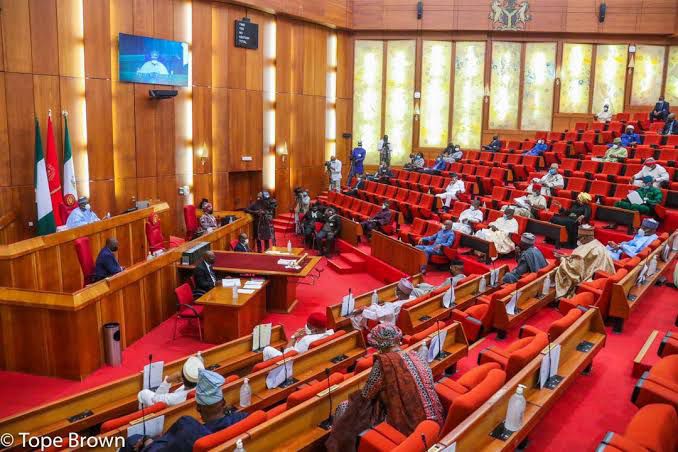
The Nigerian Senate has strongly condemned the ongoing xenophobic attacks against Nigerians and other African nationals in South Africa, describing the incidents as barbaric, unlawful, and a betrayal of African unity.
The Senate noted with concern that similar waves of attacks recorded in 1998, 2011, 2017, 2020, and now resurfacing in April 2026 have left many Nigerians displaced, traumatised, and forced to abandon their livelihoods, while raising fresh concerns about the safety and dignity of African migrants in South Africa.
During deliberations, some senators called for strong retaliatory measures, including the revocation of operating licences of South African companies in Nigeria, particularly MTN and DStv.
However, the Senate president described the move as uncalled for and warned against actions that could escalate diplomatic tensions.
Senate President Godswill Akpabio urged restraint, stressing that Nigeria would not resort to measures that could endanger existing bilateral relations.
He instead called for firm diplomatic engagement to secure justice for victims and ensure accountability for the killings.
Akpabio disclosed that Nigeria would transmit a strongly worded communication to the South African Parliament and also lead a high-level delegation comprising a joint ad hoc committee of the Senate and House of Representatives to engage South African lawmakers directly.
He added that the Minister of Foreign Affairs will be invited to brief the Senate on ongoing diplomatic efforts and the outcomes of engagements with the South African government.
The Senate further resolved that the delegation would formally visit the South African Parliament to express Nigeria’s strong displeasure and demand urgent action to stop the attacks.
Senator Adamu Aliero in his submission noted that Nigerian officials are already in South Africa and that ongoing diplomatic talks should be allowed to run their course.
He emphasized that while Nigerians in South Africa must be protected, retaliation must not descend into violence, noting that South African nationals live and do business in Nigeria and must also be protected under the law.
Senator Abdul Ningi expressed concern over alleged inaction by South African security forces during the attacks, questioning whether the violence was being tolerated or inadequately addressed.
He warned that continued killings could force stronger measures if diplomacy fails, adding that “words must also carry weight.
In a more heated remark, Ningi suggested that Nigeria must be ready to take the matter to South African territory if the killings do not stop, reflecting the anger in the chamber over the repeated attacks.
Supporting diplomatic firmness, Akpabio referenced actions taken by other African nations, noting that countries such as Botswana, Zimbabwe, and Ghana have moved to evacuate or protect their citizens during crises, urging Nigeria to adopt similar protective measures if necessary.
Senator Osita Izunaso echoed similar sentiments, stating that regional responses have shown seriousness in protecting citizens, and urged Nigeria to intensify diplomatic pressure while commending the Ministry of Foreign Affairs for ongoing engagements.
The resolution followed a motion sponsored by Aniekan Bassey, Chairman, Senate Committee on Diaspora and NGOs, calling for urgent national, diplomatic, and humanitarian action to defend the dignity, safety, and rights of Nigerians abroad.
Lawmakers stressed that the attacks violate the principles of the African Union and other international instruments guaranteeing free movement and protection of African citizens.
The Senate also expressed deep concern that the recurring attacks reflect a disregard for Nigeria’s historic role in the fight against apartheid.