
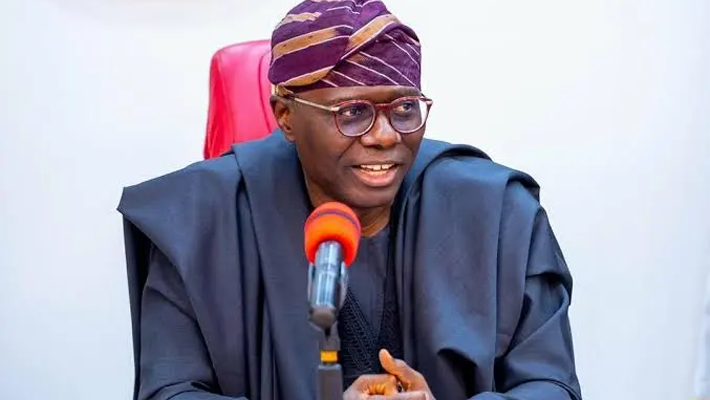
Lagos State Governor Babajide Sanwo-Olu has called on federal energy regulators to partner with state governments in accelerating Nigeria’s shift towards cleaner energy, as he inaugurated the country’s first integrated energy hub in Oshodi on Friday.
The facility, developed by Ibile Oil and Gas Corporation (IOGC), brings together multiple energy solutions under one roof—including premium motor spirit (PMS), automotive gas oil (AGO), liquefied petroleum gas (LPG), compressed natural gas (CNG), electric vehicle charging infrastructure, and solar power.
Describing the project as a milestone in Nigeria’s sustainable mobility drive, Mr Sanwo-Olu urged the Nigerian National Petroleum Company Limited, the Nigerian Midstream and Downstream Petroleum Regulatory Authority (NMDPRA), and other relevant agencies to remove bureaucratic bottlenecks hindering clean energy investment.
“Energy transition is real. The message to all federal agencies is simple: come and see what we have done here and support those ready to invest. Let us remove unnecessary delays and make the transition easier for Nigerians,” the governor said.
He commended President Bola Tinubu’s administration for fostering an enabling environment through the Presidential Compressed Natural Gas Initiative, which has encouraged the adoption of cleaner energy solutions.
Affordable transport remains critical to economic development, Mr Sanwo-Olu noted, adding that reducing energy costs would enhance business competitiveness and improve residents’ quality of life.
“When transportation becomes more efficient and affordable, businesses become more competitive, commercial activities expand, and residents enjoy a better quality of life. That is the vision this project represents,” he said.
The governor also praised IOGC’s management for demonstrating innovation that would attract investment, create jobs, and support economic growth.
Speaking earlier, IOGC Managing Director Temitayo Gbajumo described the hub as the first of its kind in Nigeria, designed to serve hundreds of vehicles daily. The PMS and AGO sections are expected to receive between 200 and 300 vehicles each day, while the CNG segment has a dispensing capacity of approximately 7,000 standard cubic metres daily.
Mr Gbajumo revealed that the corporation plans to establish 19 CNG stations across Lagos, with four already operational in Agege, Ikota, Ogudu, and Ojota. Four additional stations will become operational by October, with six more under construction, and completion targeted before the end of 2026. Future expansion will cover Epe, Ikorodu, and Badagry.
The energy hub also houses a cooking gas plant and a vehicle conversion centre, where motorists can convert their vehicles to run on CNG at subsidised rates of N700,000 for the kit and installation.
“We currently charge N700,000 for the conversion kit and installation. The objective is to make the transition to cleaner and more affordable energy easier for Lagos residents,” Mr Gbajumo said.
Public acceptance of CNG has continued to grow, he added, with existing stations operating near capacity—serving between 200 and 300 tricycles, cars, and trucks daily, with average gas utilisation of about 5,000 SCM per day.