
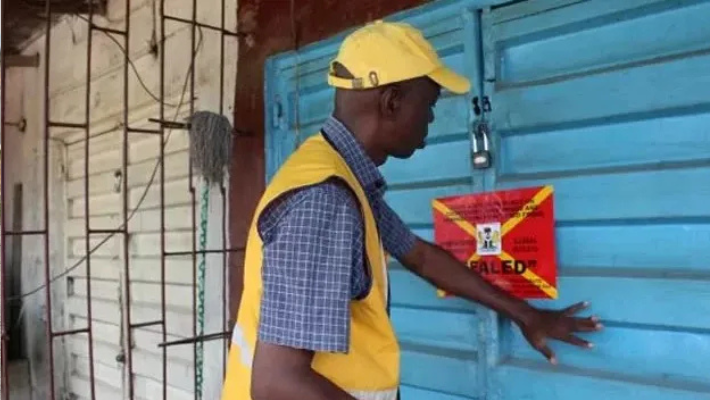
The Pharmacy Council of Nigeria has sealed 383 pharmaceutical premises in Ogun following a four-day enforcement exercise across 11 council areas.
The head of enforcement, Suleiman Chiroma, disclosed this on Friday in Abeokuta while presenting the outcome of the operation on behalf of PCN’s registrar, Ibrahim Ahmed.
Mr Chiroma said the exercise covered Abeokuta South, Abeokuta North, Odeda, Obafemi-Owode, Ifo, Ado-Odo/Ota, Sagamu, Ijebu-Ode, Ikenne, Ijebu North-East and Ewekoro LGAs.
He said 738 premises were inspected, comprising 277 pharmacies, 288 patent medicine stores, and 173 unregistered/illegal medicine outlets.
According to him, 383 premises were sealed, including 123 pharmacies, 87 patent medicine stores, and all 173 illegal outlets, while three compliance directives were issued.
“During the four-day operation, a total of 738 premises were visited, comprising 277 pharmacies, 288 patent medicine stores, and 173 unregistered/illegal outlets.
“At the end of the exercise, 383 premises were sealed for various offences. This comprised 123 pharmacies, 87 patent medicine stores, and 173 illegal outlets,” he said.
Mr Chiroma said the enforcement aligned with the federal government’s universal health coverage agenda by ensuring access to safe, quality-assured, and affordable medicines.
He warned that dispensing medicines by untrained persons and poor storage conditions contributed to treatment failure, antimicrobial resistance, and avoidable deaths.
According to him, 23 per cent of the inspected premises operated illegally, with most located outside the Abeokuta metropolis, highlighting the need for stronger rural regulatory oversight.
He said illegal premises accounted for 45 per cent of all facilities sealed, while only 56 per cent of licensed pharmacies fully complied with regulatory standards.
Mr Chiroma added that 70 per cent of inspected patent medicine outlets complied with regulations, while all illegal premises identified were sealed in line with the law.
He listed major violations to include operating without valid PCN licenses, poor medicine storage, unauthorised access to controlled medicines, obstruction of inspectors, and training apprentices.
Other offences included cooking within pharmaceutical premises, practices he said posed serious public health risks that could facilitate diversion of controlled medicines into criminal networks.
Mr Chiroma said the council would sustain strict monitoring and enforcement to ensure compliance with pharmaceutical regulations and protect the integrity of Nigeria’s medicine distribution system.
He urged Nigerians to purchase medicines only from PCN-licensed premises and verify the validity of outlets by checking for the display of current council licences.
“All premises engaged in the handling, storage, and dispensing of medicines will be subjected to stringent and continuous regulatory review. Violations of extant regulations shall be met with prompt and firm enforcement measures by the council,” he said.
Mr Chiroma reaffirmed the council’s commitment to ensuring safe, effective, and quality-assured medicines nationwide.
(NAN)