
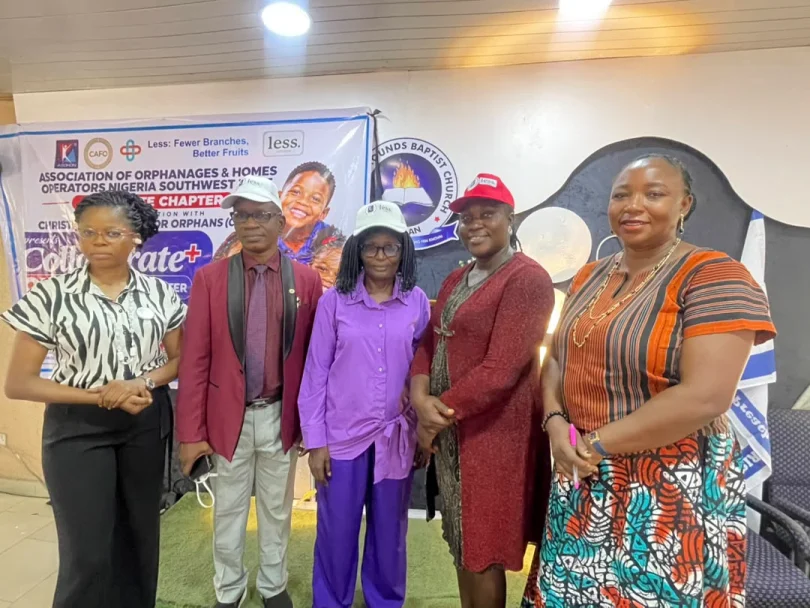
The Oyo State Government, in conjunction with the Association of Orphanages and Homes Operators in Nigeria (ASOHON), Oyo State Chapter, has called for stronger support systems for caregivers and families to ensure the safety, protection and proper development of vulnerable children.
The call was made at the 2026 COLLABORATE+ Oyo State Chapter programme organised in collaboration with the Christian Alliance for Orphans (CAFO) at Higher Ground Baptist Church, Akala Expressway, New Garage, Ibadan.
The programme, themed “Empowering Caregivers and Strengthening Families,” was held in line with CAFO’s 2026 theme, “LESS: Fewer Branches, Better Fruits.”
Delivering the keynote address on behalf of the Commissioner for Women Affairs and Social Inclusion, the Director of Child Welfare, Oyo State Ministry of Women Affairs and Social Inclusion, Mr Gbemileke Ojerinde, said strengthening caregivers and families remained critical to achieving better outcomes for children in alternative care.
Ojerinde, who represented the ministry at the event, said child welfare should not be regarded as the sole responsibility of government, stressing that families, communities, faith-based organisations, civil society groups, caregivers and other stakeholders all had roles to play.
He said: “If we want better outcomes for children, we must strengthen the people and families who care for them.”
According to him, while institutional care remained necessary in certain circumstances, the collective goal should be to ensure that children do not remain in institutions simply because the systems supporting their families have failed.
He explained that poverty, family conflict, neglect, disability, abuse, parental illness and loss of a parent could contribute to the separation of children from their families.
Ojerinde urged stakeholders to continually ask what could be done to strengthen families so that children could safely remain with, or return to, their families.
He said early identification of families experiencing difficulties, coupled with appropriate support and access to relevant services, could help prevent unnecessary separation of children from their families.
The Director also disclosed that the Oyo State Government had taken steps to strengthen the alternative care system, including the development of the Oyo State Alternative Care Guidelines.
He said the guidelines and other interventions were aimed at strengthening child protection, regulating and monitoring care arrangements, improving referral systems and promoting family-based care.
Ojerinde urged caregivers and operators of childcare institutions to ensure that the safety, development, emotional wellbeing, identity and long-term interests of children remained at the centre of their work.
Earlier, the Southwest Coordinator of ASOHON, Dr Rosemary Odigbo, said the 2026 COLLABORATE+ programme was designed to promote quality, effectiveness and greater impact in the care of vulnerable children and families.
Odigbo welcomed participants to the event and acknowledged the support of the organisation’s National President, Rev Dr Gabriel Oyediji, and Madam Sandra Chikan, who participated in the programme virtually from Atlanta, Georgia, United States.
She said the theme, “Empowering Caregivers and Strengthening Families,” underscored the importance of equipping caregivers and strengthening families as a means of providing better protection and support for children.
Also speaking, the guest facilitator, Barrister Emilia Oluwaseun Folajuwon-Banjo, identified safety, development, identity, participation, stability and non-discrimination as key considerations in the care and protection of children.
She said caregivers must provide safe environments, exercise appropriate supervision, prevent foreseeable harm and respond promptly whenever a child was exposed to risk.
“A child should never have to choose between being cared for and being protected,” she said.
Folajuwon-Banjo urged caregivers and operators of homes to create environments where children would feel safe, heard and respected while being prepared to thrive.
The Deputy State Coordinator of ASOHON, Oyo State Chapter, Abiola Adefolayan, said the programme was important in equipping caregivers with additional knowledge and skills needed to effectively care for children.
Adefolayan said children came from different backgrounds and often arrived at shelters with different forms of trauma, making specialised care and professional therapy essential to their recovery.
She appealed to the government to provide greater support for therapeutic services for children in care, noting that the cost of therapy could be burdensome for families and institutions.
She said: “Some children need to go through therapy sessions in order to recover and regain themselves. Government really needs to help us by providing therapists and supporting the cost of therapy for these children.”
Adefolayan also appealed to families who could no longer care adequately for their children not to abandon them, urging them instead to seek assistance from trusted relatives or appropriate care institutions.
She stressed that every child deserved to live a safe and dignified life, regardless of the circumstances that brought them into alternative care.
“No child is a mistake. No child is worth dumping on the street or in a dark place. Every child deserves to live a proper life and to express themselves,” she said.
She urged parents and families facing difficulties to seek help early, stressing that children were valuable and required collective efforts from families, government and other stakeholders to thrive.