
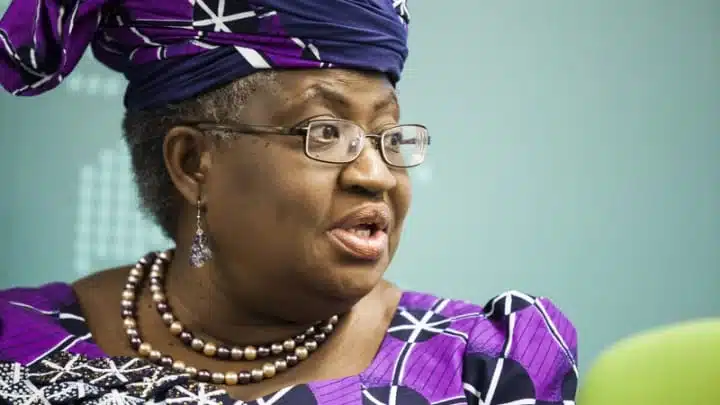
The Director-General of the World Trade Organisation (WTO), Dr Ngozi Okonjo-Iweala, has outlined a five-pronged economic roadmap through which Delta State can transform its abundant natural resources, strategic location and youthful population into a major industrial hub in Nigeria.
Okonjo-Iweala, who described herself as a “proud daughter of Delta State,” said the state possessed virtually everything required to emerge as one of Nigeria’s leading centres of industrial and economic activity.
She spoke at the Delta State Economic and Investment Summit held from August 3 to 5, 2026, where she delivered the keynote address on the prospects and strategies for attracting investment and accelerating economic growth in the state.
Her presentation provided perhaps the most detailed prescription yet for Governor Sheriff Oborevwori’s ambition of repositioning Delta as an industrial and investment destination.
According to the WTO chief, Delta must look beyond its traditional dependence on oil and government revenue and deliberately position itself within emerging global supply chains and the expanding African Continental Free Trade Area (AfCFTA) market.
She said global supply chains were undergoing major changes as countries and businesses sought to reduce excessive dependence on a few countries for critical products and services.
For Nigeria and Delta State, she said, the development presented a historic opportunity to attract investments into areas previously marginal to global trade.
Okonjo-Iweala said the AfCFTA, with a market of more than 1.4 billion people, further strengthened Africa’s investment prospects by creating a larger continental market with improved regional integration and harmonised standards.
“These twin opportunities—global supply chain diversification and African economic integration—should be at the heart of Delta State’s development strategy,” she said.
“We must think beyond Nigeria and position Delta State to compete internationally.”
The former Nigerian coordinating minister of the economy said Delta’s natural and geographical advantages gave it a head start in the race for industrialisation.
She listed abundant natural gas, transport infrastructure, fertile agricultural land, solid mineral deposits, seaports, export terminals and 49 tertiary institutions producing a large pool of young people as some of the state’s major advantages.
“As a proud daughter of Delta State, I firmly believe the state possesses everything required to become Nigeria’s next major industrial hub, standing alongside Lagos, Kano and Port Harcourt as a key driver of national economic growth,” she said.
But Okonjo-Iweala cautioned that natural resources and government budgets alone could not create prosperity.
She said the difference between potential and development was execution, urging the state government to prioritise infrastructure maintenance, institutional strengthening and careful investment decisions.
She particularly endorsed Delta’s plan to develop Special Economic Zones, describing SEZs as an effective industrial policy tool for governments operating with limited fiscal space.
According to her, properly developed economic zones could provide investors with quality infrastructure, efficient regulation and integrated services required to establish and expand businesses.
She urged Delta to learn from successful models such as the Lekki Free Zone, where infrastructure and investor-support systems had helped create employment opportunities for young Nigerians.
The WTO chief also identified Delta’s gas resources as a major competitive advantage, but warned that the state would need close collaboration with the Federal Government to provide reliable electricity, transportation, digital connectivity and efficient regulatory services.
She stressed that gas pipeline connectivity would be critical to powering industrial parks, electricity generation and mineral processing.
“Without reliable gas supply, many of the state’s industrial ambitions cannot be realised,” she warned.
Beyond industrialisation, Okonjo-Iweala urged the state to concentrate on a limited number of agricultural value chains where it had genuine comparative advantage.
Rather than spreading resources across too many sectors, she advised Delta to select two or three agricultural commodities and develop their complete value chains—from production and processing to quality standards, financing and export.
She also described the blue economy as another major opportunity waiting to be fully exploited.
According to her, Delta’s coastline and inland waterways could support aquaculture, fish landing sites, cold storage facilities, jetties and marine logistics.
She noted that Nigeria currently imports hundreds of thousands of tonnes of fish and fish products annually, creating an opportunity for Delta to replace a significant portion of those imports through local production.
The WTO chief, however, cautioned against unsustainable exploitation of the state’s marine resources, saying development of the blue economy should protect local fishing communities and preserve marine resources.
She urged Delta to participate in fisheries management initiatives involving relevant Federal Government agencies and research institutions.
Okonjo-Iweala further identified the state’s ports and export terminals as potential engines of a maritime economy.
With targeted investment, she said, Delta could develop ship repair facilities, marine logistics and other maritime services capable of turning the state into one of Nigeria’s leading marine logistics hubs while creating thousands of jobs for young people.
She also commended the state’s fiscal position, citing BudgIT’s 2025 State of States report, which ranked Delta sixth nationally in overall fiscal performance and second in debt sustainability.
She welcomed Governor Oborevwori’s position that the state would not rely on borrowing to finance its development agenda, stressing that fiscal discipline remained essential to sustainable development.
The August summit was the first major economic and investment summit organised by Delta State since its creation nearly 35 years ago and brought together business leaders, investors, development experts, government officials and other stakeholders.
For Oborevwori, the summit was intended to open a new economic frontier for the state as his administration pursues its development agenda and prepares for the 2027 governorship election.
For Okonjo-Iweala, however, the opportunity before Delta extends beyond politics.
Her message was that the state already possesses the raw materials for prosperity. What remains is to build the infrastructure, institutions, industries and value chains capable of converting those resources into jobs, exports and sustainable wealth.