
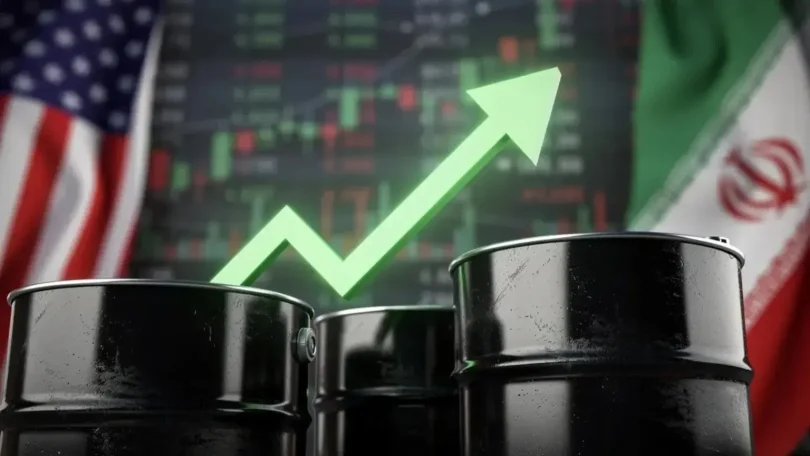
Global oil prices jumped sharply on Monday while stock markets fell after peace talks between the United States and Iran collapsed and Washington announced a blockade of the Strait of Hormuz, a key global shipping route.
Negotiations in Islamabad reportedly broke down over Iran’s nuclear programme, with the US delegation led by Vice President JD Vance accusing Tehran of refusing a final deal, while Iranian officials condemned what they called shifting demands and coercive tactics.
Following the collapse, US President Donald Trump announced what he described as a naval blockade of vessels entering or leaving the Strait of Hormuz, a vital passage through which about a fifth of global oil and gas flows.
Iran rejected the move, with Foreign Minister Abbas Araghchi saying the talks had been “inches away” from an agreement before what he described as US “maximalism” and a blockade derailed progress.
Oil prices reacted immediately, with Brent and West Texas Intermediate rising more than 6–8 percent at one point, both crossing the $100 per barrel mark amid fears of disrupted supply from the Middle East.
Equity markets across Asia and Europe declined, including in Tokyo, Hong Kong, Seoul, and London, as investors moved into safer assets amid growing geopolitical uncertainty and inflation concerns.
Iran’s military leadership warned that it maintained control over the Strait of Hormuz and cautioned against any escalation, while US officials said operations would focus on restricting Iranian-linked shipping activity.
Analysts warned that even if diplomatic talks resume, oil prices could remain elevated due to disrupted production and uncertainty over how quickly supply chains could stabilise.
The crisis has also heightened global inflation concerns, with economists noting that prolonged instability in the Middle East could keep energy prices high and maintain pressure on central banks worldwide.