
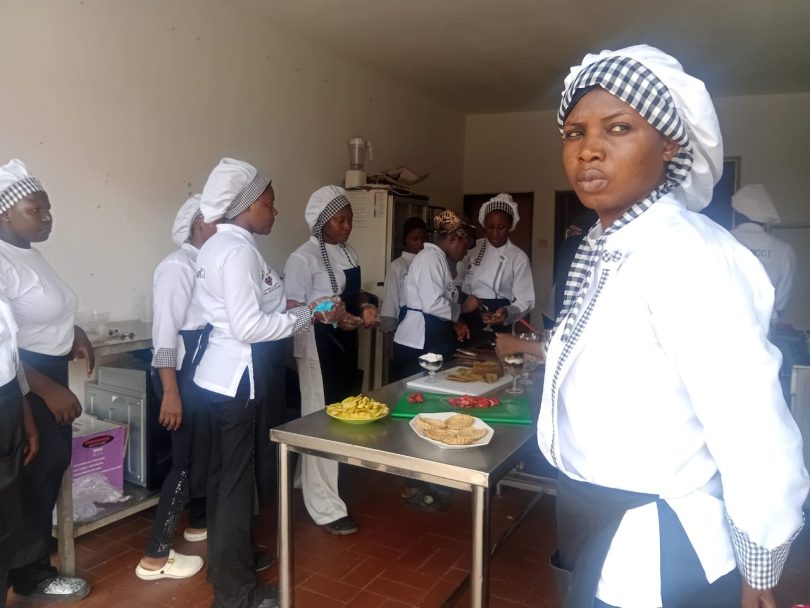
The Federal Government has trained and empowered 100 young Nigerians in culinary and hospitality skills under the Innovation, Development and Effectiveness in the Acquisition of Skills (IDEAS) initiative, part of efforts to address unemployment and bridge critical skills gaps in the service sector.
The six-month training programme was implemented by Masterminds Catering and Culinary Institute Academy in partnership with the Federal Ministry of Education and the World Bank. It combined classroom instruction with hands-on industry experience to prepare participants for employment and entrepreneurship opportunities.
Speaking at the programme’s closing ceremony in Abuja on Wednesday, the institute’s Chief Executive Officer, Khadijat Fashina, said the academy was established to respond to the shortage of skilled professionals in Nigeria’s hospitality and catering industry.
She explained that the training structure ensured participants acquired both theoretical knowledge and practical exposure needed to succeed in the sector.
“At the end of the programme, they are better positioned to either start their own businesses or become more employable,” she said.
Fashina added that the trainees were certified under the National Skills Qualification Framework to ensure standardised, competency-based recognition of their skills.
Also speaking at the event, the Special Assistant to the President on Arts, Culture, Tourism and Creative Economy, Ayomide Adeagbo, said the initiative reflects the government’s growing emphasis on skills-based employment in response to changes in the global labour market.
“The world is moving beyond traditional nine-to-five jobs. Skills and talent now matter a lot, and that is why the government is investing in programmes like this to empower young people,” he said.
Adeagbo noted that beneficiaries would receive post-training support through funding opportunities such as the Creative Economy Development Fund to help them establish and expand their businesses.
He stressed that policy backing and targeted financing remain essential to strengthening Nigeria’s creative and skills-driven economy.
In her remarks, the National Project Coordinator of the IDEAS-TVET initiative at the Federal Ministry of Education, Blessing Ogwu, urged participants to take advantage of the opportunity by focusing on entrepreneurship rather than relying solely on paid employment.
One of the beneficiaries, Patience Anaja, described the training as transformative, noting that it helped her convert a personal interest in cooking into a viable career path. She also called for expansion of the programme to enable more young Nigerians benefit from similar opportunities.
Nigeria continues to face high youth unemployment and a widening gap between available skills and labour market demands. In response, policymakers are increasingly prioritising technical and vocational education and training, particularly in sectors such as hospitality, tourism and creative services, which are considered key drivers of job creation in the country’s evolving service economy.