
An analysis of the 2024 financial records from the Nigerian Maritime Administration and Safety Agency (NIMASA) has revealed a staggering expenditure of over N5.16 billion across four specific administrative lines. Notably, these funds were allocated entirely to overhead costs, with no evidence of investment in critical maritime infrastructure, such as vessels, rescue assets, or safety equipment.
The lion’s share of this spending, totaling N4,520,775,100, was attributed to fueling power generators. Other significant expenditures included N320,050,000 for the maintenance of office equipment, N223,250,000 for stationery, and N100,000,000 designated for the London Dumping Convention. Together, these operational costs account for more than N5.16 billion, despite the agency’s core mandate being focused on maritime safety and regulation.
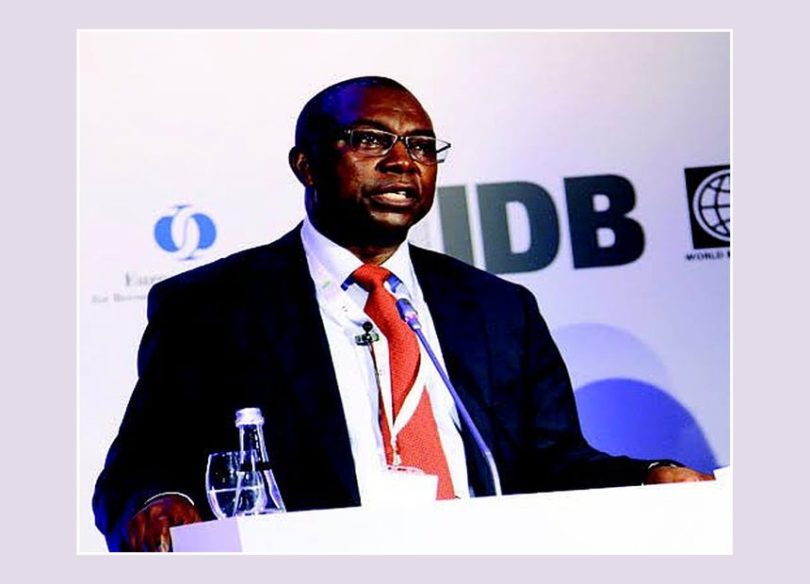
Dr. Dayo Mobereola, who assumed the role of Director-General in March 2024 following his appointment by President Bola Tinubu, oversaw the agency for the majority of the year. While the published records provide annual totals without specific transaction dates, the accounts reflect the financial activities maintained under his leadership.
The sheer volume of fuel consumption reported raises significant questions regarding accountability. With N4.52 billion spent on diesel, the agency effectively utilized an average of N12.35 million daily. Based on market prices throughout 2024, this sum accounts for approximately 3.28 million litres of fuel. To contextualize this volume, industry specifications suggest that such an amount of diesel could theoretically power a 100 kVA generator continuously for over 16 years, or a 500 kVA generator for more than three years. Without detailed logs matching these millions of litres to specific facilities, daily run-times, or generator capacities, the figures appear to lack the transparency required for institutional oversight.
The agency’s expenditure on the London Dumping Convention also remains opaque. The N100 million allocation is listed under the broad subject of marine pollution prevention with no accompanying documentation. It remains unclear whether these funds covered statutory contributions, travel for delegates, airfare, or consultancy services. Given that a return flight from Lagos to London typically costs between N1.2 million and N4 million, the lack of a detailed breakdown makes it impossible to verify the value received for this nine-figure sum.
Finally, the stationery budget presents similar challenges. At market rates, the N223.25 million allocated for stationery would cover the purchase of up to 44,650 reams of A4 paper. Distributed across the agency’s reported workforce of 1,750 staff members, this equates to approximately N127,571 per employee annually, or roughly 25 reams of paper per person. While the term “stationery” encompasses various office supplies, the magnitude of the cost suggests an urgent need for the agency to provide a granular accounting of these procurement processes to ensure public resources are being managed with the required level of fiscal responsibility.
Source: NaijaProbe