
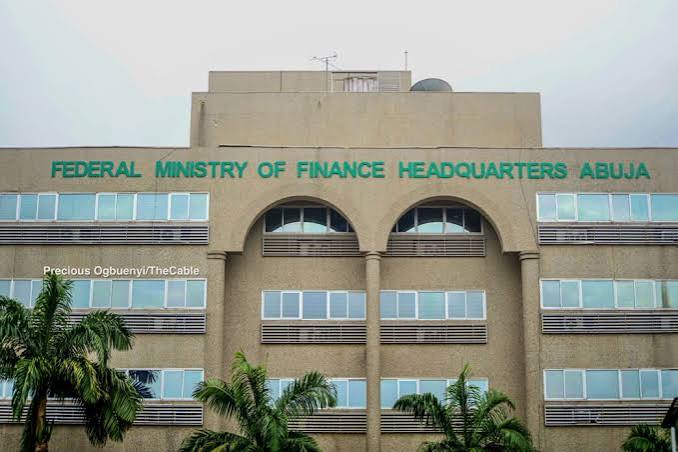
The Federal Ministry of Finance, Budget and National Planning is under scrutiny following revelations that over ₦23 million was disbursed to a maintenance contractor for office furniture and construction projects without following standard procurement protocols. According to the 2024 Annual Report on Non-Compliance and Internal Control Weaknesses submitted to the National Assembly in July 2026, these expenditures were improperly bundled into a routine facility maintenance agreement.
Detailed findings from the Auditor-General for the Federation indicate that the payments—comprising ₦4,114,025.00 for office furniture, including a sofa set and coffee table, and ₦18,969,169.97 for construction services—were processed as “reimbursable expenses.” This method allowed the Ministry to circumvent the mandatory competitive bidding process required for such substantial procurements. Further raising concerns, the total sum of ₦23,083,194.97 was deposited directly into the private bank account of a Ministry staff member rather than the corporate account of the contractor, Oviswift Engineering Ltd (formerly Annai Ltd).
While the audit report highlights these irregularities, it does not specify the exact calendar year of the transactions or attribute responsibility to a particular minister or permanent secretary. Oviswift Engineering Ltd, which maintained an active maintenance contract with the Ministry valued at approximately ₦35.2 million, sought to justify the extra payments by citing a clause in its agreement that allowed for monthly reimbursements of up to ₦1 million.
However, federal auditors have firmly rejected this justification. The audit notes that such a maneuver violates the 2009 Public Procurement Manual and the 2009 Financial Regulations, both of which mandate open, competitive tendering for such works. The report warns that these actions pose significant risks, including the potential diversion of public funds, the deliberate circumvention of due process, and the misapplication of government capital.
In its formal response to the audit query, the Ministry stated that it has established a four-man standing committee tasked with conducting rigorous oversight and scrutiny of all payment claims before funds are released in the future.
This incident arrives amid broader public frustration regarding the efficacy of audit queries in Nigeria. While the Office of the Auditor-General consistently documents procurement breaches and the improper transfer of funds to private accounts, the legislative oversight process is often criticized for being sluggish. As a result, many of these cases remain unresolved for years, leaving taxpayers to question whether the Ministry’s new internal committee will foster genuine accountability or serve as a mere bureaucratic formality.