
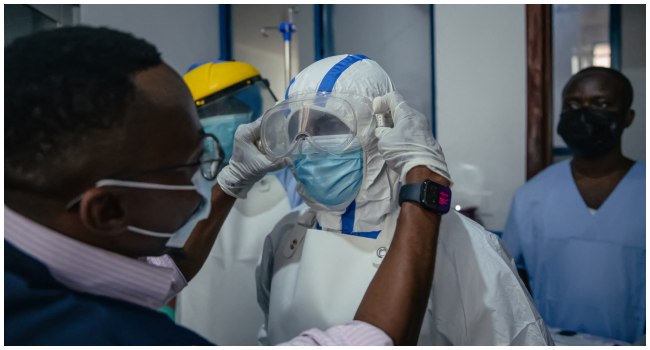
The Nigeria Centre for Disease Control and Prevention (NCDC) has confirmed that two suspected cases of Ebola Virus Disease (EVD) reported in Adamawa State tested negative after two rounds of laboratory testing.
NCDC Director-General, Dr Jide Idris, disclosed this in a statement on Saturday, saying the samples collected from the two individuals showed no evidence of Ebola virus.
The development followed an alert received by the Adamawa State Public Health Emergency Operations Centre (PHEOC) in the early hours of October 30, 2026, after two individuals in Yola presented with symptoms suggestive of Ebola.
According to Idris, the individuals were immediately isolated while appropriate public health measures were activated pending the outcome of laboratory investigations.
“The Nigeria Centre for Disease Control and Prevention (NCDC) is working closely with the Adamawa State Government, through the State Ministry of Health and Human Services, to investigate the report of suspected Ebola Virus Disease in Yola, Adamawa State,” he said.
“Samples were collected for laboratory testing to establish the cause of the illness. Fortunately, the samples turned out negative for EBV after two rounds of testing.”
Idris commended the Adamawa State Commissioner for Health and his team for their prompt response, assuring the state government of continued technical support from the NCDC.
He stressed that there is currently no laboratory-confirmed case of Ebola in Adamawa State, adding that the index case previously confirmed in the Federal Capital Territory remains the only confirmed case recorded in Nigeria.
The NCDC chief urged members of the public to remain calm and refrain from circulating unverified information or speculation about the situation.
He advised Nigerians to rely on official government and public health channels for verified updates.
Idris also reminded the public that Ebola is a serious infectious disease requiring prompt detection, appropriate clinical management and strict infection prevention and control measures.
He urged anyone experiencing symptoms including fever, severe weakness, headache, muscle pain, vomiting, diarrhoea or unexplained bleeding, particularly after a relevant exposure, to seek immediate medical attention and disclose any relevant travel or contact history to healthcare workers.
He further advised Nigerians to avoid self-medication and follow the guidance of healthcare professionals.
The NCDC said it would continue to work with the Adamawa State Government and other relevant stakeholders to monitor the situation and provide updates as verified information becomes available.
Nigeria’s public health authorities, it added, remain committed to strengthening early detection, evidence-based response and transparent communication to protect the health of Nigerians.