
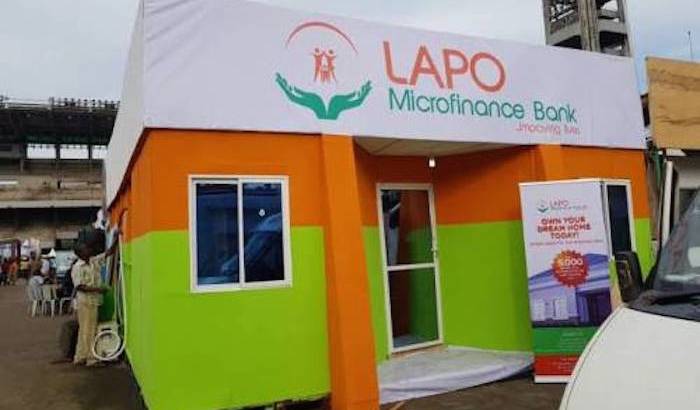
LAPO Microfinance Bank (LAPO MfB) significantly expanded its sustainability financing in the first half of 2026, disbursing more than N7.2 billion into green, agricultural, and climate-related initiatives while widening access to renewable energy, strengthening financial inclusion, and aligning its governance framework with global sustainability reporting standards.
The lender’s sustainability drive gained momentum throughout the six months. In the first quarter, it deployed N824.5 million through its Go Green, Go Clean, and Aqua Plus programmes before accelerating in the second quarter with N6.41 billion in agricultural loans extended to 9,857 farmers.
Of the agricultural financing, N4.70 billion was dedicated to climate-adapt input finance, supporting 7,742 farmers with climate-smart agricultural inputs aimed at improving resilience and productivity.
The bank also crossed a significant milestone in renewable energy financing during the period, surpassing N1 billion in clean-energy loans to support the adoption of solar home systems and other renewable energy solutions.
Beyond customer financing, LAPO expanded its clean-energy infrastructure by converting 20 additional branches to solar power, bringing it to 40 percent of its annual target of migrating 50 branches to renewable energy.
The bank also recorded strong growth in financing cleaner transportation. Demand for its DAG Empower Bajaj Compressed Natural Gas (CNG) loan increased sharply, with disbursements rising 1,225 percent to N217.38 million, financing the acquisition of 53 CNG-powered vehicles. It also launched REXOX CNG vehicle and tricycle conversion loans across Edo, Lagos, and the Federal Capital Territory.
Oluremi Akande, Director of Marketing and Communications at LAPO Microfinance Bank, said the bank continues to integrate sustainability into its financial inclusion strategy.
“Sustainability is not separate from financial inclusion; it is integral to how we create lasting value for our customers and communities. Our H1 performance demonstrates how targeted financing can respond to environmental and social challenges while enabling individuals, farmers and businesses to become more resilient and productive,” Akande said.
Beyond financing, the bank expanded its social investment programmes during the review period.
More than 1,000 people benefited from its skills acquisition initiative, while its scholarship programme has supported over 4,000 students since inception. Healthcare interventions reached more than 1,000 community members, complemented by environmental projects including Waste-to-Wealth initiatives, afforestation campaigns, and coastal clean-up exercises.
LAPO also deepened financial inclusion through community engagement programmes across markets in Lagos and Ibadan, reaching more than 200,000 people. The initiative resulted in the opening of 2,885 new accounts and mobilised N65.97 million in deposits.
On the governance front, the bank completed documentation required for the adoption of IFRS S1 and IFRS S2 sustainability disclosure standards following specialised training by the Financial Reporting Council of Nigeria (FRCN).
The move positions LAPO among the early adopters of the International Sustainability Standards Board (ISSB) reporting framework within Nigeria’s microfinance banking industry, strengthening the quality and transparency of its sustainability disclosures.
The lender also reinforced its corporate governance and workplace safety framework by completing its annual board evaluation, convening 30 board and committee meetings, automating its occupational health and safety management system, and maintaining 514 first-aid boxes and 1,104 fire extinguishers across its nationwide operations.