
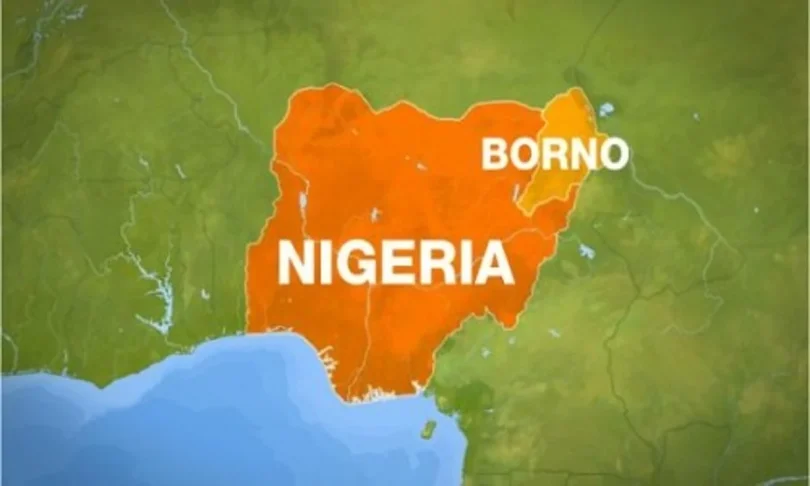
The Borno State Government has disclosed that more than 1,400 schools have been destroyed across the North-East, while 2,295 teachers have been killed and 19,000 displaced amid years of insurgency and conflict in the region.
The government also said about three million children remain in urgent need of emergency education support.
The Deputy Governor of Borno State, Umar Usman Kadafur, who represented Governor Babagana Umara Zulum, disclosed this at the two-day National Dialogue on the Psychosocial Impact of Conflict on Children in Nigeria, held in Maiduguri.
The dialogue was convened by the Office of the Special Adviser to the President on Health in collaboration with the North East Development Commission (NEDC) and the Borno State Government.
Kadafur said the figures represented more than statistics, noting that behind the destruction of schools, displacement of teachers and disruption of education were children whose psychological wellbeing and future had been affected by years of violence.
He said Borno’s experience of insurgency showed that the consequences of conflict continued after the guns had fallen silent, with trauma affecting children’s cognition, behaviour, ability to trust and relationships with their communities.
ALSO READ: Lassa school attack: Borno govt delegation visits families of victims
“I stand before you today with a heart that is both heavy and hopeful. Heavy because the subject of this dialogue, psychosocial impact of conflict on our children, is not an abstract policy debate for us in Borno State. It is the lived reality of hundreds of thousands of our sons and daughters,” Kadafur said.
He said the insurgency had targeted children through abduction, indoctrination and the use of children as human bombs, creating fear and mistrust that continued to affect communities.
“Trauma does not end when the guns fall silent. It embeds itself in their developing brains. It alters their cognition, behaviour, and their capacity to trust,” he said.
The deputy governor warned that untreated trauma could create a cycle of bitterness, alienation and vulnerability to recruitment into violent groups.
“If left untreated, it creates a pipeline of bitterness, alienation, and vulnerability to recruitment, perpetuating the very cycle of violence we are fighting to end,” he said.
Kadafur said the state government had learnt that military intervention alone could not resolve the consequences of insurgency, insisting that security without healing remained incomplete.
He proposed a national mental health framework for children affected by conflict, the training and deployment of child mental health professionals across conflict-affected areas, the integration of psychosocial support into counter-terrorism and anti-radicalisation programmes, protection of education as a psychosocial intervention and greater investment in data-driven, community-owned interventions.
“We need psychiatrists, clinical psychologists, psychiatric social workers, and counsellors—not just in our cities, but in our rural communities, in our IDP camps, and in our schools,” he said.
He also called for schools to be protected as safe spaces where children could regain a sense of normalcy and hope.
“Schools are not merely a place for learning arithmetic and grammar. For a conflict-affected child, the classroom represents normalcy, safety, and hope,” Kadafur said.
The deputy governor commended the Federal Government, security agencies and other stakeholders for their efforts to restore peace to Borno, but urged development partners to increase investment in children’s mental health, education, skills development and job creation.
Delivering the keynote address titled “Mental Health Issues Among Conflict-Affected Children in Nigeria and What the Data Tells Us,” Professor Andrew Zamani said the psychological consequences of conflict had become a national emergency.
Zamani recalled his first involvement in psychosocial interventions for children in Borno about seven years ago through civil society activist Dr Fatima Akilu.
He recounted the experience of a boy who had lost his parents and siblings to insurgency and told researchers that all he wanted was a gun to take revenge before killing himself.
“He said, ‘All that I need now is a gun. That’s what will make me happy,’” Zamani recalled.
The professor said the boy’s experience illustrated how untreated trauma could turn grief and anger into a desire for revenge.
He also recounted the story of an elderly woman caring for more than 200 girls who complained of harassment and abuse affecting displaced children under her care.
Zamani said the accounts showed why mental health interventions must be integrated into broader humanitarian and security responses.
He identified violent extremism, expanding insecurity, internal displacement, disrupted education and the intergenerational transmission of trauma as reasons for urgent action.
According to him, many children who experienced conflict two decades ago were now adults and parents, but some had grown up without stable parental care.
“You can’t give what you don’t have,” he said, warning that parents who had suffered severe trauma could struggle to raise children effectively.
Zamani said children in conflict-affected areas suffered chronic anxiety, psychological trauma, depression and disruption of social relationships, adding that the consequences extended beyond individuals to families and communities.
Representing the National Security Adviser, Mallam Nuhu Ribadu, Director of Medical Intelligence, Dr Patience Omokri, said unaddressed child trauma should be regarded as a national security issue rather than only a humanitarian concern.
Reading Ribadu’s message, Omoikri said children exposed to insurgency, terrorism and communal violence had lost parents, homes and the innocence of childhood, while some had experienced abduction, recruitment into armed groups, displacement and exploitation.
“A traumatized child is not only a victim. If left unsupported, they can become a vector of instability,” Ribadu said in the speech.
He warned that emotional scars could manifest as aggression, mistrust, impaired judgment and alienation, creating vulnerabilities that extremist recruiters, traffickers and criminal networks could exploit.
“The resilience of Nigeria depends on the resilience of its children,” he said.
Ribadu called for mental health and psychosocial support to be incorporated into security and recovery frameworks and urged security agencies, teachers and health workers to receive training in identifying and responding to trauma.
The Senior Special Assistant to the President on Special Needs and Equal Opportunities, Hon. Mohammed Abba Isa, called for disability-inclusive psychosocial interventions, noting that children with disabilities often suffer disproportionately during conflict through displacement, trauma, disruption of education and healthcare, abuse and exploitation.
The official said children with disabilities should be treated as rights holders and active participants in policies and programmes affecting them.
Also speaking for civil society, Dr Fatima Akilu said mental health for children should no longer be treated as an afterthought in humanitarian planning.
“Civil society have been the ones that have been holding up the infrastructure of mental health,” Akilu said, recalling that civil society organisations were among the first groups to respond in Borno at the height of the insurgency.
She said civil society actors had also been at the forefront of highlighting the importance of trauma and called for a holistic national response.
The UNICEF representative, Francis Otuochi, said 270,864 children in Borno, Adamawa and Yobe require mental health and psychosocial support under the 2026 humanitarian needs and response plan.
He said mental health and psychosocial support should be embedded in government-led child protection, healthcare, education and social welfare systems.
“Conflict continues to cause profound harm on children, including fear, anxiety, family separation, disrupted learning, and exposure to violence and trauma,” Otuochi said.
Representing the NEDC Managing Director, Mohammed Goni Alkali, the Borno State Coordinator, Engineer Muhammadu Umar Maska, said sustainable peace in the North-East required development interventions alongside security measures.
He said reconstruction, youth empowerment, livelihood restoration, support for internally displaced persons and social cohesion were crucial to preventing a return to violence.
“Development should be regarded not as a mere economic activity, but as a powerful instrument of conflict prevention and peacebuilding,” Maska said.
Former Minister of State for Education and former student of the University of Maiduguri, Dr Yusuf Tanko Sununu, said more than three million people had been displaced nationwide by conflict, banditry, flooding and other crises, with children constituting a significant proportion.
Sununu, who served as Minister of State for Education and Humanitarian Affairs, said displaced children faced disrupted education, poor access to healthcare, lack of parental guidance and trauma.
He called for a dedicated budget line for children growing up in conflict zones, saying the existing Child Rights Act needed stronger provisions and implementation mechanisms to address their circumstances.
“We must have a fund, a budget line that will address the issue and concern of children growing in conflict zones. They are special,” Sununu said.
He also urged universities to dedicate resources to research into psychosocial interventions for children affected by conflict.