
The Federal Government on Wednesday reaffirmed its commitment to every initiative aimed at preventing illicit drug use, dismantling trafficking networks, expanding access to treatment and rehabilitation, and promoting the wellbeing of all Nigerians.
The assurance was given by the Secretary to the Government of the Federation (SGF), Senator George Akume, at the opening ceremony of the ongoing National Drug Use Summit themed “Addressing Illicit Drug Use and Trafficking: A Call to National Action” in Abuja.
“On behalf of the Federal Government of Nigeria, and President Bola Ahmed Tinubu, I reaffirm our unwavering commitment to every initiative aimed at preventing illicit drug use, dismantling trafficking networks, expanding access to treatment and rehabilitation, and promoting the wellbeing of all Nigerians,” the SGF stated in his remarks as Special Guest of Honour at the opening session of the summit, jointly organised by the National Drug Law Enforcement Agency (NDLEA), the Federal Ministry of Health and Social Welfare, and the United Nations Office on Drugs and Crime.
Justifying the government’s stance on the drug scourge, the SGF, represented by the Permanent Secretary, General Services (OSGF), Dr. Adamu Ibrahim Kana, stated that no nation would fold its hands while its youths are under the threat of substance abuse.
According to him: “No nation can achieve sustainable development when its young population is threatened by drug abuse and addiction. No society can attain lasting peace and prosperity when criminal networks engaged in illicit trafficking continue to undermine its institutions and exploit its vulnerabilities.
“This much we know, and this much must guide our resolve. This summit, therefore, presents a timely opportunity for us to renew our collective commitment, deepen our partnerships and chart a clear, coordinated pathway towards a healthier, safer and more resilient Nigeria.”
He assured of the government’s commitment to the health, safety, and wellbeing of every Nigerian.
“Under the Renewed Hope Agenda, we are building resilient communities, promoting mental health, empowering our young people and strengthening the institutions that must confront these emerging social challenges,” he said.
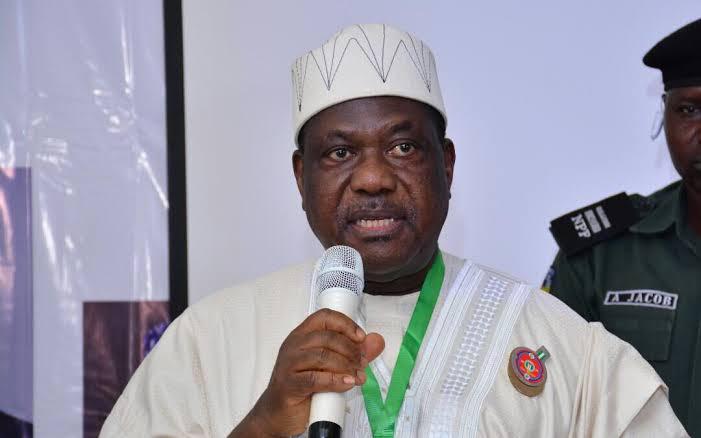
In his welcome address, the Chairman and Chief Executive Officer of the NDLEA, Brig-Gen Mohamed Marwa (Rtd), said the summit was convened as a national platform for reflection, dialogue, and collective action on the growing burden of drug use and substance use disorders, coming on the heels of a week-long World Drug Day programme dedicated to raising awareness, deepening understanding, and renewing stakeholders’ resolve.
He added that such intensity “testifies to our shared commitment to confronting Nigeria’s evolving drug situation through coordinated, evidence-based and innovative action.”
He noted that despite the efforts and successes recorded in recent years by NDLEA in drug supply and demand reduction, it has become increasingly clear that no single institution can successfully confront the drug problem in isolation.
According to the NDLEA boss: “The scale of this challenge demands a whole-of-government and whole-of-society response, one that mobilises every stakeholder: government institutions, communities, families, development partners, the private sector, religious and traditional leaders, civil society and the media.
“This Summit is therefore both timely and necessary. It aligns with the global call to confront persisting drug challenges with innovative, collaborative responses, and it offers us a unique opportunity to build consensus around a coordinated National Action Plan, one that strengthens prevention, treatment, rehabilitation, data collection, policy implementation and community resilience.”
“Over the years, the NDLEA has remained steadfast in its mandate to combat this menace through a balanced and comprehensive approach. On the supply reduction front, the agency has recorded significant successes in drug seizures, arrests, convictions and the dismantling of trafficking networks.
“Our operational feats in the last 18 months alone speak to this: a total of 29,262 arrests leading to the seizure of 5,305,484.88 kilograms of assorted illicit drugs valued at over N1.5 trillion and the conviction of 5,225 offenders.
“Within the same period of 18 months, we have conducted 6,645 drug use prevention-focused sensitisation and awareness creation programmes in schools, worship centres, workplaces, markets, motor parks, communities, and correctional facilities, among others, equipping nearly five million Nigerians with the life skills to resist drug abuse.
“Equally significant is the counselling, treatment and rehabilitation of 13,508 drug users across our 31 rehabilitation centres spread all over the country.
“Worthy of particular note, too, is the launch of the Alternative Development Initiative for cannabis sativa growers, designed to support their transition from illicit cultivation to cash crop production and other sustainable livelihoods.”
In his remarks, the Minister of Health and Social Welfare, Prof. Ali Pate, urged that the summit must not end as a talk shop. “The measure of this summit will not be the communiqué. It will be the number of young people who choose not to start drugs. It will be the number of patients who sleep without pain. It will be the number of families restored. The Federal Ministry of Health stands ready to lead, to coordinate, to collaborate and to deliver.”
Also speaking, the Country Representative of the United Nations Office on Drugs and Crime (UNODC), Mr. Cheikh Toure, represented by Dr. Akanidomo Ibanga, commended the strong collaboration across ministries, agencies, civil society, the private sector, and development partners, adding that the gathering was a powerful demonstration of Nigeria’s commitment to addressing the drug challenge in a coordinated and forward-looking manner.
According to him: “As the United Nations, we stand here today not as individual agencies, but as one system — united in our support to Nigeria. The UN family is working collectively to support a comprehensive, balanced, and evidence-based response. We meet at a critical time. The scale and evolving nature of drug use in Nigeria — marked by emerging substances and shifting patterns — require us to act with urgency, but also with clarity and purpose.
“Beyond the numbers are lives, communities, and futures that depend on the strength of our response. This summit is therefore more than a convening. It is a moment of alignment. A moment to reaffirm our shared commitment to the National Drug Control Master Plan and to translate that commitment into practical, measurable action.”
The summit is being attended by relevant ministries, departments, and agencies of government; development partners; the military and security agencies; NGOs; and civil society organisations, among others.