
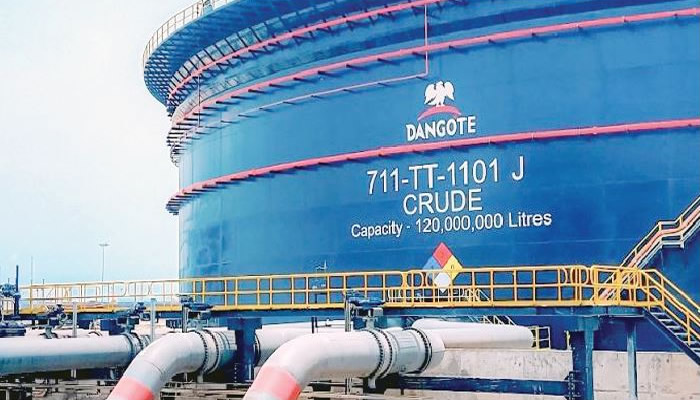
The Dangote Petroleum Refinery and Petrochemicals has restricted the sale of Premium Motor Spirit (PMS) to major marketers that continue to import petrol into Nigeria, amid concerns over product quality, market transparency and the integrity of products supplied under the Dangote brand.
The measure, which took effect late last week, reflects growing concerns over the continued entry of imported PMS into a market where substantial domestic refining capacity is now available.
Sources familiar with the refinery’s position said the immediate concern was that some marketers were allegedly blending imported PMS with products purchased from the Dangote Refinery before distributing the blended product to the market.
A source noted that the refinery is concerned that such practices could make it difficult to distinguish between products supplied directly by the refinery and those subsequently blended or handled by third parties.
“It is difficult to understand why we would invest heavily in producing high-quality petroleum products for Nigerians, only for those products to be mixed with imported products of uncertain quality and the resulting product to be associated with the refinery,” a source familiar with the refinery’s position said.
The refinery has also raised concerns over the absence of adequate laboratory and quality-control infrastructure for independently verifying and certifying the specifications of imported petroleum products entering the Nigerian market.
The development comes as Nigeria’s downstream petroleum sector undergoes a structural transition from longstanding dependence on imported refined products to greater reliance on domestic refining.
With a capacity of 700,000 barrels per day, the Dangote Petroleum Refinery has emerged as a major supplier of refined petroleum products to both the Nigerian and international markets.
The refinery says its products meet internationally recognised quality specifications.
The United States Energy Information Administration recently identified the Dangote refinery as a major factor behind the sharp increase in Nigeria’s seaborne petroleum product exports.
According to the EIA, Nigeria’s seaborne petroleum product shipments averaged 561,000 barrels per day in the second quarter of 2026, compared with an annual average of 79,000 barrels per day in 2023.
Meanwhile, Dangote Petroleum Refinery’s jet fuel has gained traction in international markets, including the United States and Europe.
The refinery has also emerged as a major external supplier of jet fuel to Europe, surpassing traditional exporters from the United States and the Middle East in recent months.
The latest restriction highlights the growing competition between locally refined products and imported petroleum products as Nigeria’s downstream sector adjusts to increased domestic refining capacity.