
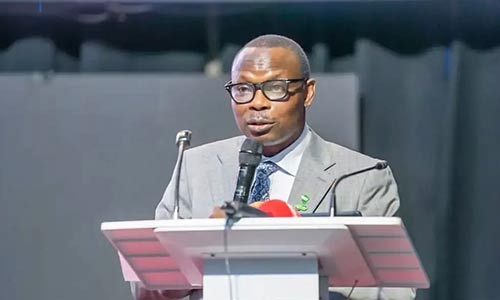
The Minister of State for Health and Social Welfare, Iziaq Salako, has disclosed that more than 30 per cent of solar power systems installed in Primary Health Centres across Nigeria become non-functional within three years of commissioning.
Salako said the recurring failures were rarely caused by the technology itself, but by poor maintenance structures, lack of spare parts, absence of dedicated budgetary provisions and uncertainty over who assumes responsibility for the systems after the initial project period ends.
He spoke in Abuja at the official launch of the Rural Electrification Agency-Renewable Asset Management Company, RAMCO, held under the theme, “Powering Sustainable Growth: Launching Nigeria’s Renewable Asset Management Company.”
According to the minister, Nigeria must move beyond simply installing renewable energy systems in health facilities to putting in place sustainable arrangements that guarantee their continued operation, maintenance and performance.
He said the experience with solar installations in PHCs showed that infrastructure could quickly deteriorate where there were no preventive maintenance schedules, accessible replacement parts or clearly assigned institutional responsibility.
“Sustainability must become part of the project from the first day, not an afterthought when equipment begins to fail,” Salako said.
The minister said RAMCO could help address the challenge by turning renewable energy installations into professionally managed assets rather than projects that effectively end once they are commissioned.
“RAMCO promises to convert an installation into a managed asset. Its model — build, operate, optimise, aggregate, refinance and reinvest,” he said.
Salako explained that such a model would ensure that renewable energy systems installed in hospitals and health centres have identifiable ownership, defined performance standards, maintenance schedules and proper financial treatment.
He said Nigeria needed to abandon the practice of commissioning energy infrastructure without establishing a sustainable framework for its long-term operation and upkeep.
The minister also disclosed that the Federal Government was targeting steady electricity supply in at least 30 per cent of health facilities nationwide by the end of 2027.
According to him, the target is part of the Nigeria Power-for-Health Initiative approved by President Bola Tinubu following the first National Stakeholders’ Dialogue on Power in the Health Sector held in September 2025.
He said the dialogue resulted in a Compact for the Sustainable Electrification of Public and Private Health Facilities, alongside an implementation plan aimed at achieving the 2027 target.
He further noted that the Federal Government could not single-handedly finance the scale of energy infrastructure required across Nigeria’s health system.
He further noted that the Federal Government could not single-handedly finance the scale of energy infrastructure required across Nigeria’s health system.
According to him, attracting private capital and building partnerships would therefore be necessary to expand reliable electricity access while ensuring that installed infrastructure remained functional over the long term.
The minister maintained that sustainable power remained critical to effective healthcare delivery, particularly at the primary healthcare level, where unreliable electricity can undermine essential services and waste investments in renewable-energy infrastructure.