
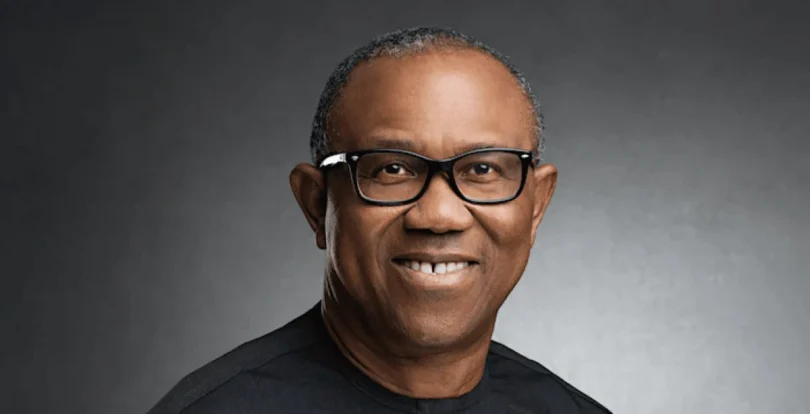
Lagos State chapter of the All Progressives Congress (APC) has dismissed the prediction by the Nigeria Democratic Congress (NDC) that its presidential candidate, Peter Obi, will defeat President Bola Tinubu by a wider margin in Lagos State in the 2027 election.
The APC spokesman in Lagos, Seye Oladejo, said the outcome of the 2023 presidential election could not be regarded as a permanent political advantage for any candidate or party, stressing that the 2027 contest would be determined by voters.
Oladejo stated this on Sunday while reacting to comments by the NDC National Publicity Secretary, Osa Director, who expressed confidence that Obi would repeat his 2023 victory in Lagos and increase his winning margin.
ALSO READ: APC victory in bye-elections affirms confidence in ruling party — Tinubu
Obi, who contested the 2023 presidential election on the Labour Party platform, secured 582,454 votes in Lagos, while Tinubu of the APC polled 572,606 votes, according to results published by the Independent National Electoral Commission (INEC).
Reacting, Oladejo said Obi’s performance in 2023 was a legitimate electoral outcome but should not be interpreted as an indication of what would happen in 2027.
“Lagos does not belong to Peter Obi. Lagos does not belong to APC either. Lagos belongs to Lagosians,” he said.
The APC spokesman said political parties would have to persuade voters afresh through their candidates, policies, organisation, mobilisation and records rather than rely on the outcome of the previous election.
He also challenged the NDC to focus on its campaign programme instead of projecting the outcome of an election that has not been held.
According to him, the 2027 contest would give voters an opportunity to assess the records and policy positions of the competing parties and candidates.
Oladejo said the political environment in 2027 would not necessarily replicate that of 2023, given the changes in Nigeria’s political landscape since the last presidential election.
He also questioned whether the youth mobilisation and social-media enthusiasm associated with the 2023 election would automatically translate into votes in 2027.
The APC spokesman urged political parties to address issues including employment, education, skills development, security, infrastructure and economic opportunities, rather than relying mainly on online mobilisation or protest sentiment.
On ethnic and religious mobilisation, Oladejo urged political actors to avoid reducing Lagos politics to identity-based calculations, describing the state as a cosmopolitan society with residents from different ethnic and religious backgrounds.
He said voters would ultimately assess the competing parties based on their policies, records and engagement with the people of Lagos.
“Lagos will ask: what have you done for us?” he said.
Oladejo also said scrutiny of Obi had increased since the 2023 election, with fact-checking organisations examining some claims circulating about the former Anambra governor and his political activities.
He maintained that the 2027 election should be approached as a fresh contest rather than a replay of 2023.
The NDC had earlier said it expected Obi to defeat Tinubu again in Lagos, with Director saying the margin would be wider if the election was free and fair.
Oladejo said the NDC remained free to campaign and make its case to Lagos voters, but cautioned against treating an anticipated electoral outcome as a foregone conclusion.
He said the final decision would rest with Lagos voters when they cast their ballots in 2027.