
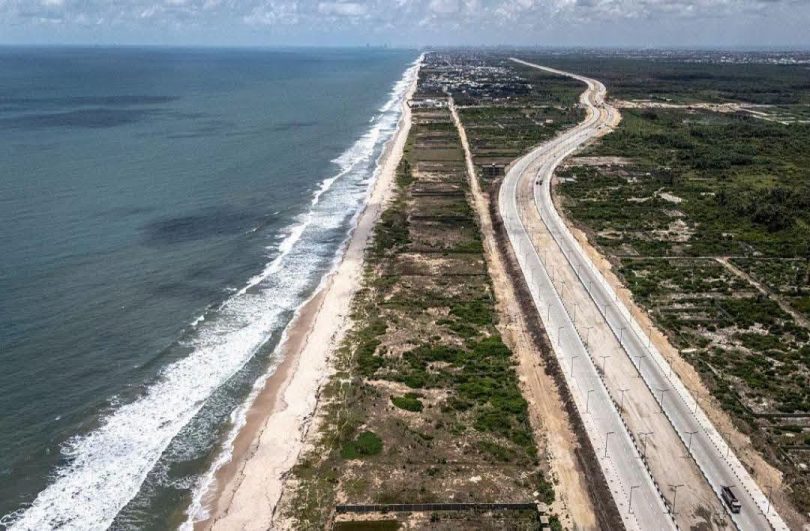
Party questions project’s cost, environmental impact and funding transparency, urges Tinubu administration to account for public funds.
The Presidential Campaign Council (PCC) of the Young Progressives Party (YPP) has criticised the Lagos-Calabar Coastal Highway project, describing it as a misplaced priority that may fail to address the immediate economic needs of Nigerians.
In a position statement reported by The Sun Nigeria, the council raised concerns over the project’s cost, financing arrangements, environmental implications and potential impact on communities and maritime activities across the Niger Delta.
The PCC argued that the region’s complex river systems, wetlands and coastal terrain require careful engineering and environmental planning to prevent damage to fishing, agriculture, shipping and other economic activities.
According to the party, poorly designed roads and bridges could obstruct maritime access, disrupt the movement of goods and negatively affect communities that depend on fishing and cash crops such as rubber, cocoa and palm oil.
The council maintained that the Federal Government should prioritise the rehabilitation of existing roads, railway development, port access and climate-resilient infrastructure alongside any new coastal highway projects.
YPP Questions Project Financing and Transparency
The PCC also called for greater transparency in the financing and execution of the highway, citing reported financing arrangements worth approximately $1.873 billion for the first two project sections, covering about 103 kilometres.
It noted that Works Minister David Umahi had described the financing model as Engineering, Procurement, Construction and Financing (EPC+F), with the Federal Government contributing 30 per cent and lenders providing the remaining 70 per cent.
The party urged the government to reconcile official project-cost estimates, budget provisions, financing agreements, actual payments and independently certified construction progress.
It further called for the publication of a comprehensive public ledger detailing appropriations, fund releases, lender drawdowns, contractor payments and verified work completed.
The PCC stressed that budgetary allocations alone do not establish how much money has been released or what level of construction has been achieved.
Calls for Independent Engineering and Financial Audit
The YPP council proposed an independent review of the project involving relevant professional bodies, including the Nigerian Society of Engineers (NSE), the Council for the Regulation of Engineering in Nigeria (COREN), the Nigerian Institute of Architects (NIA) and the Architects Registration Council of Nigeria (ARCON).
According to the council, the proposed review would examine construction quality, contract costs, environmental compliance, compensation for affected property owners and the project’s overall value for money.
It also advocated the publication of contracts and financing agreements, subject to necessary limited redactions, as well as the disclosure of verified construction progress and outstanding compensation.
The party said any decision to continue, redesign, reduce the scope of, suspend or terminate parts of the project should be based on documented engineering assessments, legal considerations, financial evidence and public-safety requirements.
It further proposed immediate action on verified flooding and safety concerns, alongside the recovery of any overpayments established through an independent audit.
Party Demands Accountability
The PCC maintained that the strategic importance of coastal infrastructure should not be used to justify unchecked expenditure or inadequate public scrutiny.
It also questioned the wider implications of Nigeria’s rising public debt, debt-servicing obligations and the use of crude-oil-backed financing arrangements, urging the government to disclose the terms and repayment implications of such facilities.
The council called on the Federal Government to prioritise the completion of valuable existing infrastructure, improve access to major ports and strengthen rail freight systems before committing additional resources to major projects without comprehensive cost-benefit assessments.
It further urged the administration of President Bola Tinubu to apologise to Nigerians over what it described as shortcomings in the handling of the coastal highway project.
The party also advocated the establishment of the National Council on Public Procurement, as provided for under the Public Procurement Act, to strengthen oversight of public contracts.
The YPP PCC concluded that major infrastructure projects must deliver measurable economic and social benefits, insisting that public funds should be spent transparently and that decisions concerning the Lagos-Calabar Coastal Highway should be guided by evidence, engineering standards and value for money.